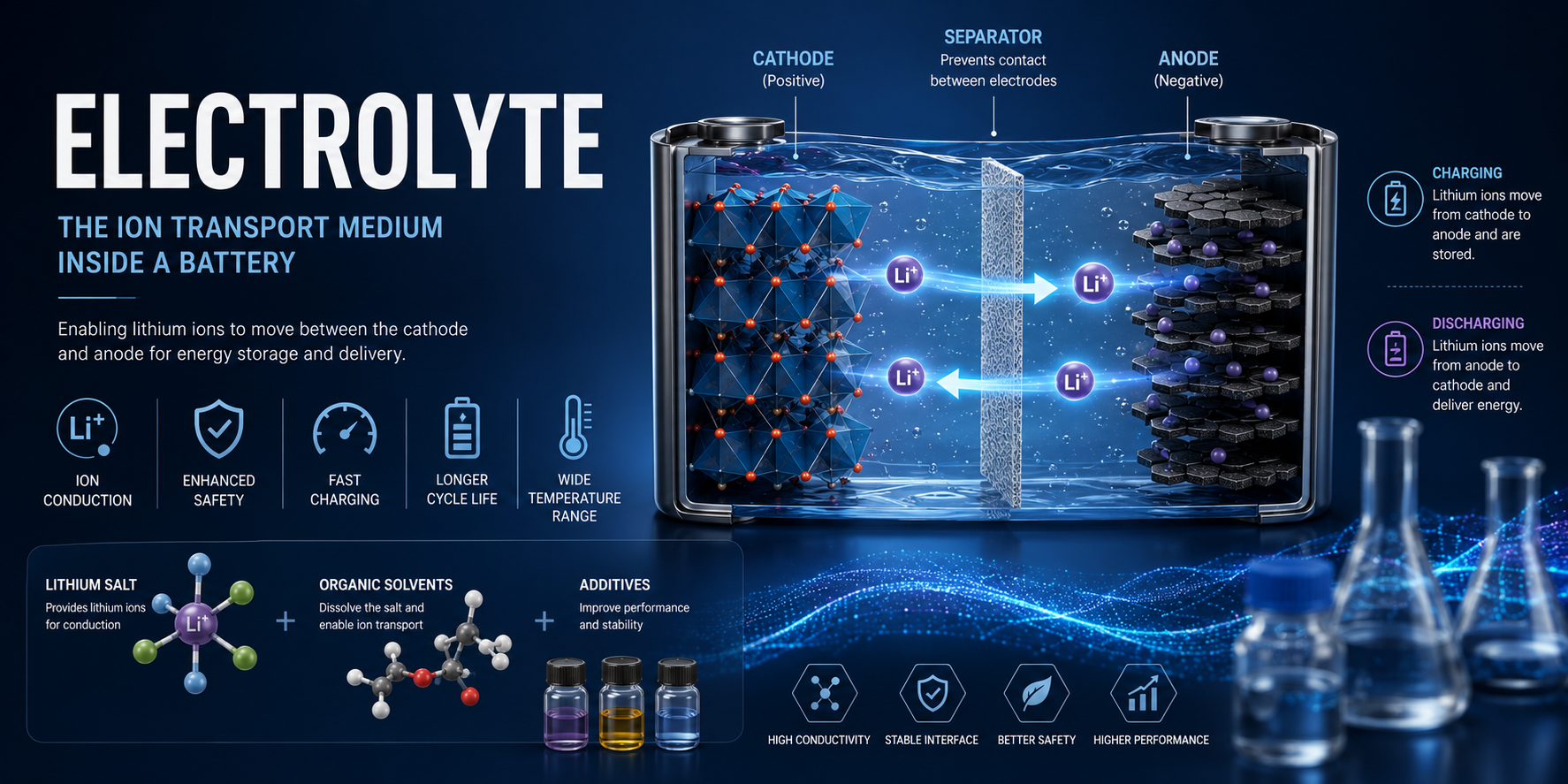
Electrolyte Explained: The Ion Transport Medium Inside a Battery
Understanding Electrolyte Materials, Functions, and Their Role in Lithium-ion Battery Performance
Category: Battery Technology
Content Type: Materials
Related Industries: Electric Vehicles · Energy Storage Systems · Consumer Electronics
Last Updated: August 2026
Industry Snapshot
The electrolyte is one of the four essential components of a lithium-ion battery, together with the cathode, anode, and separator.
Its primary role is to provide a pathway for lithium ions to move between the cathode and anode during charging and discharging. While electrons travel through the external circuit, lithium ions move internally through the electrolyte, completing the electrochemical process that allows the battery to store and release energy.
Electrolyte performance directly affects ionic conductivity, charging capability, operating temperature, cycle life, and battery safety. As battery technology evolves toward fast charging, higher energy density, and solid-state systems, electrolyte innovation is becoming increasingly important.
At a Glance
| Category | Description |
|---|---|
| Definition | Medium that transports lithium ions between electrodes |
| Main Function | Enable ionic conduction inside the battery |
| Typical Composition | Lithium salt + Organic solvents + Additives |
| Key Properties | Ionic conductivity, stability, safety |
| Major Applications | EVs, ESS, Consumer Electronics |
What Is an Electrolyte?
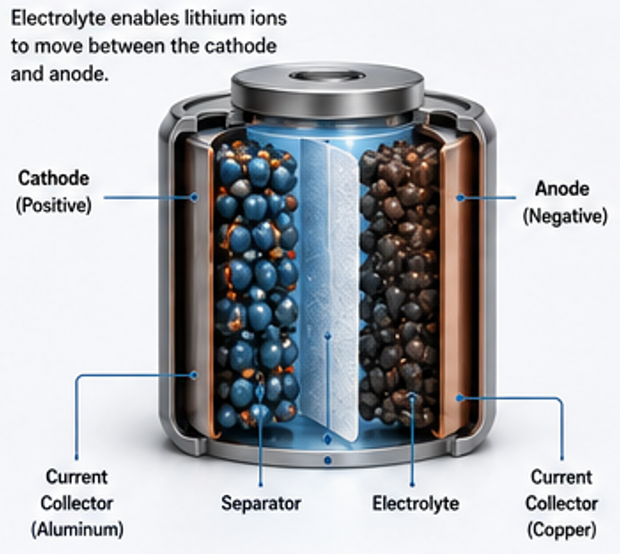
An electrolyte is an ion-conducting medium located between the cathode and anode.
In conventional lithium-ion batteries, the electrolyte is typically a liquid solution consisting of lithium salts dissolved in organic solvents.
The electrolyte allows lithium ions to travel between the electrodes while the separator helps prevent direct electrical contact between them.
This distinction is important:
The electrolyte transports ions, while the external circuit transports electrons.
Both movements are necessary for a battery to operate.
How an Electrolyte Works
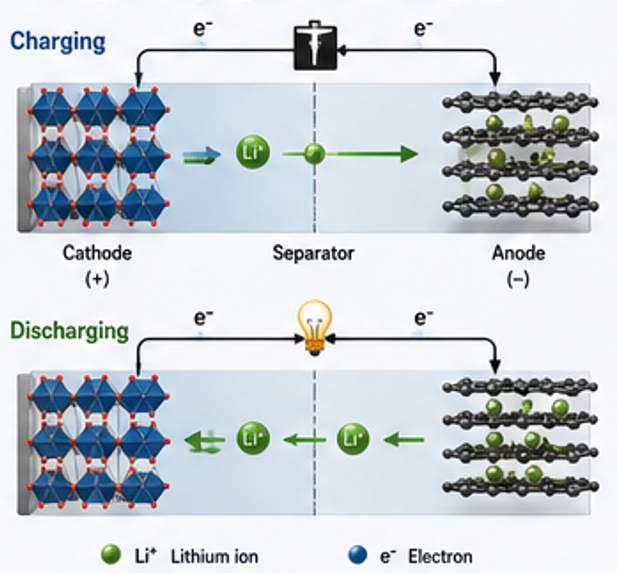
The direction of lithium-ion movement changes depending on whether the battery is charging or discharging.
Charging
During charging:
- Lithium ions leave the cathode.
- The ions move through the electrolyte.
- They pass through the separator.
- Lithium ions enter and are stored in the anode.
Electrons travel through the external charging circuit toward the anode.
Discharging
During discharge:
- Lithium ions leave the anode.
- They move through the electrolyte toward the cathode.
- Electrons travel through the external circuit.
- Electrical energy is delivered to the connected device.
The electrolyte therefore acts as an internal transportation pathway for lithium ions throughout every charge-discharge cycle.
What Is a Lithium-ion Electrolyte Made Of?
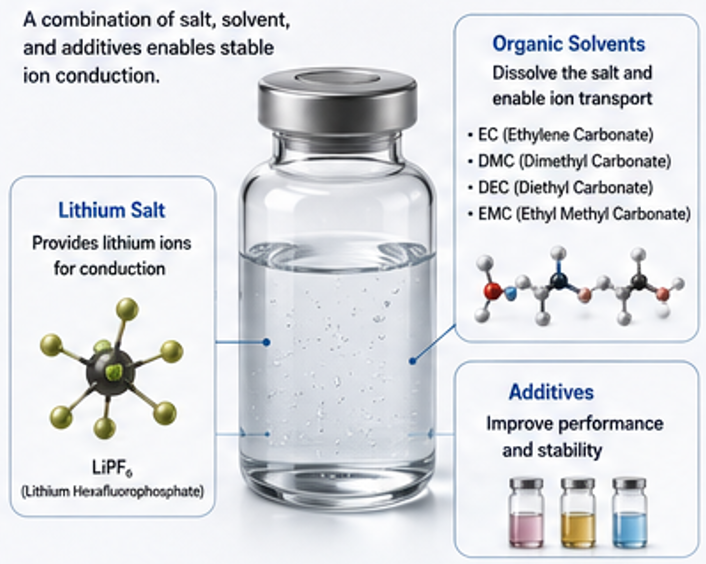
A conventional lithium-ion battery electrolyte generally contains three major components.
Lithium Salt
Lithium salts provide lithium ions for ionic conduction.
One of the most widely used salts is:
LiPF₆ — Lithium Hexafluorophosphate
The salt must provide good ionic conductivity while remaining compatible with the other battery materials.
Organic Solvents
Lithium salts are dissolved in organic solvents.
Common carbonate solvents include:
- Ethylene Carbonate (EC)
- Dimethyl Carbonate (DMC)
- Diethyl Carbonate (DEC)
- Ethyl Methyl Carbonate (EMC)
Different solvent combinations are used to balance conductivity, temperature performance, viscosity, and stability.
Additives
Small quantities of specialized additives can significantly influence electrolyte behavior.
They may be used to improve:
- Cycle life
- Electrode interface stability
- Fast-charging performance
- High-temperature stability
- Low-temperature performance
- Safety
Although additives represent only a small portion of the electrolyte, they can have a major impact on battery performance.
Types of Battery Electrolytes
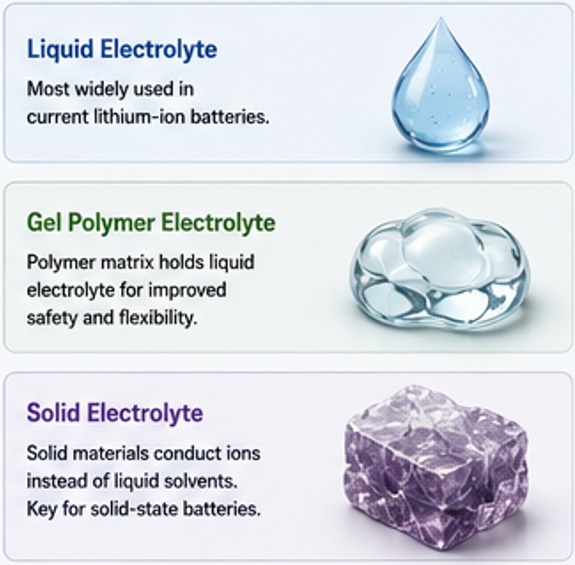
Electrolytes can be classified according to their physical form and chemistry.
Liquid Electrolyte
The conventional solution used in most commercial lithium-ion batteries today.
Advantages
- High ionic conductivity
- Mature manufacturing technology
- Strong commercial supply chain
Challenges
- Flammability
- Leakage risk
- Thermal stability limitations
Gel Polymer Electrolyte
A polymer matrix contains a liquid electrolyte, combining characteristics of both liquid and solid systems.
It can provide greater design flexibility while maintaining relatively good ionic conductivity.
Solid Electrolyte
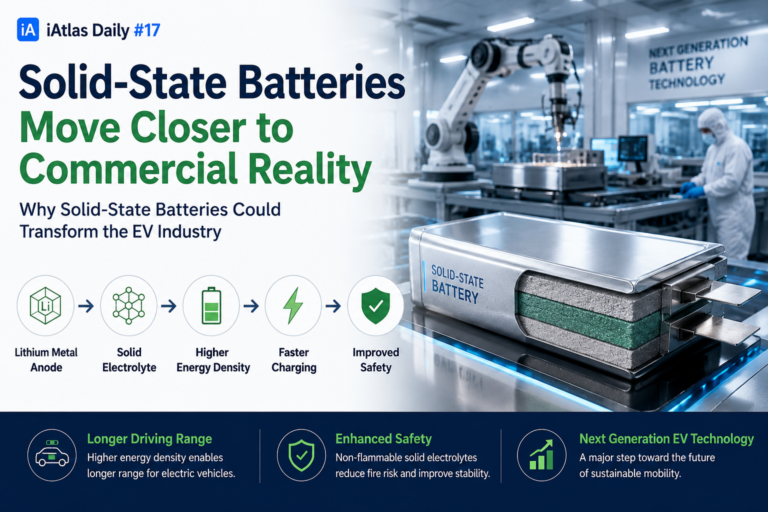
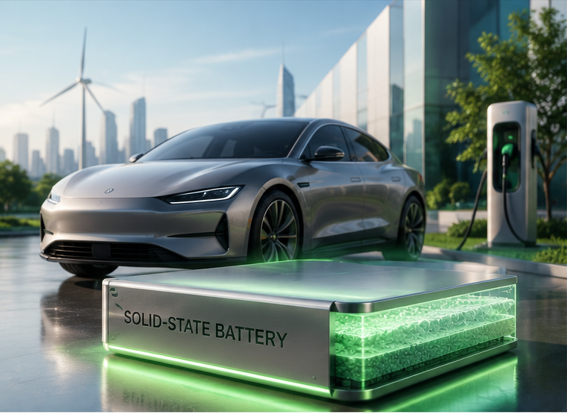
Solid electrolytes replace conventional flammable liquid electrolytes with solid ion-conducting materials.
Major families include:
- Sulfide-based electrolytes
- Oxide-based electrolytes
- Polymer-based electrolytes
Solid electrolytes are a key enabling technology for solid-state batteries.
Electrolyte and the Electrode Interface
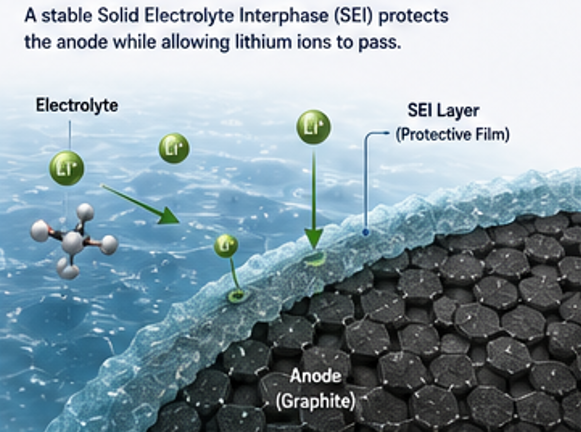
The electrolyte does more than transport lithium ions.
When a lithium-ion battery is first charged, reactions between the electrolyte and anode create a thin protective layer known as the:
Solid Electrolyte Interphase (SEI)
The SEI helps prevent continuous electrolyte decomposition while allowing lithium ions to pass through.
A stable SEI is important for:
- Cycle life
- Battery efficiency
- Fast charging
- Safety
- Long-term performance
Poor interface stability can increase degradation and reduce battery lifespan.
Key Performance Factors
Several properties determine electrolyte performance.
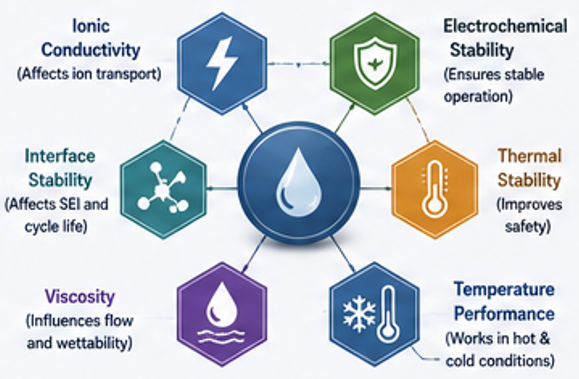
| Parameter | Why It Matters |
|---|---|
| Ionic Conductivity | Determines how easily lithium ions move |
| Electrochemical Stability | Supports stable charging and discharging |
| Thermal Stability | Influences battery safety |
| Viscosity | Affects ion transport and cell filling |
| Temperature Performance | Determines operation in hot and cold environments |
| Interface Stability | Influences cycle life and degradation |
A successful electrolyte must balance these characteristics rather than maximize only one.
Electrolyte Manufacturing Process
A simplified electrolyte production process can be represented as:
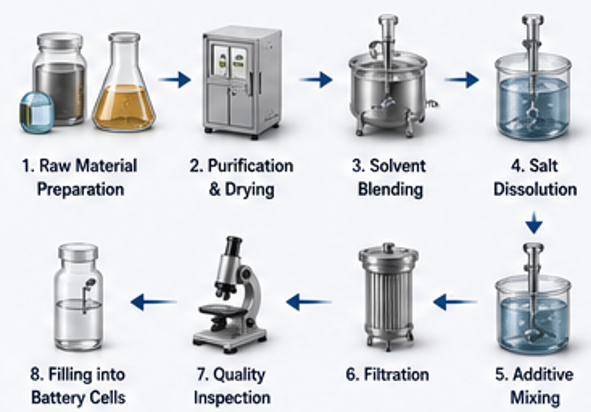
Raw Material Preparation
↓
Purification & Drying
↓
Solvent Blending
↓
Lithium Salt Dissolution
↓
Additive Mixing
↓
Filtration
↓
Quality Inspection
↓
Filling into Battery Cells
Strict moisture control is especially important because electrolyte materials can be sensitive to water and impurities.
Quality control therefore plays a major role in electrolyte production and battery cell manufacturing.
Why Moisture Control Matters
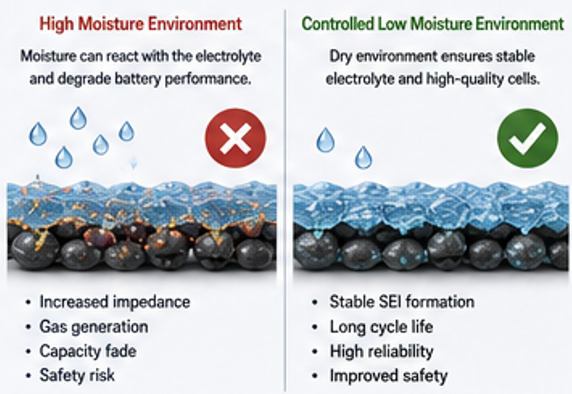
Moisture is one of the most important contamination concerns in lithium-ion battery electrolyte handling.
Certain electrolyte components can react with water, potentially creating unwanted reaction products and reducing battery performance.
For this reason, electrolyte production and battery cell assembly are typically conducted under carefully controlled environmental conditions.
Moisture management helps improve:
- Electrolyte stability
- Cell consistency
- Battery lifespan
- Manufacturing quality
- Safety
Applications
Electrolytes are essential to virtually every lithium-ion battery application.
Major applications include:
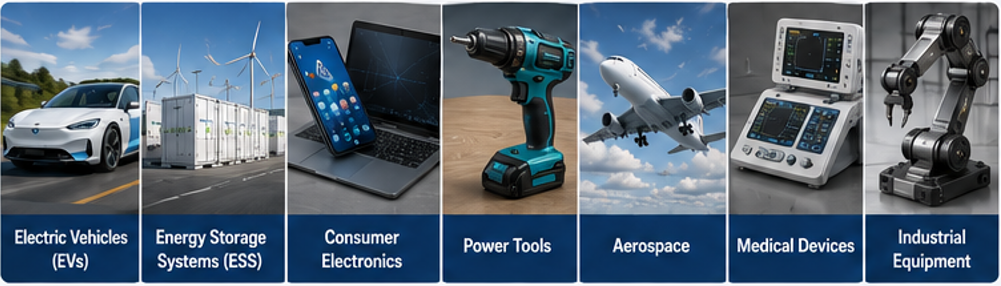
- Electric Vehicles (EVs)
- Energy Storage Systems (ESS)
- Smartphones
- Laptops
- Power Tools
- Industrial Equipment
- Aerospace Systems
- Medical Devices
Different applications may require different electrolyte formulations depending on operating temperature, charging speed, safety requirements, and expected lifespan.
Industry Ecosystem
The electrolyte supply chain connects chemical materials directly with battery manufacturing.
Typical participants include:
Lithium & Chemical Suppliers
↓
Solvent Manufacturers
↓
Electrolyte Manufacturers
↓
Battery Cell Manufacturers
↓
Battery Pack Integrators
↓
Automotive & ESS Companies
Because electrolyte formulations strongly influence battery characteristics, electrolyte manufacturers play an important role in battery development.
Atlas Insight
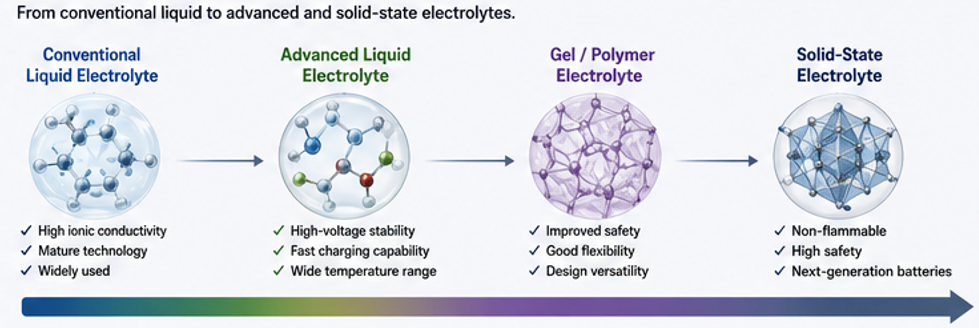
Electrolyte technology is becoming one of the key battlegrounds in next-generation battery development.
Conventional liquid electrolytes continue to improve through new salts, solvents, and additives designed for fast charging, high-voltage operation, and wider temperature ranges.
At the same time, solid electrolytes are being developed to enable next-generation solid-state batteries.
Future electrolyte technology will increasingly focus on three major goals:
Higher Performance · Better Safety · Greater Stability
The transition from liquid to advanced liquid, gel, and solid electrolyte systems may significantly influence how future batteries are designed and manufactured.
Did You Know?
- Electrolytes transport ions, not electrons, inside a lithium-ion battery.
- LiPF₆ is one of the most widely used lithium salts in commercial electrolytes.
- Small amounts of electrolyte additives can significantly influence battery performance.
- Moisture control is critical during electrolyte production and battery manufacturing.
- Solid-state batteries replace conventional liquid electrolytes with solid ion-conducting materials.
FAQ
What is an electrolyte in a battery?
An electrolyte is an ion-conducting medium that allows lithium ions to move between the cathode and anode.
What is a lithium-ion battery electrolyte made of?
Conventional electrolytes typically consist of lithium salts, organic solvents, and specialized additives.
Does the electrolyte carry electrons?
No. The electrolyte primarily transports ions. Electrons travel through the external electrical circuit.
Why is electrolyte important for battery safety?
Electrolyte chemistry influences thermal stability, interface reactions, and flammability, making it an important factor in overall battery safety.
What is a solid electrolyte?
A solid electrolyte is an ion-conducting solid material that replaces the liquid electrolyte used in conventional lithium-ion batteries.
Explore More
Fundamentals
- Battery
- Lithium-ion Battery
- Battery Cell
- Battery Module
- Battery Pack
- Battery Management System(BMS)
- Battery Thermal Management System(BTMS)
- Battery Safety
Materials
Manufacturing
- Cell Assembly
- Module Assembly
- Pack Assembly
Technologies
- Cell-to-Pack (CTP)
- Cell-to-Chassis (CTC)
- Wireless BMS
- Thermal Runaway
- Fast Charging
References
- International Energy Agency (IEA) – Global EV Outlook 2025
- U.S. Department of Energy – Vehicle Technologies Office
- Argonne National Laboratory – Battery Research
- Nature Energy
- Journal of Power Sources
- LG Energy Solution – Battery Technology
- CATL – Technology
About iAtlas
iAtlas is an independent publication covering batteries, semiconductors, OLED, advanced materials, AI, and global industrial trends.
We transform complex industrial developments into clear, reliable, and easy-to-understand insights.
Whether you’re following today’s industry news or building long-term expertise, iAtlas helps you understand not only what happened, but why it matters.
Technology creates change.
Insight creates opportunity.
— iAtlas