Cathode Explained: The Positive Electrode That Defines Battery Performance
Understanding Cathode Materials, Chemistry, and Their Role in Lithium-ion Batteries
Category: Battery Technology
Content Type: Materials
Related Industries: Electric Vehicles · Energy Storage Systems · Consumer Electronics
Last Updated: July 2026
Industry Snapshot
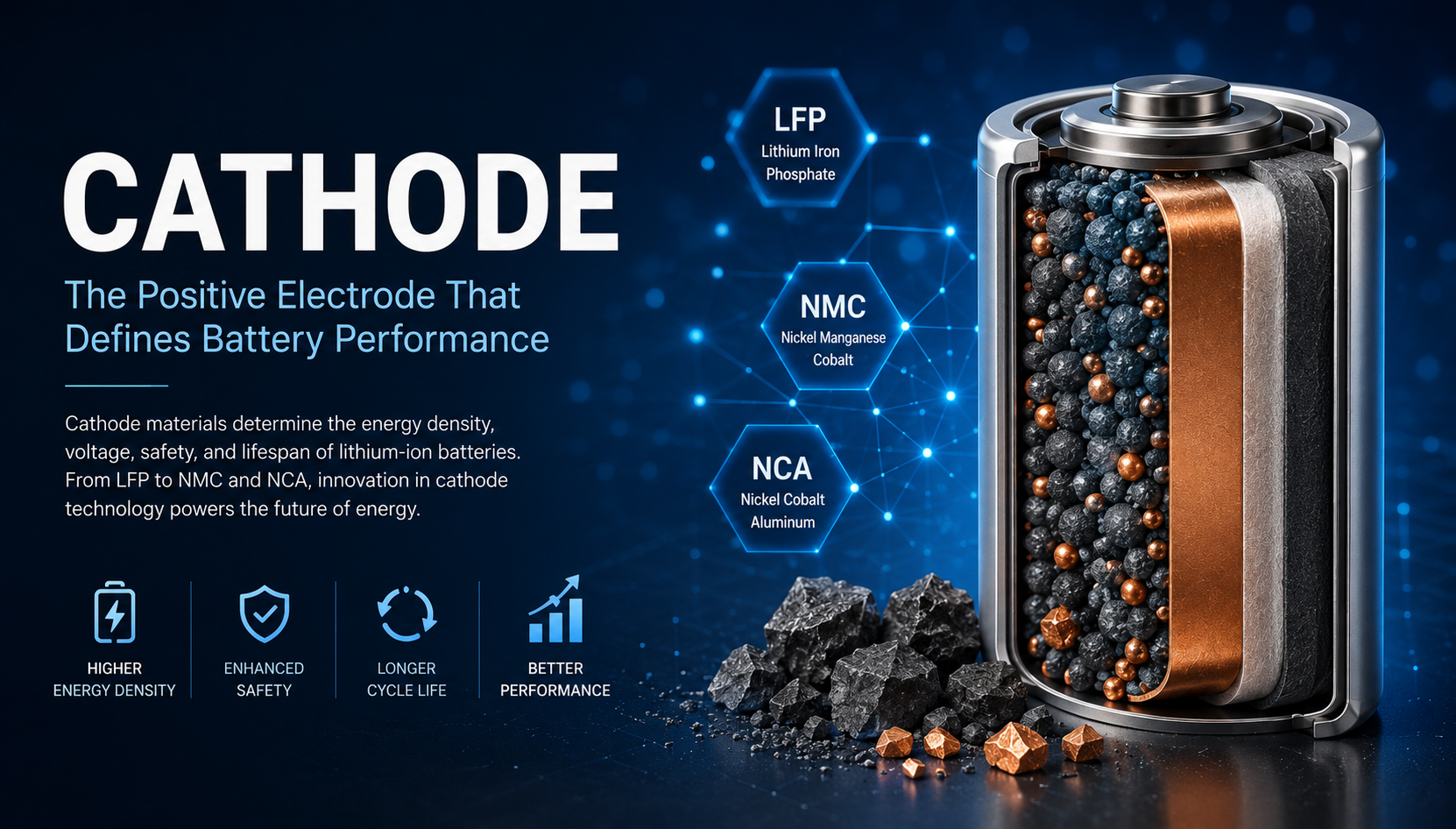
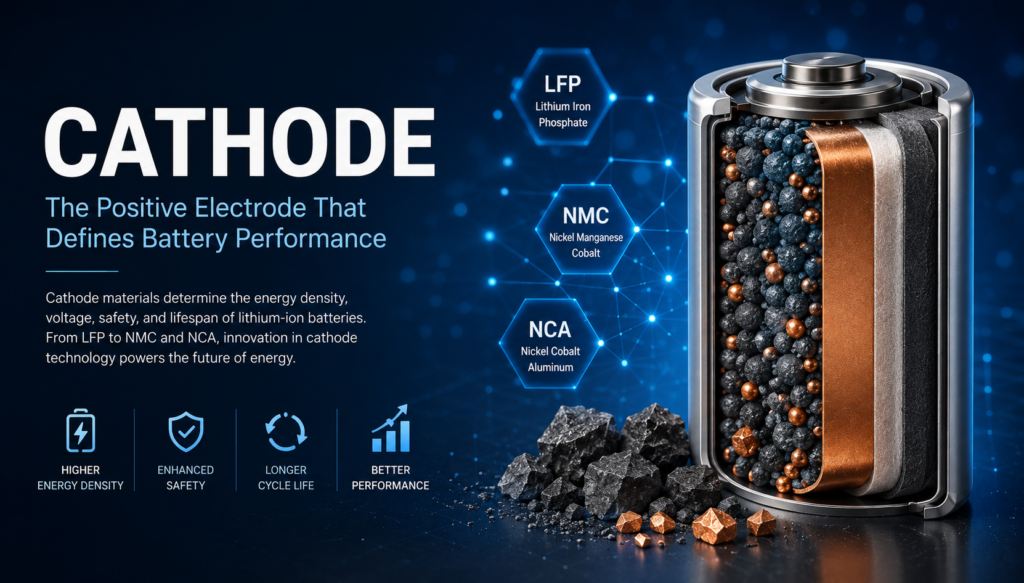
The cathode is one of the most critical components of a lithium-ion battery. Although every battery contains four essential materials—cathode, anode, electrolyte, and separator—the cathode has the greatest influence on energy density, operating voltage, safety, lifespan, and cost.
Modern battery chemistries are commonly identified by their cathode materials. Terms such as LFP (Lithium Iron Phosphate), NMC (Nickel Manganese Cobalt), and NCA (Nickel Cobalt Aluminum) all refer to different cathode compositions. As a result, understanding cathode technology is essential for understanding the entire battery industry.
At a Glance
| Category | Description |
|---|---|
| Definition | Positive electrode in a rechargeable battery |
| Main Function | Stores and releases lithium ions during charging and discharging |
| Common Materials | LFP, NMC, NCA, LCO, LMO |
| Determines | Energy density, voltage, cycle life, safety |
| Major Applications | EVs, ESS, Consumer Electronics |
What Is a Cathode?
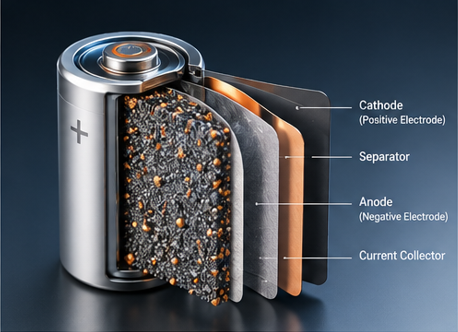
A cathode is the positive electrode of a battery during discharge.
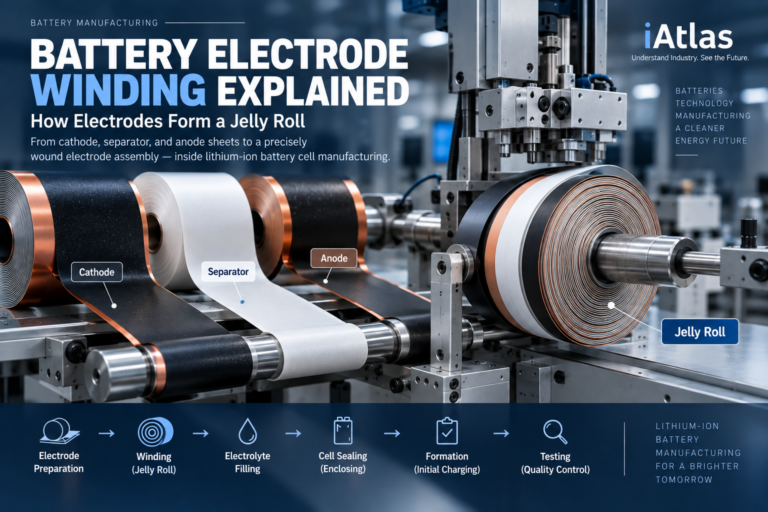
In a lithium-ion battery, lithium ions move between the cathode and anode through the electrolyte, while electrons travel through the external circuit to provide electrical power.
The cathode acts as the primary source of lithium ions and largely determines how much energy the battery can store and how safely it can operate.
How a Cathode Works
During battery operation:
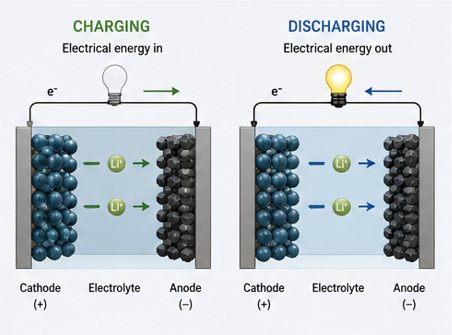
Charging
- Lithium ions leave the cathode.
- Ions move through the electrolyte.
- Lithium ions are stored in the anode.
Discharging
- Lithium ions return to the cathode.
- Electrons flow through the external circuit.
- Electrical energy is supplied to the device.
This reversible movement enables rechargeable batteries to operate over many charge-discharge cycles.
Common Cathode Materials
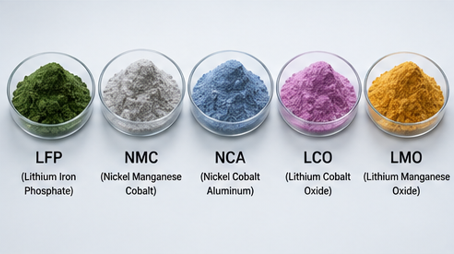
Lithium Iron Phosphate (LFP)
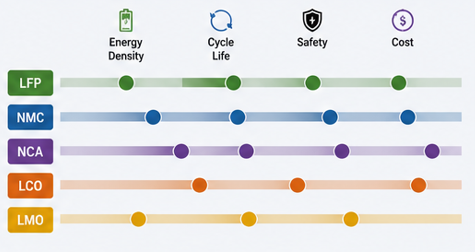
- Excellent safety
- Long cycle life
- Lower energy density
- Widely used in ESS and entry-level EVs
Nickel Manganese Cobalt (NMC)
- High energy density
- Balanced performance
- Most common EV chemistry
Nickel Cobalt Aluminum (NCA)
- Very high energy density
- Long driving range
- Premium EV applications
Lithium Cobalt Oxide (LCO)
- High energy density
- Common in smartphones and laptops
Lithium Manganese Oxide (LMO)
- High power capability
- Good thermal stability
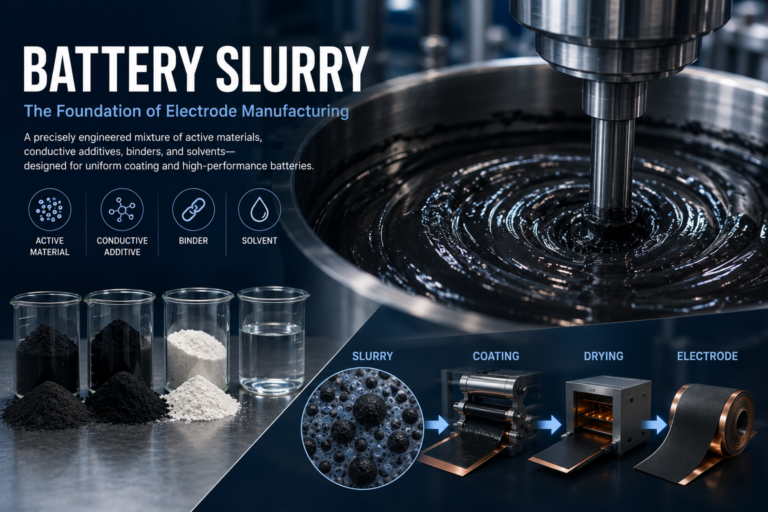
Cathode Manufacturing Process
Typical production steps include:
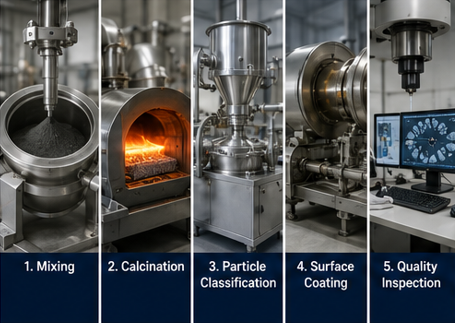
Raw Material Preparation
↓
Mixing
↓
Calcination
↓
Particle Classification
↓
Surface Coating
↓
Quality Inspection
↓
Battery Manufacturing
The quality of cathode materials directly affects battery consistency and long-term performance.
Key Performance Factors
| Parameter | Importance |
|---|---|
| Energy Density | Driving range and operating time |
| Cycle Life | Battery lifespan |
| Thermal Stability | Safety |
| Cost | Manufacturing competitiveness |
| Sustainability | Recycling and resource availability |
Applications
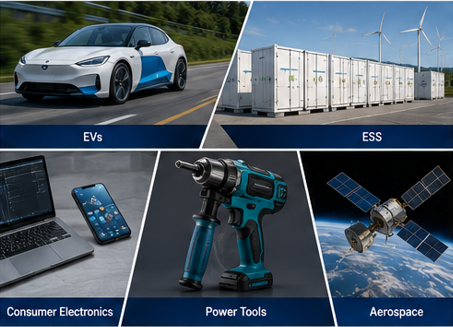
Cathode materials are widely used in:
- Electric Vehicles
- Energy Storage Systems
- Consumer Electronics
- Power Tools
- Medical Equipment
- Aerospace
- Marine Applications
Industry Ecosystem
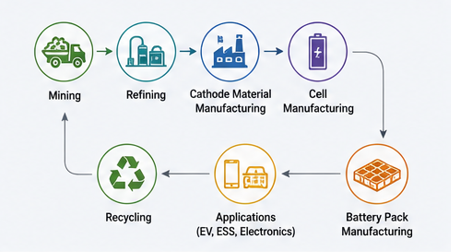
The cathode supply chain includes:
- Mining Companies
- Refining Companies
- Cathode Material Manufacturers
- Cell Manufacturers
- Battery Pack Manufacturers
- Automotive OEMs
- Battery Recycling Companies
Atlas Insight
Cathode technology is evolving rapidly toward higher nickel content, cobalt reduction, and improved sustainability.
At the same time, LFP batteries continue to gain market share because of their lower cost, longer lifespan, and enhanced safety. Future innovations will focus on higher energy density, lower environmental impact, and increased recyclability.
Did You Know?
- More than half of a lithium-ion battery’s material cost often comes from the cathode.
- LFP batteries contain no nickel or cobalt.
- NMC chemistry currently dominates many global EV platforms.
- Cathode innovation is one of the biggest drivers of battery performance improvements.
FAQ
What is a cathode?
The cathode is the positive electrode that stores and releases lithium ions.
Why is the cathode important?
It largely determines battery capacity, voltage, safety, lifespan, and cost.
Which cathode chemistry is most common?
NMC and LFP are currently the most widely used lithium-ion battery cathode chemistries.
Is the cathode the most expensive battery material?
In many lithium-ion batteries, yes. Cathode materials account for a significant portion of total cell cost.
Explore More
Fundamentals
- Battery
- Lithium-ion Battery
- Battery Cell
- Battery Module
- Battery Pack
- Battery Management System(BMS)
- Battery Thermal Management System(BTMS)
- Battery Safety
Materials
- Cathode (Current)
- Anode
- Electrolyte
- Separator
Manufacturing
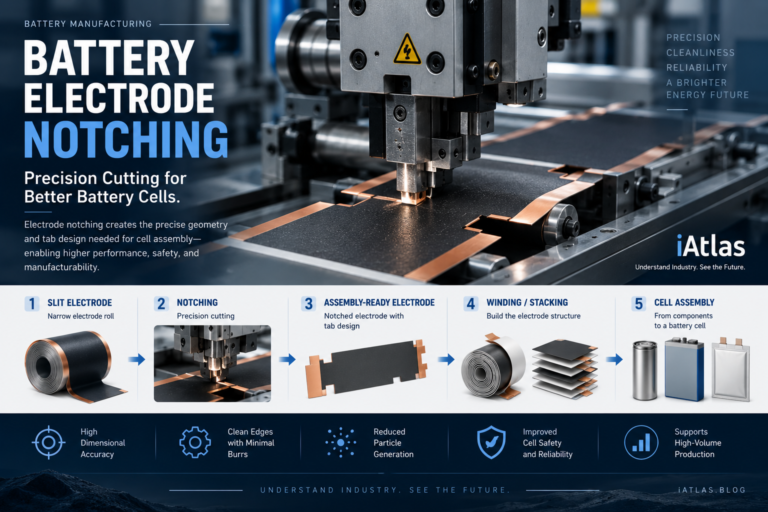
- Cell Assembly
- Module Assembly
- Pack Assembly
Technologies
- Cell-to-Pack (CTP)
- Cell-to-Chassis (CTC)
- Wireless BMS
- Thermal Runaway
- Fast Charging
References
- International Energy Agency (IEA) – Global EV Outlook 2025
- U.S. Department of Energy – Vehicle Technologies Office
- Argonne National Laboratory – Battery Research
- Nature Energy
- Journal of Power Sources
- LG Energy Solution – Battery Technology
- CATL – Technology
About iAtlas
iAtlas is an independent publication covering batteries, semiconductors, OLED, advanced materials, AI, and global industrial trends.
We transform complex industrial developments into clear, reliable, and easy-to-understand insights.
Whether you’re following today’s industry news or building long-term expertise, iAtlas helps you understand not only what happened, but why it matters.
Technology creates change.
Insight creates opportunity.
— iAtlas