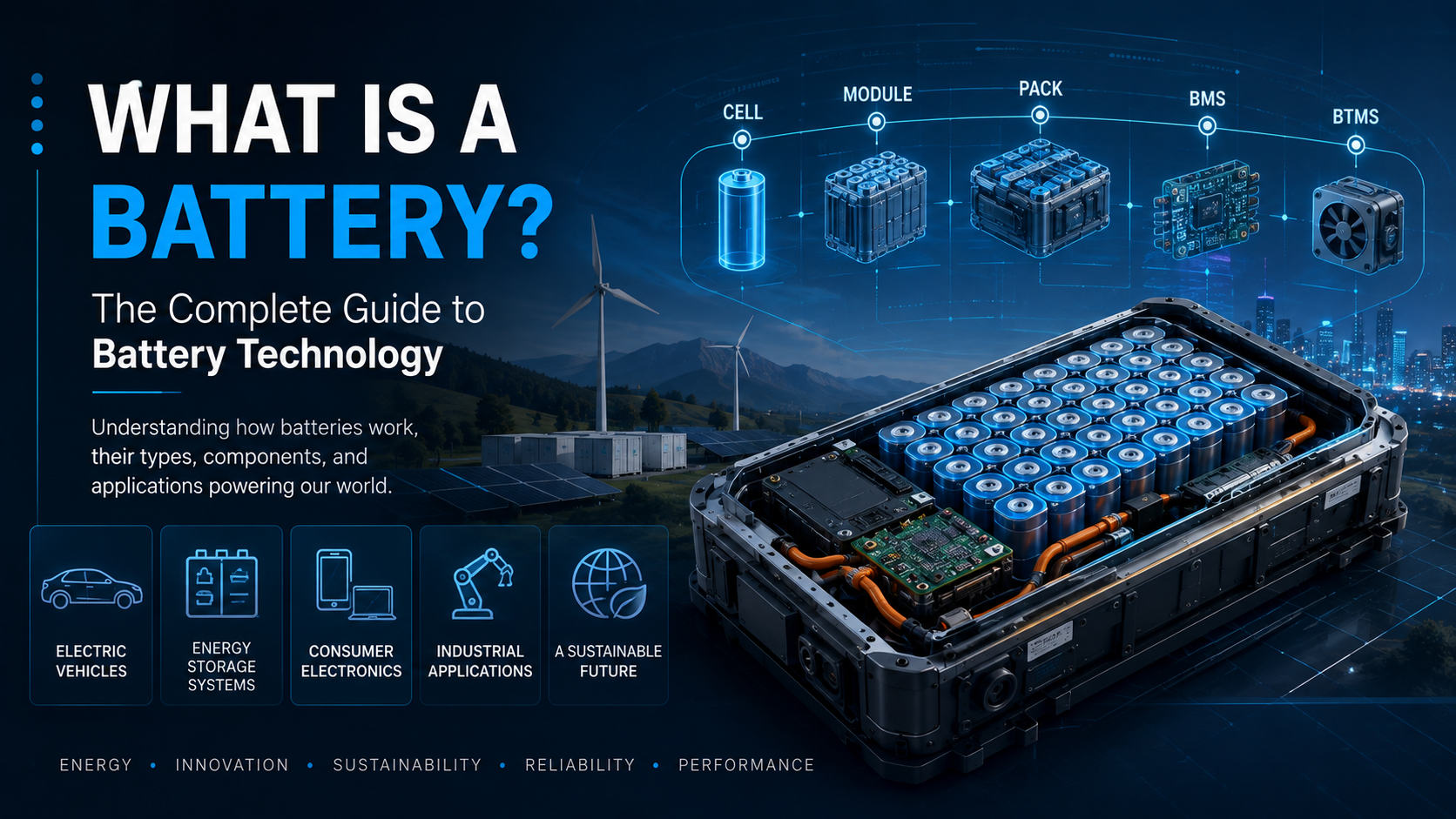
What Is a Battery? The Complete Guide to Battery Technology
Understanding How Batteries Work, Their Types, Components, and Applications
Category: Battery Technology
Content Type: Fundamentals (Pillar Page)
Related Industries: Electric Vehicles · Energy Storage Systems · Consumer Electronics · Renewable Energy
Last Updated: July 2026
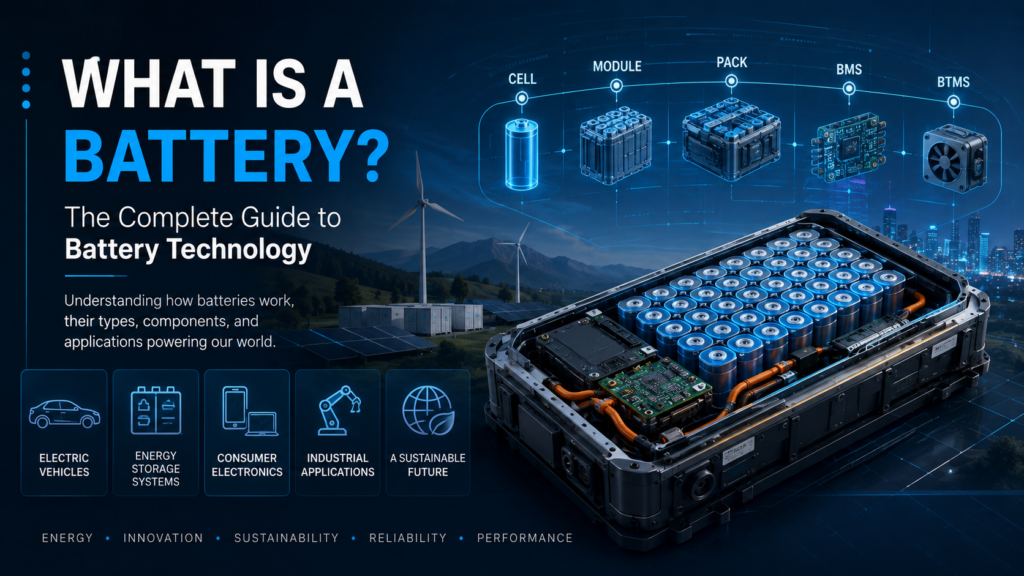
Industry Snapshot
Batteries are one of the most important technologies shaping the modern world. From smartphones and laptops to electric vehicles (EVs), renewable energy storage systems (ESS), satellites, and industrial robots, batteries enable portable, reliable, and efficient electrical power wherever it is needed.
As industries transition toward electrification and sustainability, batteries have evolved from simple energy storage devices into highly engineered systems integrating advanced materials, intelligent electronics, thermal management, and sophisticated manufacturing technologies.
Understanding batteries is no longer only for electrical engineers. Whether you work in manufacturing, automotive, energy, semiconductors, or advanced materials, battery technology has become fundamental knowledge for the future of industry.
At a Glance
| Category | Description |
|---|---|
| Definition | A device that stores chemical energy and converts it into electrical energy |
| Main Function | Store and deliver electrical power |
| Main Types | Primary Batteries, Secondary Batteries |
| Largest Markets | EVs, ESS, Consumer Electronics |
| Key Technologies | Lithium-ion, Solid-state, Sodium-ion |
| Learning Path | Battery → Cell → Module → Pack → BMS → BTMS → Safety |
What Is a Battery?
A battery is an electrochemical energy storage device that converts chemical energy into electrical energy through controlled chemical reactions.
Inside every battery, positive and negative electrodes interact with an electrolyte, allowing ions to move internally while electrons flow through an external circuit to power electrical devices.
Although batteries vary widely in size and chemistry, their fundamental operating principle remains the same: storing energy chemically and releasing it as electricity when needed.
How Does a Battery Work?
Every rechargeable battery operates through two fundamental processes.
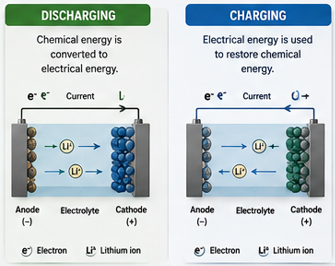
Discharging
When a battery powers a device:
- Chemical energy is converted into electrical energy.
- Electrons flow through the external circuit.
- Lithium ions move through the electrolyte between electrodes.
Charging
During charging:
- External electrical energy forces lithium ions to return to their original positions.
- Chemical energy is restored.
- The battery becomes ready for the next discharge cycle.
This reversible electrochemical process allows rechargeable batteries to be used hundreds or even thousands of times.
Types of Batteries
Batteries are broadly classified into two categories.
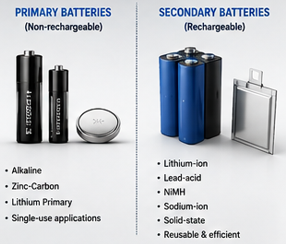
Primary Batteries
Primary batteries are designed for single-use applications and cannot be recharged after discharge.
Examples include:
- Alkaline Batteries
- Zinc-Carbon Batteries
- Lithium Primary Batteries
Typical applications include remote controls, clocks, smoke detectors, and medical devices.
Secondary Batteries
Secondary batteries are rechargeable and dominate today’s energy storage market.
Examples include:
- Lithium-ion Battery
- Lead-acid Battery
- Nickel Metal Hydride (NiMH)
- Sodium-ion Battery
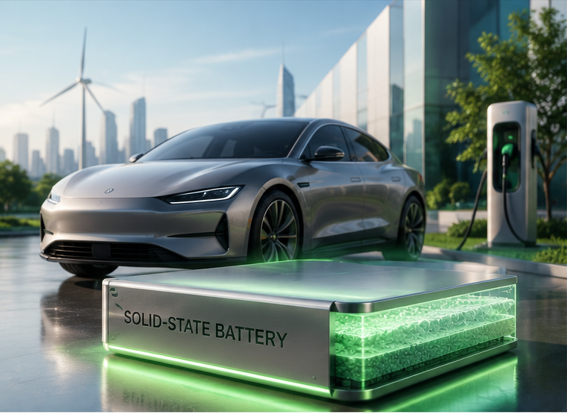
- Solid-state Battery
Rechargeable batteries are essential for EVs, ESS, laptops, smartphones, and industrial equipment.
Battery Anatomy
Modern battery systems consist of multiple levels of integration.
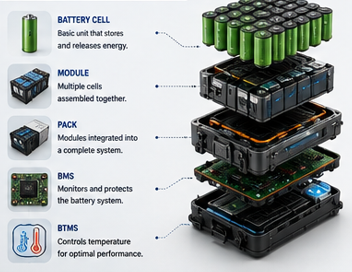
Each level has a different role.
Battery Cell
The smallest electrochemical unit where electrical energy is stored.
Battery Module
Multiple battery cells assembled into a manageable unit.
Battery Pack
Several modules integrated into a complete battery system.
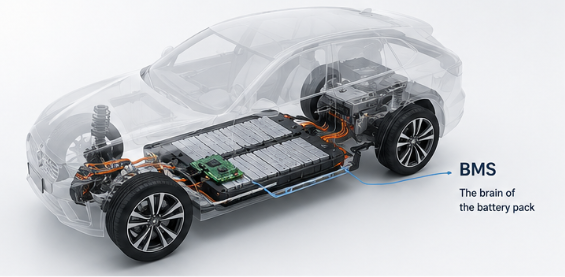
Battery Management System (BMS)
Monitors battery voltage, current, temperature, and safety.
Battery Thermal Management System (BTMS)
Controls battery temperature to maximize performance and lifespan.
Battery Materials
Battery performance depends heavily on the materials used inside the cell.
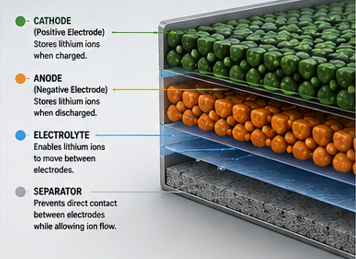
The four essential materials are:
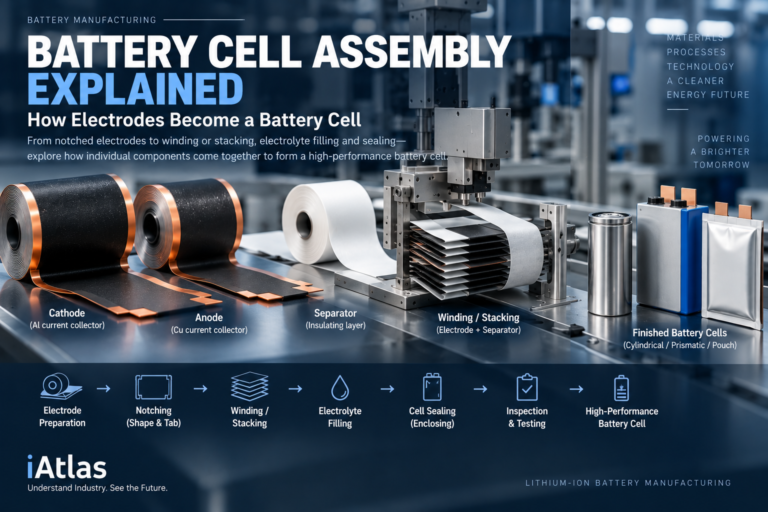
- Cathode
- Anode
- Electrolyte
- Separator
Advancements in these materials directly improve energy density, charging speed, safety, and battery lifespan.
Battery Manufacturing
Battery manufacturing involves multiple precision processes.
Typical production flow:
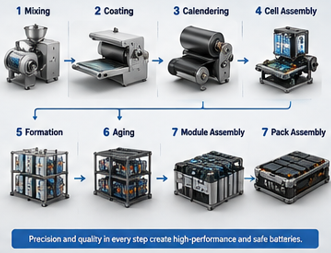
Material Mixing
↓
Electrode Coating
↓
Calendering
↓
Cell Assembly
↓
Formation
↓
Aging
↓
Module Assembly
↓
Pack Assembly
Each manufacturing step significantly influences battery quality and performance.
Why Batteries Matter
Batteries are driving the electrification of nearly every major industry.
Major applications include:
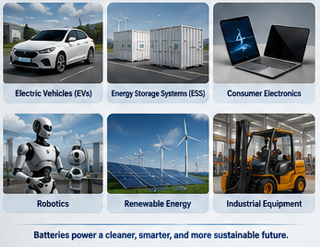
- Electric Vehicles (EVs)
- Energy Storage Systems (ESS)
- Consumer Electronics
- Robotics
- Aerospace
- Marine Applications
- AI Data Centers
- Renewable Energy Integration
As global electricity demand grows, battery technology will continue to play a central role in achieving sustainable energy systems.
Atlas Insight
The future of battery technology extends far beyond higher capacity.
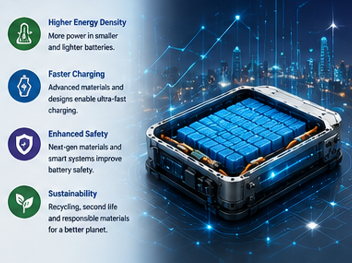
Next-generation batteries focus on improving:
- Energy Density
- Fast Charging
- Safety
- Cost Efficiency
- Sustainability
- Recycling
Emerging technologies such as Solid-state Batteries, Sodium-ion Batteries, Cell-to-Pack (CTP), and AI-powered battery management systems are expected to redefine the industry over the next decade.
Battery Learning Path
This article is the starting point of the iAtlas Battery Atlas.
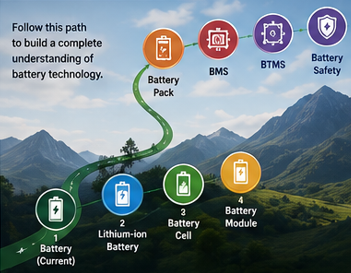
Continue learning through the following sequence:
- Lithium-ion Battery
- Battery Cell
- Battery Module
- Battery Pack
- Battery Management System (BMS)
- Battery Thermal Management System (BTMS)
- Battery Safety
Together, these articles build a complete understanding of modern battery systems—from the smallest electrochemical cell to advanced safety and thermal management technologies.
Did You Know?
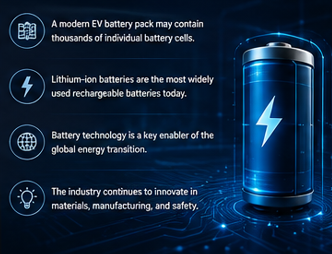
- A modern EV battery pack may contain thousands of individual battery cells.
- Lithium-ion batteries have become the dominant rechargeable battery technology due to their high energy density.
- Battery technology is considered one of the key enablers of the global energy transition.
- The battery industry continues to evolve rapidly through advances in materials, manufacturing, and intelligent battery management.
FAQ
What is a battery?
A battery is an electrochemical device that stores chemical energy and converts it into electrical energy.
What is the difference between a primary and a secondary battery?
Primary batteries are disposable, while secondary batteries can be recharged multiple times.
Why are lithium-ion batteries widely used?
They provide high energy density, long cycle life, and relatively low self-discharge.
What is inside a modern battery system?
A complete battery system includes battery cells, modules, packs, a Battery Management System (BMS), and a Battery Thermal Management System (BTMS).
Why is battery technology important?
Battery technology enables electrification across transportation, renewable energy, consumer electronics, and industrial automation.
Explore More
Fundamentals
- Battery(Current)
- Lithium-ion Battery
- Battery Cell
- Battery Module
- Battery Pack
- Battery Management System(BMS)
- Battery Thermal Management System(BTMS)
- Battery Safety
Materials
- Cathode
- Anode
- Electrolyte
- Separator
Manufacturing
- Cell Assembly
- Module Assembly
- Pack Assembly
Technologies
- Cell-to-Pack (CTP)
- Cell-to-Chassis (CTC)
- Wireless BMS
- Thermal Runaway
- Fast Charging
References
- International Energy Agency (IEA) – Global EV Outlook 2025
- U.S. Department of Energy – Vehicle Technologies Office
- Texas Instruments – Battery Management Solutions
- Analog Devices – Battery Management Systems
- LG Energy Solution – Battery Technology
About iAtlas
iAtlas is an independent publication covering batteries, semiconductors, OLED, advanced materials, AI, and global industrial trends.
We transform complex industrial developments into clear, reliable, and easy-to-understand insights.
Whether you’re following today’s industry news or building long-term expertise, iAtlas helps you understand not only what happened, but why it matters.
Technology creates change.
Insight creates opportunity.
— iAtlas