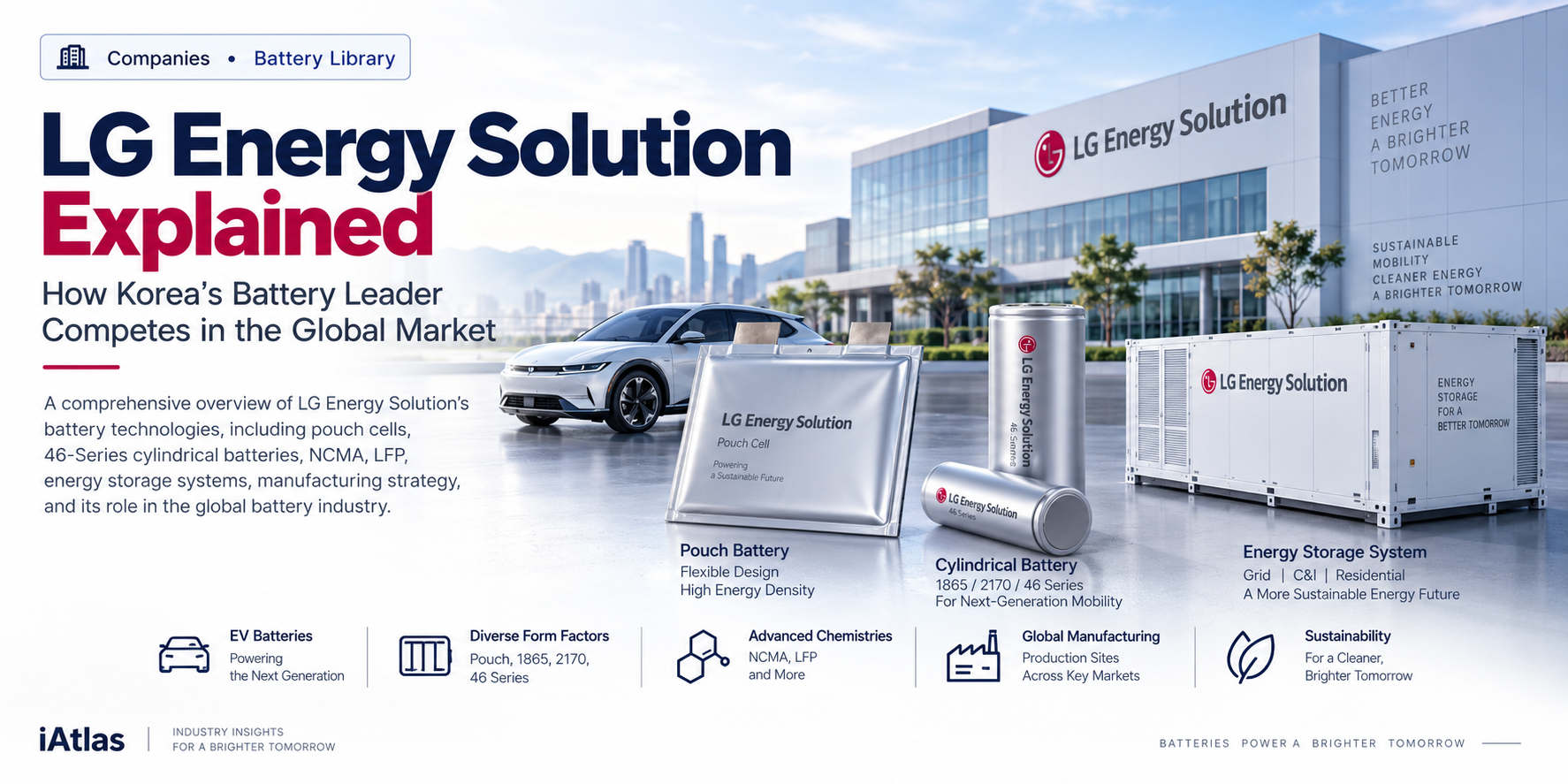
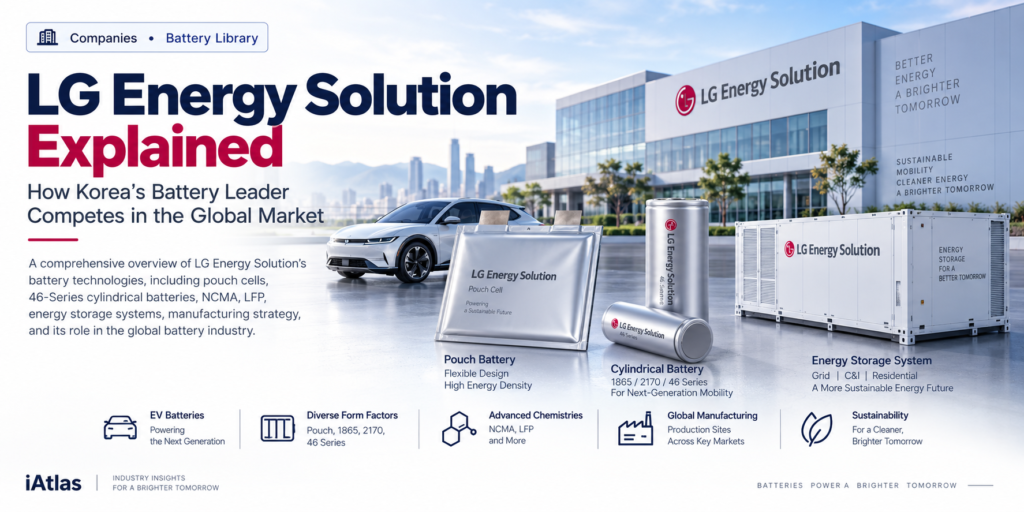
LG Energy Solution Explained: How Korea’s Battery Leader Competes in the Global Market
🔋 iAtlas Battery #32 | 🏢 Companies → LG Energy Solution
LG Energy Solution is one of the major companies shaping the global lithium-ion battery industry.
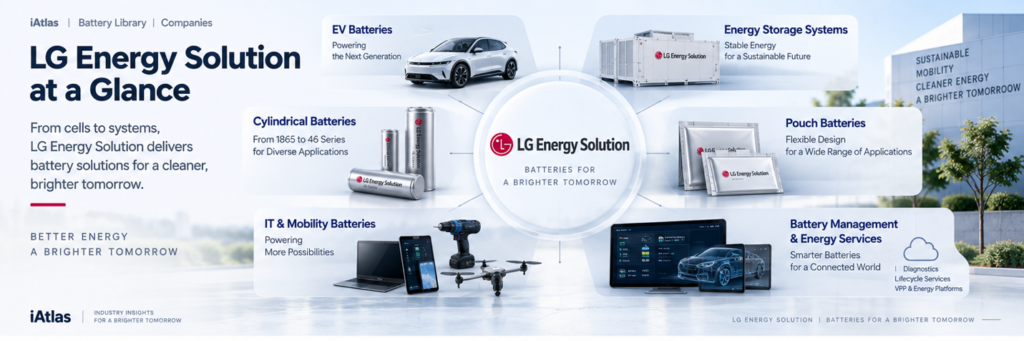
Its battery business extends across electric vehicles, energy storage systems, IT devices, light electric vehicles, and emerging applications such as robotics and future mobility. The company also operates across multiple levels of the battery system, including cells, modules, packs, and battery management systems.
What makes LG Energy Solution particularly interesting is the breadth of its strategy.
Rather than relying on a single battery format or market, the company is developing pouch batteries, cylindrical batteries including the 46 Series, multiple cathode chemistries, ESS solutions, battery-management technologies, and battery lifecycle services.
Understanding LG Energy Solution therefore provides a useful example of how a global battery manufacturer competes through technology, product diversification, manufacturing scale, customer relationships, and regional production networks.
In this article, we’ll explore LG Energy Solution’s major businesses, battery technologies, manufacturing strategy, and competitive position in the global battery industry.
Table of Contents
- What Is LG Energy Solution?
- How LG Energy Solution Built Its Battery Business
- Core Battery Business Areas
- Pouch Battery Technology
- Cylindrical Batteries and the 46 Series
- Battery Chemistry Strategy
- Energy Storage Systems
- Battery Management and Energy Services
- Global Manufacturing Strategy
- Customer and Partnership Strategy
- Manufacturing Technology and Innovation
- Battery Lifecycle and Sustainability
- What Makes LG Energy Solution Competitive?
- Key Challenges
- Frequently Asked Questions
- Key Takeaways
1. What Is LG Energy Solution?
LG Energy Solution is a South Korean battery company established as an independent corporation in December 2020 following the separation of LG Chem’s battery business.
Today, its activities extend well beyond producing individual battery cells.
Its major areas include:
- EV batteries
- Cylindrical batteries
- Pouch batteries
- Energy storage systems
- Small and IT batteries
- Battery modules and packs
- Battery management systems
- Battery lifecycle and energy services
The company currently reports production operations across six countries, reflecting the increasingly global nature of battery manufacturing.
2. How LG Energy Solution Built Its Battery Business
Although LG Energy Solution itself was established in 2020, its battery technology heritage extends through the battery operations previously developed within LG Chem.
That accumulated experience helped create capabilities across:
Materials → Cells → Modules → Packs → BMS → Energy Solutions
The company’s development also coincided with rapid growth in global EV demand.
As automakers increased investment in electrification, battery manufacturers increasingly needed to provide more than competitive cell technology.
They also needed:
- Large-scale production
- Consistent quality
- Regional manufacturing
- Long-term supply capability
- Technical collaboration with automakers
LG Energy Solution responded by developing production and customer networks across major automotive regions.
This is an important lesson in understanding modern battery competition:
Battery leadership depends not only on cell performance, but also on the ability to manufacture that technology reliably at global scale.
3. Core Battery Business Areas
LG Energy Solution’s business can broadly be understood through three major battery markets.
Advanced Automotive Batteries
EV batteries are a central part of the company’s business.
LG Energy Solution provides battery solutions extending from cells to modules, packs, BMS, and technical support for applications including passenger vehicles, buses, trucks, ships, and future mobility.
Mobility & IT Batteries
Smaller batteries are used across:
- IT devices
- Power tools
- LEVs
- Drones
- Robots
- Other emerging applications
This market is increasingly important as batteries spread beyond smartphones and laptops into a much broader range of connected and mobile devices.
Energy Storage Systems
ESS represents another major growth area.
LG Energy Solution offers solutions for applications including:
- Grid storage
- Commercial & industrial storage
- Residential storage
- UPS systems
Its current ESS portfolio includes both NCM(A) and LFP battery technologies.
4. Pouch Battery Technology
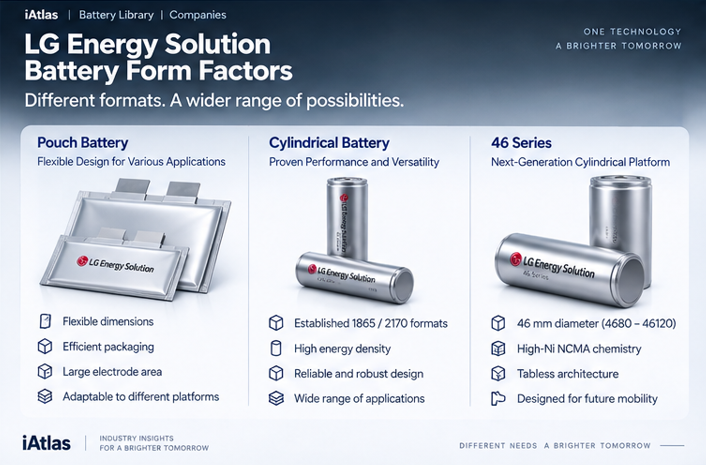
The pouch format has historically been an important part of LG Energy Solution’s battery portfolio.
Unlike cylindrical cells, pouch cells use a flexible laminated exterior rather than a rigid metal can.
This provides several potential design advantages:
- Flexible dimensions
- Efficient packaging
- Large electrode area
- Adaptability to different vehicle platforms
Pouch cells can therefore be optimized for specific applications and pack designs.
However, pouch cells also require careful engineering in areas such as:
- Mechanical support
- Swelling management
- Thermal management
- Module and pack integration
This illustrates an important principle in battery engineering:
Cell format influences not only the cell itself, but also how the entire battery system must be designed.
5. Cylindrical Batteries and the 46 Series
Cylindrical batteries are becoming an increasingly important part of LG Energy Solution’s product strategy.
The company produces established 1865 and 2170 formats while expanding its 46 Series platform.
The 46 Series uses a 46 mm diameter while allowing different cell heights for different applications. LG Energy Solution currently describes a range extending from 4680 to 46120.
The company highlights several technologies in its 46-Series platform:
- High-Ni NCMA cathode materials
- Silicon-based anode technology
- Tabless architecture
- Thermal-management improvements
- Directional venting
- Cell Array Structure (CAS)
Tabless architecture is particularly important because reducing current-path resistance can support higher output and improved electrical performance.
The larger cylindrical format also demonstrates a broader industry trend:
Battery manufacturers are increasingly optimizing chemistry, cell structure, and pack architecture together rather than treating them as separate engineering problems.
6. Battery Chemistry Strategy
Like CATL, LG Energy Solution is not relying on a single chemistry.
Different applications require different balances among:
- Energy density
- Cost
- Safety
- Power
- Cycle life
- Charging performance
High-Nickel / NCMA
High-nickel materials are particularly relevant for applications where high energy density and vehicle range are important.
LG Energy Solution’s 46-Series platform uses high-Ni NCMA technology together with silicon-based anode materials.
LFP
LFP is increasingly important for cost-sensitive EV segments and stationary energy storage.
LG Energy Solution has expanded its LFP strategy particularly aggressively in ESS and has begun localized LFP production in North America.
Mid-Nickel and Other Chemistries
The company is also broadening its chemistry portfolio to address different EV price and performance segments.
This reflects the same industry principle we saw with CATL:
The future battery market is likely to be multi-chemistry rather than dominated by one universal chemistry.
7. Energy Storage Systems
ESS is becoming increasingly important to LG Energy Solution’s growth strategy.
Stationary energy storage has different requirements from EV batteries.
An EV battery must balance:
Range + Weight + Power + Fast Charging + Safety
An ESS battery places greater emphasis on:
Cost + Cycle Life + Safety + Reliability + Energy Efficiency
LG Energy Solution currently offers ESS solutions ranging from cells through modules, packs/racks, and containers, covering grid, residential, C&I, and UPS applications.
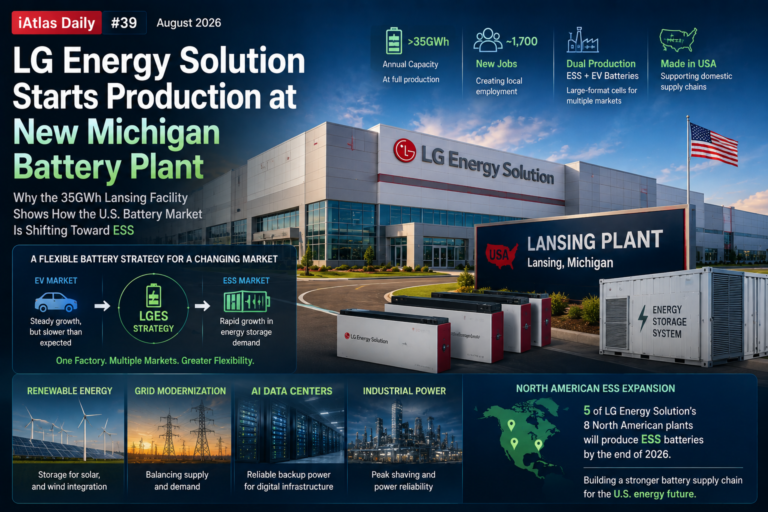
The company is also expanding LFP-based ESS production, particularly in North America.
This matters because the rapid expansion of renewable energy creates growing demand for batteries that can store electricity when generation exceeds demand and release it when needed.
Renewable Generation → Energy Storage → Grid Demand
ESS therefore gives battery manufacturers a major growth market beyond electric vehicles.
8. Battery Management and Energy Services
Modern battery competition is moving beyond hardware.
LG Energy Solution’s portfolio includes BMS technology and a growing range of battery and energy services.
These include areas such as:
- Battery condition management
- Battery diagnostics
- Battery lifecycle services
- ESS system integration
- Virtual power plant services
- Battery swapping for selected mobility applications
The company’s current service portfolio includes platforms such as B.around, B-Lifecare, B.once, KooRoo, VPP services, and ESS system integration.
This reflects an important transition:
Battery Cell Manufacturer
↓
Battery System Supplier
↓
Energy Solution Provider
As battery markets mature, data and software may become increasingly important alongside cell manufacturing.
9. Global Manufacturing Strategy
Battery manufacturing is increasingly regional.
Automakers want battery factories closer to vehicle production for several reasons:
- Lower logistics complexity
- Greater supply security
- Faster customer response
- Regional policy incentives
- Localization requirements
LG Energy Solution has therefore developed manufacturing operations across major battery markets.
Its official company profile currently identifies production sites across six countries.
North America has become particularly strategically important because of both automotive electrification and rapidly growing ESS demand.
The company has also been adapting production capacity between EV and ESS applications as market demand changes.
This flexibility highlights another important battery-industry trend:
Manufacturing capacity itself is becoming a strategic asset that can be optimized across applications and regions.
10. Customer and Partnership Strategy
Battery factories require enormous capital investment.
For this reason, battery manufacturers and automakers often form long-term supply relationships or joint ventures.
LG Energy Solution has used both approaches.
Partnership-based manufacturing can provide advantages for both sides.
For the automaker:
- More secure battery supply
- Greater production localization
- Closer technical collaboration
For the battery manufacturer:
- Long-term demand visibility
- Shared investment
- Stronger customer relationships
- Production close to vehicle factories
This approach has become one of the defining characteristics of the global EV battery industry.
Rather than competing as isolated suppliers, battery manufacturers increasingly operate as part of integrated automotive manufacturing ecosystems.
11. Manufacturing Technology and Innovation
Battery manufacturing competitiveness is not determined only by factory size.
Manufacturers must continuously improve:
- Yield
- Throughput
- Energy consumption
- Material utilization
- Automation
- Quality control
- Process consistency
LG Energy Solution is also developing dry electrode processing for its 46-Series battery platform.
Traditional electrode manufacturing commonly uses solvent-based slurry coating followed by drying.
A dry process seeks to reduce or eliminate parts of this solvent-intensive manufacturing route.
Potential advantages include:
- Reduced drying requirements
- Lower process energy consumption
- Simplified manufacturing
- Potential cost reduction
LG Energy Solution publicly identifies dry electrode commercialization as part of its 46-Series manufacturing technology strategy.
This is especially relevant to iAtlas because it connects directly with the Manufacturing and Equipment Learning Paths:
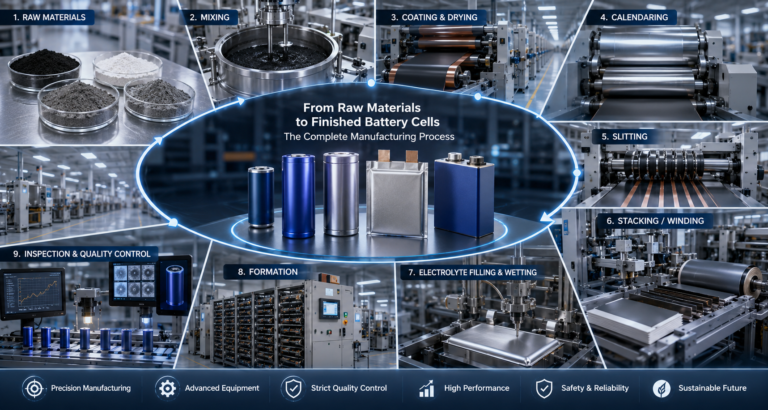
Mixing → Coating → Drying → Calendaring → Slitting → Cell Assembly
12. Battery Lifecycle and Sustainability
Battery sustainability does not end when a battery leaves the factory.
The full lifecycle includes:
Raw Materials
↓
Cell Manufacturing
↓
Vehicle / ESS Use
↓
Reuse
↓
Recycling
LG Energy Solution is developing battery lifecycle services and reuse approaches, including applications that repurpose used batteries for energy storage.
This can potentially extend the useful life of battery assets before final recycling.
Over the longer term, battery manufacturers will increasingly be evaluated not only on:
How many batteries they manufacture
but also on:
How efficiently materials and batteries move through the entire lifecycle.
13. What Makes LG Energy Solution Competitive?
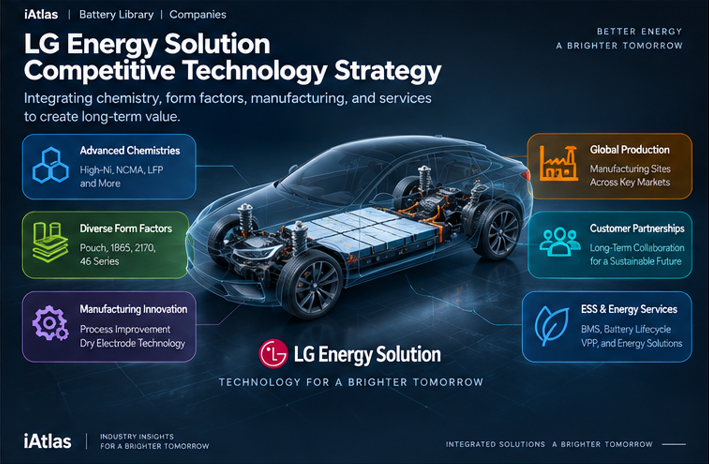
LG Energy Solution’s competitive position comes from a combination of capabilities rather than one individual technology.
Diverse Form Factors
Pouch, 1865/2170 cylindrical, and 46-Series batteries allow the company to address different applications.
Multi-Chemistry Strategy
High-nickel, NCMA, LFP, and other developing chemistries provide flexibility across market segments.
Global Manufacturing
Regional production helps support major automotive and ESS markets.
Manufacturing Technology
Process development, including dry electrode technology, can potentially improve future production economics.
System Capabilities
Cells, modules, packs, BMS, ESS integration, and services expand the company’s role beyond cell manufacturing.
Customer Relationships
Long-term partnerships and localized production strengthen integration with global automotive supply chains.
Together, these capabilities create a broader competitive system:
Technology → Customers → Manufacturing Scale → Process Improvement → Product Expansion → New Markets
14. Key Challenges
LG Energy Solution also operates in an increasingly difficult competitive environment.
EV Demand Volatility
EV growth continues, but the pace differs significantly across markets and vehicle segments.
Battery manufacturers must manage capacity while demand patterns change.
Chinese Competition
Chinese manufacturers have achieved significant scale and cost competitiveness, particularly in LFP batteries.
Battery Price Pressure
Lower battery prices benefit EV adoption but can put pressure on manufacturer profitability.
Technology Competition
The industry continues advancing in:
- Fast charging
- 46-Series cylindrical cells
- LFP
- High-nickel batteries
- Dry electrodes
- Silicon anodes
- Solid-state batteries
Manufacturing Utilization
Large battery factories are expensive assets.
Maintaining high utilization while adapting to changes in EV and ESS demand is therefore an important operational challenge.
The company’s long-term competitiveness will depend on how effectively it balances technology, cost, manufacturing flexibility, regional production, and market diversification.
15. Frequently Asked Questions
What is LG Energy Solution?
LG Energy Solution is a South Korean battery company producing batteries and related solutions for electric vehicles, energy storage, IT devices, mobility, and other applications.
Is LG Energy Solution part of LG Chem?
LG Energy Solution originated from LG Chem’s battery business and became an independent corporation in December 2020.
Does LG Energy Solution make pouch batteries?
Yes. Pouch batteries remain an important part of its portfolio across multiple applications.
Does LG Energy Solution make cylindrical batteries?
Yes. Its cylindrical portfolio includes 1865, 2170, and the newer 46-Series platform.
What is LG Energy Solution’s 46-Series battery?
It is a family of cylindrical batteries with a 46 mm diameter and multiple height options designed for different applications.
Does LG Energy Solution make LFP batteries?
Yes. LFP is part of its battery strategy, particularly in ESS, and the company has begun LFP ESS production in North America.
Is LG Energy Solution only an EV battery manufacturer?
No. It also operates in ESS, IT and mobility batteries, BMS, battery services, and other energy-related businesses.
16. Key Takeaways
- LG Energy Solution is a global battery manufacturer with businesses spanning EV, ESS, IT, and emerging applications.
- Its major form factors include pouch batteries and cylindrical batteries, including the 46 Series.
- The company is pursuing a multi-chemistry strategy, including high-nickel/NCMA and LFP technologies.
- The 46-Series platform combines innovations in materials, cell structure, thermal management, and manufacturing.
- ESS is becoming an increasingly important growth market alongside EV batteries.
- LG Energy Solution is expanding beyond cells into BMS, system integration, battery diagnostics, and energy services.
- Regional manufacturing and long-term customer partnerships are important parts of its global strategy.
- Future competitiveness will depend on balancing technology, cost, manufacturing utilization, product diversification, and global production.
Editorial Note: iAtlas is an independent publication and is not affiliated with LG Energy Solution. Company and product information in this article is based on publicly available sources.
📚 Key Terms
LG Energy Solution
A global battery manufacturer headquartered in South Korea, producing batteries and energy solutions for electric vehicles, energy storage systems, IT devices, and other applications.
Pouch Cell
A lithium-ion battery format that uses a flexible laminated exterior instead of a rigid metal casing, allowing greater flexibility in cell dimensions and battery-pack design.
Cylindrical Cell
A battery cell enclosed in a cylindrical metal casing. LG Energy Solution’s portfolio includes 1865, 2170, and 46-Series cylindrical batteries.
46 Series
LG Energy Solution’s large-format cylindrical battery platform based on a 46 mm cell diameter, designed to support different cell heights and applications.
NCMA
A cathode chemistry based primarily on nickel, cobalt, manganese, and aluminum. High-nickel NCMA can support high energy density for applications such as EV batteries.
LFP
Lithium iron phosphate, a cathode chemistry valued for its thermal stability, cycle life, and cost characteristics.
BMS
Battery Management System. An electronic system that monitors and manages battery conditions such as voltage, temperature, state of charge, and safety.
ESS
Energy Storage System. A system that stores electrical energy for later use in grid, commercial, industrial, residential, and other applications.
Dry Electrode Process
An electrode-manufacturing approach designed to reduce or eliminate solvent-dependent processing and associated drying requirements.
🎓 Battery Learning Path
🏢 Companies
✔ iAtlas Battery #31 — CATL
📍 iAtlas Battery #32 — LG Energy Solution (Current)
▶ iAtlas Battery #33 — Panasonic Energy
▶ iAtlas Battery #34 — Samsung SDI
▶ iAtlas Battery #35 — SK On
▶ iAtlas Battery #36 — BYD / FinDreams Battery
View Full Battery Companies Learning Path →
Welcome to the Battery Companies Learning Path, where you’ll explore the companies shaping the global battery industry—from established cell manufacturers to emerging battery makers and next-generation technology companies.
What You’ll Explore
The Companies Learning Path is organized around four major groups:
Global Battery Leaders
CATL · LG Energy Solution · Panasonic Energy · Samsung SDI · SK On · BYD
Major & Emerging Battery Manufacturers
EVE Energy · CALB · Gotion High-Tech · Sunwoda · REPT BATTERO · Farasis Energy · SVOLT Energy · AESC
Global Battery Manufacturing Ventures
Prime Planet Energy & Solutions · ACC · PowerCo · Ultium Cells
Next-Generation Battery Companies
Solid Power · QuantumScape · Factorial Energy · ProLogium · SES AI · Amprius Technologies
🏭 Previous Learning Path — Manufacturing
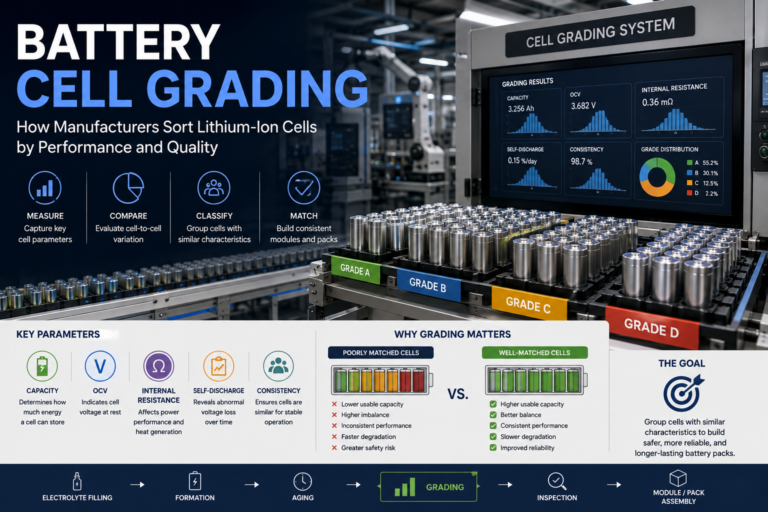
Before exploring battery companies, the Manufacturing Learning Path examined how lithium-ion cells are produced, stabilized, evaluated, and prepared for use.
Battery Manufacturing Process
↓
Formation
↓
Battery Aging
↓
Cell Grading
↓
Inspection & Quality Control
Together, the Manufacturing and Companies paths connect how batteries are made with who is developing and manufacturing them at industrial scale.
📖 Continue Reading
⬅ Previous Article
🔋 iAtlas Battery #31 — CATL
Learn how CATL combines battery chemistry, Cell-to-Pack technology, manufacturing scale, energy storage, and supply-chain capabilities.
➡ Next Article
🔋 iAtlas Battery #33 — Panasonic Energy
Explore Panasonic Energy’s cylindrical battery strategy, automotive partnerships, manufacturing capabilities, and role in the global EV battery market.
📚 Related Articles
- 🔋 Battery Cell Formats Explained
- 🔋 Battery Pack Architecture Explained
- 🔋 Battery Management System Explained
- 🔋 Battery Thermal Management Explained
- 🔋 LFP Battery Explained
- 🔋 NCM Battery Explained
- 🔋 Sodium-Ion Battery Explained
- 🔋 Cell-to-Pack Technology Explained
- 🔋 Battery Manufacturing Process Explained
🔗 References
For this article, I recommend prioritizing LG Energy Solution’s primary sources, followed by independent industry and research sources.
Primary Sources
Industry & Research Sources
- International Energy Agency — Global EV Outlook 2026
- SNE Research — Battery & EV Market Insights
- Argonne National Laboratory
🔷 About iAtlas
iAtlas is an independent publication dedicated to making industrial knowledge more accessible.
From batteries and semiconductors to advanced materials, AI, and global manufacturing, iAtlas transforms complex technologies into practical, easy-to-understand insights.
Whether you’re following today’s industry news or building long-term expertise, iAtlas helps you understand not only what happened, but why it matters.
Technology creates change.
Insight creates opportunity.
— iAtlas