LG Energy Solution Starts Production at New Michigan Battery Plant
Why the 35GWh Lansing Facility Shows How the U.S. Battery Market Is Shifting Toward ESS
📰 iAtlas Daily #39 | August 2026
📰 What Happened?
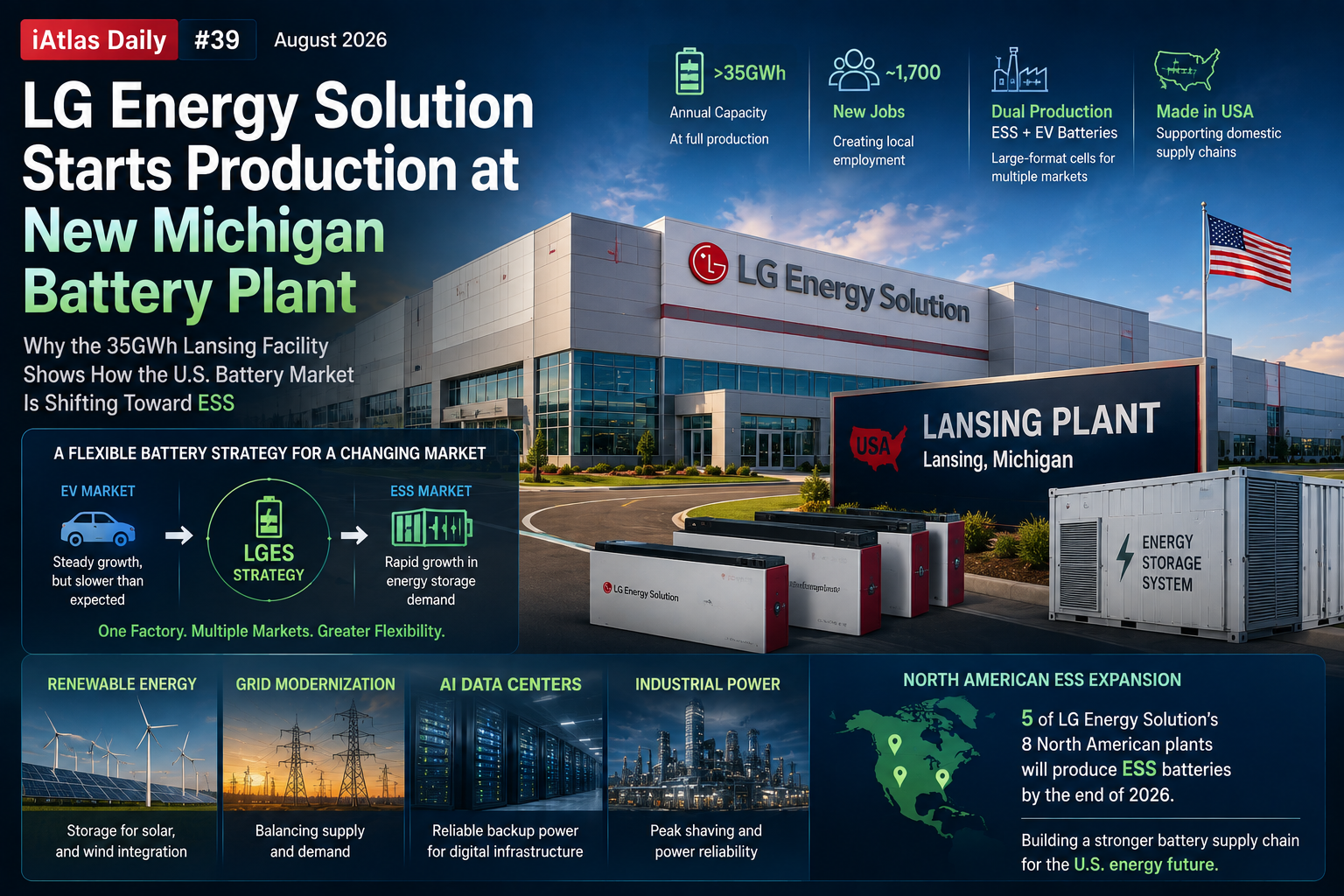
LG Energy Solution has started production at its new battery manufacturing facility in Lansing, Michigan, marking another major expansion of its North American manufacturing network.
The 226-acre facility officially began production on August 18.
At full-scale production, the plant is expected to reach more than 35GWh of annual battery manufacturing capacity and employ approximately 1,700 people.
But what makes the Lansing plant particularly interesting is what it will produce.
Unlike battery factories built primarily around electric vehicles, the new facility is designed to manufacture large-format batteries for both:
- Energy Storage Systems (ESS)
- Electric Vehicles (EVs)
That dual-purpose strategy reflects a major change taking place across the battery industry.
The next generation of battery factories may need to serve more than one market.
🔋 Why the Lansing Plant Matters
For much of the past decade, North American battery investment was driven overwhelmingly by expectations of rapid EV growth.
Battery manufacturers and automakers committed billions of dollars to new gigafactories.
But the market has evolved.
EV demand continues to grow, but more slowly and unevenly than many manufacturers originally expected.
At the same time, demand for large-scale stationary energy storage is accelerating.
That is creating a new manufacturing equation:
EV Demand + ESS Demand = More Flexible Battery Manufacturing
LG Energy Solution’s Lansing facility is a clear example of this transition.
Rather than depending on a single end market, the plant can support both transportation and energy infrastructure.
🏭 More Than 35GWh of New U.S. Capacity
The scale of the Lansing facility is significant.
At full production, LG Energy Solution expects the plant to exceed 35GWh of annual capacity.
The company says the facility will manufacture large-format cells and support customers seeking batteries that meet U.S. domestic-content requirements.
The plant also strengthens LG Energy Solution’s already extensive North American manufacturing network.
But capacity alone is not the most important point.
What matters is how that capacity can be used.
As the balance between EV and ESS demand changes, manufacturers increasingly need factories capable of responding to changing market conditions.
That flexibility could become a major competitive advantage.
⚡ ESS Is Becoming a Second Growth Engine
The battery industry’s first major growth engine was the electric vehicle.
Its second may be stationary energy storage.
ESS demand is being supported by several structural trends:
☀️ Renewable Energy
Solar and wind generation require storage to balance fluctuations in electricity production.
🔌 Grid Modernization
Electricity networks need additional flexibility as renewable generation and distributed energy resources expand.
💻 AI Data Centers
Rapid data-center construction is creating enormous new electricity demand and increasing interest in reliable backup and energy-storage systems.
🏭 Industrial Power
Factories and commercial facilities increasingly use batteries for backup power, peak management and energy-cost optimization.
Together, these applications are creating a battery market that extends far beyond transportation.
🔄 LG Energy Solution Is Rebalancing Its U.S. Strategy
The Lansing plant is not an isolated investment.
LG Energy Solution is increasingly repositioning its North American manufacturing network around ESS.
Reuters reported that five of LG Energy Solution’s eight North American factories are expected to produce ESS batteries by the end of 2026.
That represents a substantial strategic shift for a company whose North American expansion was originally centered heavily on EV batteries.
The objective is not necessarily to abandon EVs.
Instead, LG Energy Solution is attempting to diversify its manufacturing base.
The emerging strategy looks more like:
EV + ESS + Grid Infrastructure + AI Data Centers
This gives the company multiple potential sources of battery demand.
🧪 LFP Changes the Manufacturing Equation
The ESS expansion also brings another important change:
battery chemistry.
Korean battery manufacturers historically built much of their competitive position around nickel-rich chemistries such as NCM and NCMA.
These chemistries provide high energy density, making them attractive for electric vehicles.
Stationary energy storage has different priorities.
ESS applications typically place greater emphasis on:
- Cost
- Cycle life
- Safety
- Durability
- Thermal stability
That makes Lithium Iron Phosphate (LFP) particularly attractive.
LG Energy Solution is therefore expanding LFP production capabilities in North America as part of its ESS strategy.
This is strategically important because LFP has historically been dominated by Chinese battery manufacturers.
🇺🇸 Why Local LFP Production Matters
China currently dominates the global LFP battery supply chain.
That includes not only cells but also many of the materials required to manufacture them.
For U.S. customers, however, supply-chain localization and domestic-content requirements are becoming increasingly important.
That creates an opportunity for Korean manufacturers.
Producing LFP batteries in North America could allow LG Energy Solution to combine:
LFP Economics + Local Manufacturing + U.S. Customer Access
If successful, this could create a stronger competitive position against imported battery products.
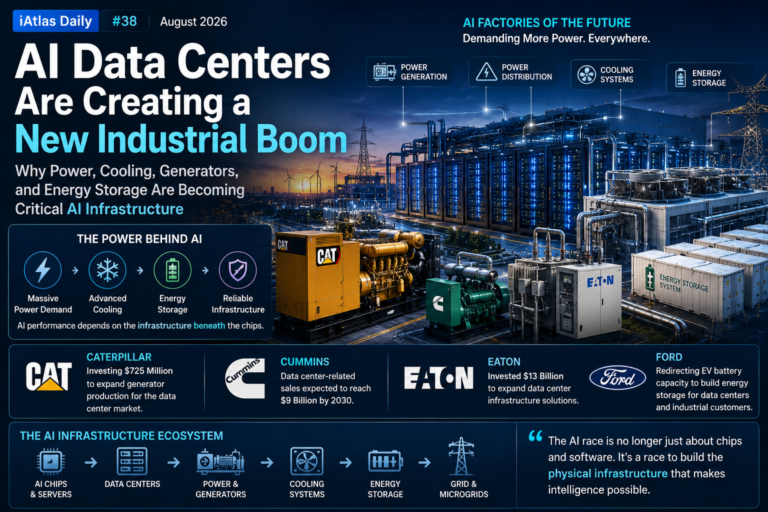
🔗 AI Is Connecting Batteries and Data Centers
The Lansing announcement also connects directly with another major industrial trend.
AI data centers.
The rapid expansion of AI computing is increasing demand for electricity at an extraordinary rate.
Data centers require:
Grid Power -> Power Distribution -> Backup Generation -> Energy Storage -> Cooling
Battery storage can play several roles in this infrastructure.
It can provide backup power, support grid stability, manage peak demand and integrate renewable generation.
This means the AI investment cycle is beginning to create demand in an industry that initially appears unrelated:
batteries.
🏭 Battery Factories Are Becoming Infrastructure Factories
This changes how gigafactories should be understood.
The first generation of battery factories was closely associated with automotive production.
A battery plant was often built around a specific automaker, vehicle platform or EV program.
The emerging model is broader.
A modern battery factory may supply:
🚗 Transportation
Electric vehicles and commercial vehicles.
⚡ Electricity Infrastructure
Utility-scale energy storage.
💻 Digital Infrastructure
Data centers and AI facilities.
🏭 Industrial Infrastructure
Factories, microgrids and commercial energy systems.
The battery industry is gradually moving from the automotive supply chain into the broader energy infrastructure supply chain.
🌎 North America Is Becoming an ESS Battleground
This shift could make North America particularly important.
The region already has enormous investment underway across:
- AI data centers
- Renewable energy
- Grid modernization
- Semiconductor manufacturing
- Advanced manufacturing
All of these industries require reliable electricity.
As electricity demand rises, energy storage becomes more valuable.
LG Energy Solution is therefore not simply adding another battery factory.
It is positioning manufacturing capacity near what could become one of the world’s largest emerging ESS markets.
📈 Industry Impact
🔋 Battery Manufacturers
ESS provides an additional growth market and can help manufacturers utilize capacity originally planned around faster EV growth.
🧪 Battery Materials
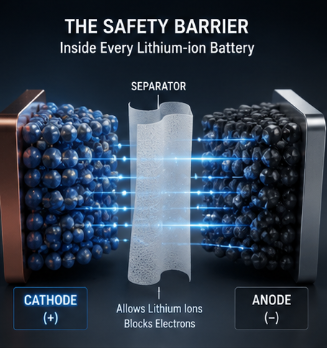
More LFP production creates demand across cathode materials, graphite, electrolytes, separators and lithium supply chains.
⚙️ Battery Equipment
New production and line conversions require coating, calendaring, stacking, assembly, formation, grading and inspection equipment.
⚡ Energy Infrastructure
Battery manufacturers increasingly become suppliers to utilities, renewable-energy developers and data centers.
💻 AI Infrastructure
The AI boom could indirectly become an important source of battery demand as electricity and backup-power requirements expand.
👀 What to Watch
Several developments will show how significant LG Energy Solution’s ESS pivot becomes:
- Lansing production ramp
- LFP production volumes
- ESS customer announcements
- North American ESS contracts
- Utilization of existing EV battery plants
- Data-center battery deployments
- U.S. battery-content requirements
- Chinese LFP competition
One number deserves particular attention:
How much of LG Energy Solution’s North American capacity eventually serves ESS rather than EVs?
The answer could tell us how fundamentally the battery market is changing.
🎯 Atlas Insight
The battery industry is no longer defined by a single growth story.
For the past decade, the equation was simple:
Battery = EV
That equation is breaking apart.
The emerging battery economy looks more like:
Battery -> EV + ESS + Grid + Data Center + Industrial Power
LG Energy Solution’s new Lansing factory illustrates this transition.
Its importance is not simply that another 35GWh of manufacturing capacity has entered the market.
It is that this capacity can serve both transportation and energy infrastructure.
That flexibility may become increasingly valuable as electricity demand rises and EV growth becomes less predictable.
The first battery gigafactory boom was built around the automobile.
The next one may increasingly be built around the entire electricity economy.
📚 Related Articles
📰 iAtlas Daily #31 | China Expands Its Lead in the Global EV Battery Market
📰 iAtlas Daily #37 | Samsung SDI Takes Full Control of GM Battery Plant
📰 iAtlas Daily #38 | AI Data Centers Are Creating a New Industrial Boom
📊 iAtlas Weekly #7 | Technology Demand Is Becoming Factory Demand
Sources
- LG Energy Solution — Start of Production at New Lansing Battery Plant
- Reuters — LG Energy Solution Shifts North American Battery Strategy Toward ESS
About iAtlas
iAtlas is an independent publication covering batteries, semiconductors, OLED, advanced materials, AI, and global industrial trends.
We transform complex industrial developments into clear, reliable, and easy-to-understand insights.
Whether you’re following today’s industry news or building long-term expertise, iAtlas helps you understand not only what happened, but why it matters.
Technology creates change.
Insight creates opportunity.
— iAtlas