Battery Management System (BMS) Explained: The Brain of Every Lithium-ion Battery
🔋 iAtlas Battery #10 | 🔋 Cell Design → 🧠 Battery Management System (BMS)
Introduction
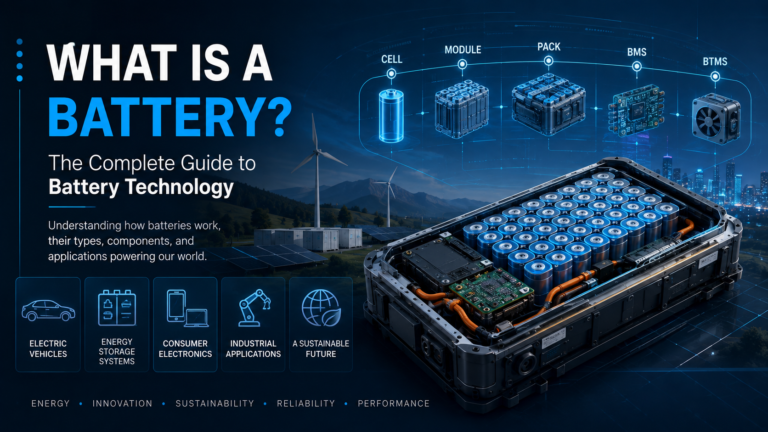
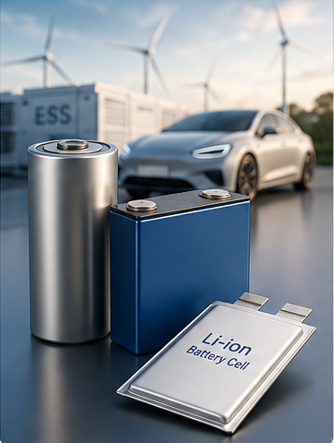
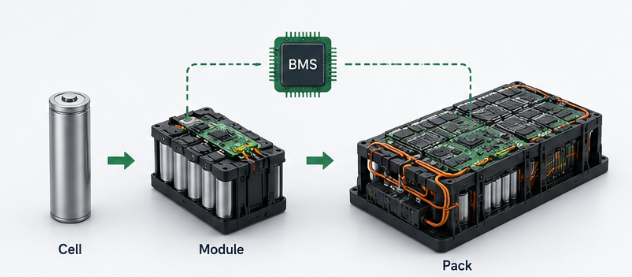
A lithium-ion battery pack contains hundreds or even thousands of individual battery cells.
Without proper control, differences in voltage, temperature, and state of charge can reduce battery life or even create serious safety risks.
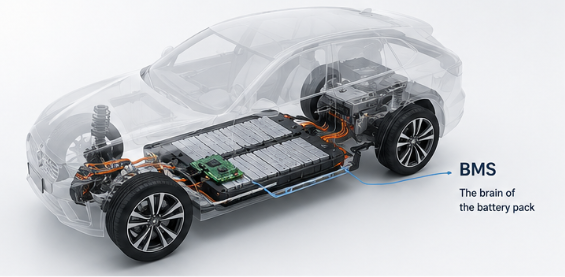
A Battery Management System (BMS) acts as the brain of the battery pack by continuously monitoring every cell, balancing performance, and protecting the battery from abnormal operating conditions.
Modern electric vehicles simply could not operate safely without a BMS.
Table of Contents
- What Is a Battery Management System?
- Why Is a BMS Important?
- Main Functions of a BMS
- Cell Balancing
- Hardware Components
- Future Trends
- Frequently Asked Questions
What Is a Battery Management System?
A Battery Management System (BMS) is an electronic control system responsible for monitoring and managing lithium-ion battery packs.
Its primary role is to ensure that every battery cell operates within a safe operating range.
A BMS collects real-time information such as:
- Cell voltage
- Pack voltage
- Current
- Temperature
- State of Charge (SOC)
- State of Health (SOH)
It then uses this information to optimize battery performance and protect the system.
Why Is a BMS Important?
Individual battery cells naturally develop small differences over time.
Without monitoring, these differences grow larger and can cause:
- Capacity loss
- Reduced driving range
- Faster degradation
- Cell overheating
- Thermal runaway
The BMS prevents these problems before they become dangerous.
Main Functions of a BMS
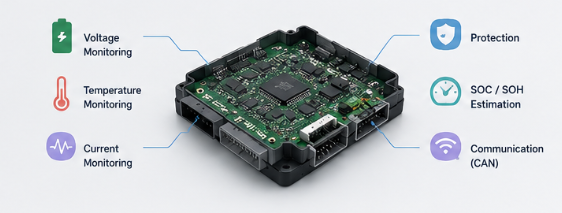
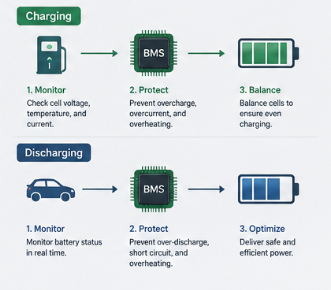
A modern BMS performs several critical tasks.
Battery Monitoring
Measures voltage, current, and temperature in real time.
Safety Protection
Disconnects the battery during:
- Overcharge
- Over-discharge
- Overcurrent
- Short circuit
- Overheating
SOC Estimation
Calculates the remaining battery capacity.
SOH Estimation
Evaluates long-term battery degradation.
Communication
Exchanges data with:
- Vehicle Control Unit (VCU)
- Charger
- Motor controller
Cell Balancing
No two battery cells are exactly identical.
Small voltage differences gradually appear after repeated charging cycles.
Cell balancing keeps every cell at nearly the same voltage.
There are two common methods.
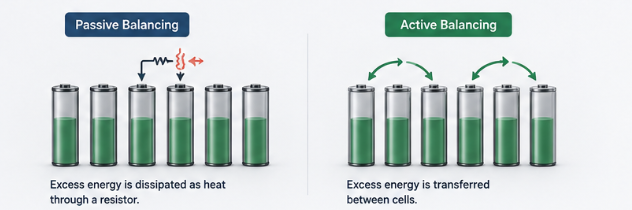
Passive Balancing
- Simpler
- Lower cost
- Dissipates excess energy as heat
Active Balancing
- Transfers energy between cells
- Higher efficiency
- More complex and expensive
Hardware Components
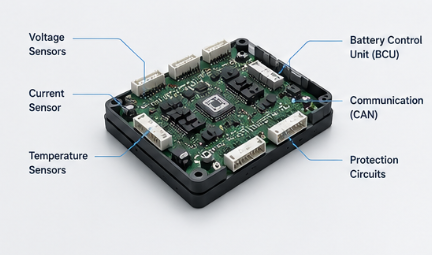
A typical BMS includes:
- Voltage sensors
- Current sensor
- Temperature sensors
- Battery Control Unit (BCU)
- Communication interface (CAN)
- Protection circuits
Together, these components continuously monitor battery health.
Future Trends
As EV batteries become larger and more advanced, BMS technology is evolving.
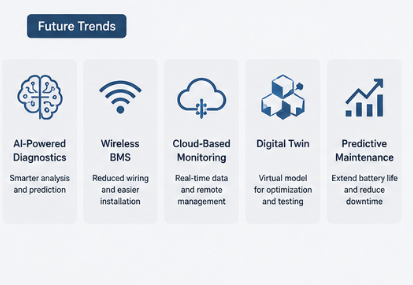
Current industry trends include:
- AI-assisted battery diagnostics
- Wireless BMS
- Cloud-based battery monitoring
- Digital twin technology
- Predictive maintenance
Companies such as Tesla, CATL, LG Energy Solution, and Bosch continue investing in next-generation BMS technologies.
Frequently Asked Questions
What does a Battery Management System do?
A BMS monitors battery voltage, temperature, and current while protecting the battery from unsafe operating conditions.
Why is cell balancing important?
Cell balancing keeps battery cells at similar voltages, improving battery lifespan and overall performance.
What is the difference between SOC and SOH?
SOC (State of Charge) indicates the remaining battery capacity.
SOH (State of Health) measures battery aging and long-term condition.
Can an EV operate without a BMS?
No.
Modern lithium-ion battery packs require a BMS to ensure safe charging, discharging, and overall battery protection.
Key Takeaways
- A Battery Management System (BMS) is the brain of a lithium-ion battery pack.
- It continuously monitors voltage, current, and temperature.
- Cell balancing improves battery lifespan and consistency.
- A BMS protects batteries from overcharge, overheating, and other dangerous conditions.
- Future BMS technologies are becoming smarter through AI and wireless communication.
🎓 Battery Learning Path
🔋 Cell Design
✅🔋 iAtlas Battery #8 — Cell Formats
✅🔋 iAtlas Battery #9 — Battery Pack Architecture
📍 🔋 iAtlas Battery #10 — Battery Management System (BMS) (Current)
▶ 🔋 iAtlas Battery #11 — Thermal Management
▶ 🔋 iAtlas Battery #12 — Cell-to-Pack (CTP) & Cell-to-Chassis (CTC)
Prerequisite: Complete the 📘 Fundamentals and 🧪 Materials learning paths before starting 🔋 Cell Design.
📖 Continue Reading
⬅ Previous Article
🔋 iAtlas Battery #9
Battery Pack Architecture Explained: Modules, Packs, and Cell-to-Pack (CTP)
Learn how individual battery cells are assembled into modules and battery packs, and discover why Cell-to-Pack (CTP) technology is transforming modern EV battery design.
➡ Next Article
🔋 iAtlas Battery #11
Battery Thermal Management Explained: Keeping EV Batteries Safe and Efficient
Discover how battery thermal management systems regulate temperature, improve charging performance, and prevent overheating in lithium-ion batteries.
References
- International Energy Agency (IEA)
- U.S. Department of Energy – Vehicle Technologies Office
- Battery University
- Nature Energy (Battery Manufacturing Research)
About iAtlas
iAtlas is an independent publication covering batteries, semiconductors, OLED, advanced materials, AI, and global industrial trends.
We transform complex industrial developments into clear, reliable, and easy-to-understand insights.
Whether you’re following today’s industry news or building long-term expertise, iAtlas helps you understand not only what happened, but why it matters.
Technology creates change.
Insight creates opportunity.
— iAtlas