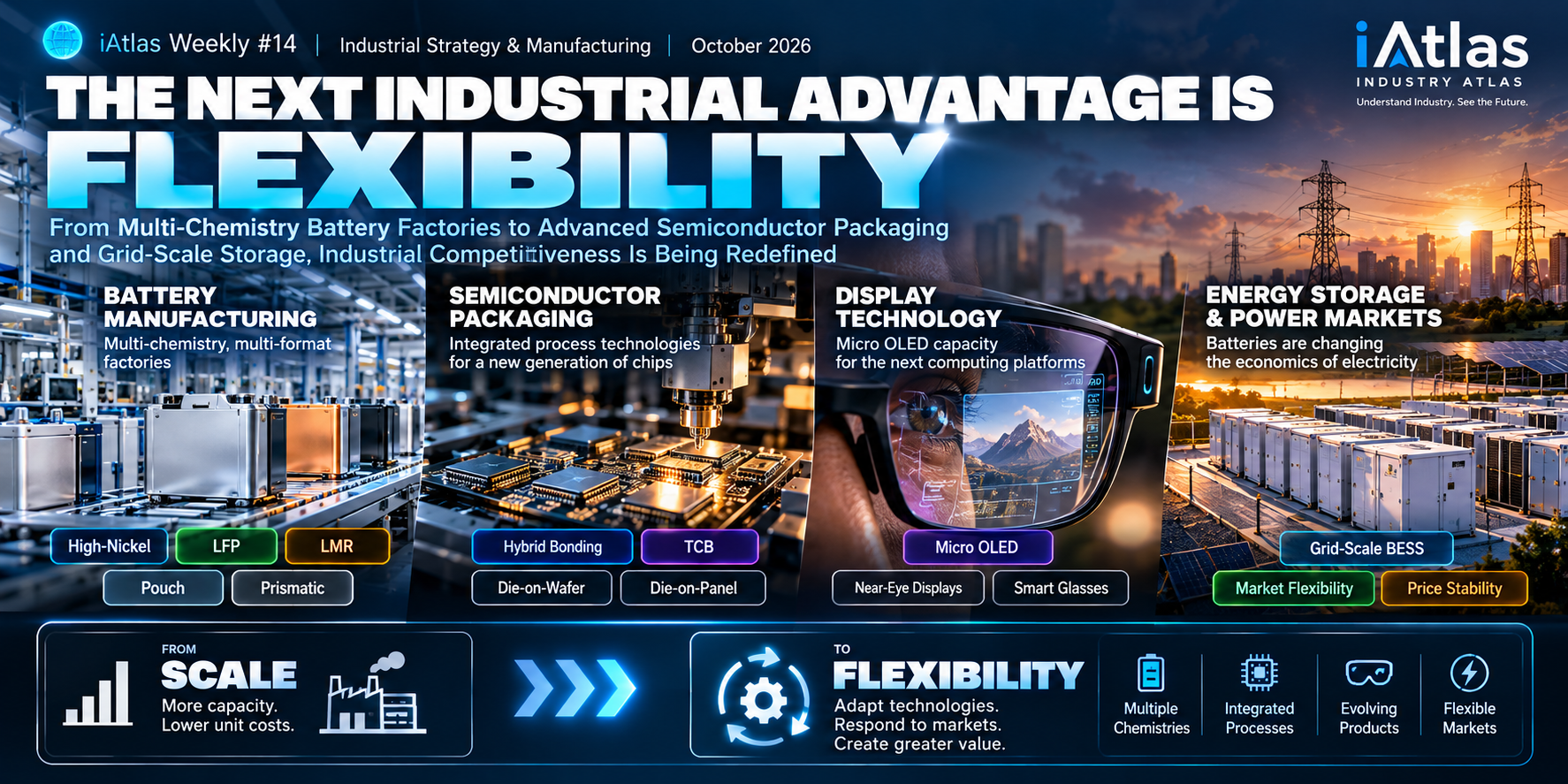
The Next Industrial Advantage Is Flexibility
Why Multi-Chemistry Batteries, Advanced Packaging, Micro OLED and Grid-Scale Storage Are Redefining Industrial Competitiveness
🌐 iAtlas Weekly #14 | Industrial Strategy & Manufacturing | October 2026
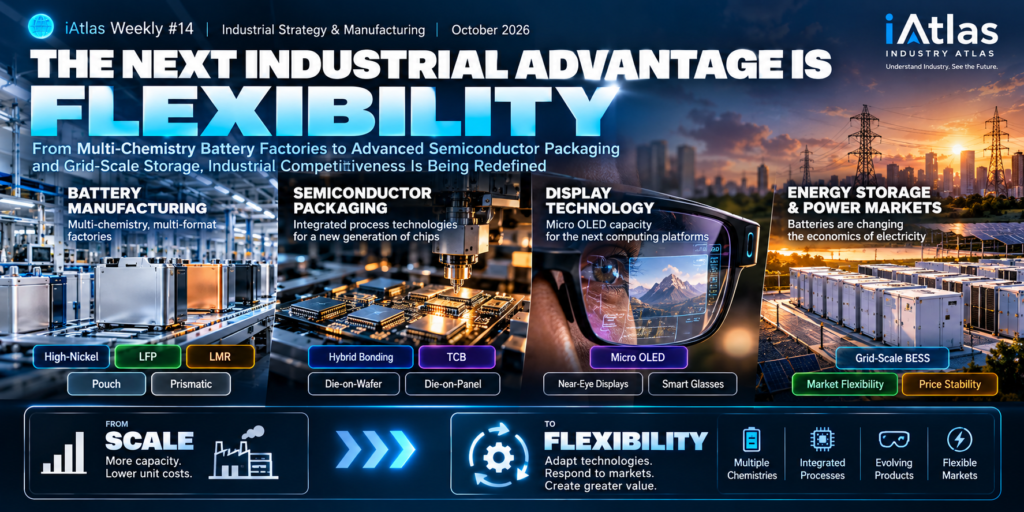
For decades, industrial competition was largely defined by scale.
The largest factories could produce more products. Higher production volumes could reduce unit costs. Companies with greater manufacturing capacity often gained stronger positions in global markets.
That model remains important.
But across batteries, semiconductors, displays and energy infrastructure, another competitive factor is becoming increasingly visible:
Flexibility.
The ability to change production technologies, support different products, integrate new processes and respond to shifting demand may become just as important as the ability to manufacture at scale.
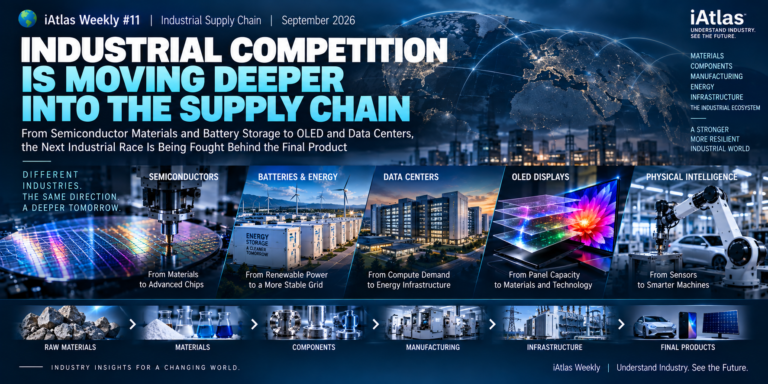
Five developments examined by iAtlas this week illustrate this transition.
Korea is expanding its LFP battery-material supply chain. GM and LG Energy Solution are preparing a factory capable of supporting multiple battery chemistries and cell formats. Applied Materials and Besi are developing increasingly integrated advanced-packaging technologies. Chinese display manufacturers are expanding Micro OLED production ahead of uncertain smart-glasses demand. And Australia’s growing battery-storage fleet is changing the economics of electricity itself.
These developments are not identical. Some concern manufacturing adaptability, others technological integration or market responsiveness.
But together, they suggest a broader industrial transition:
From maximizing production capacity to maximizing the strategic value of that capacity.
1. Battery Materials: From Specialization to Chemistry Diversification
Korea’s battery industry built much of its international competitiveness around high-nickel lithium-ion batteries.
That specialization supported demand for high-energy-density EV batteries and helped Korean manufacturers establish positions in premium electric vehicles.
But the market is becoming more diverse.
LFP batteries have become increasingly important in cost-sensitive electric vehicles and stationary energy storage.
In September 2026, POSCO Future M announced a KRW 1.1 trillion LFP cathode-material supply agreement with SK On, covering deliveries from 2027 through 2029, with an option to extend the contract.
The agreement followed another major LFP supply arrangement and reinforced the company’s expansion beyond its established materials portfolio.

POSCO FUTURE M
The strategic significance extends beyond one contract.
Battery-material manufacturers increasingly need to support several chemistry platforms rather than relying on one dominant formulation.
High-nickel batteries may remain important for premium performance, while LFP, manganese-rich and other chemistries address different cost and application requirements.
The emerging advantage is not necessarily having the best single chemistry. It is being able to serve a broader range of battery markets.
This diversification may also help suppliers respond when EV demand, ESS investment or raw-material economics change.
2. Battery Factories: From Fixed Production to Flexible Manufacturing
The same trend is appearing in battery-cell manufacturing.
GM and LG Energy Solution’s joint venture, Ultium Cells, announced plans to upgrade its Spring Hill, Tennessee facility for lithium manganese-rich (LMR) prismatic battery production.
The modifications are expected to be completed in 2028.
According to Ultium Cells, the facility will support high-nickel, LFP and LMR chemistries across pouch and prismatic cell formats. The site began producing LFP cells for ESS applications in June 2026.
Ultium Cells LLC
This is a significant departure from the traditional idea of a gigafactory optimized around one product.
Battery factories are expensive, highly engineered facilities.
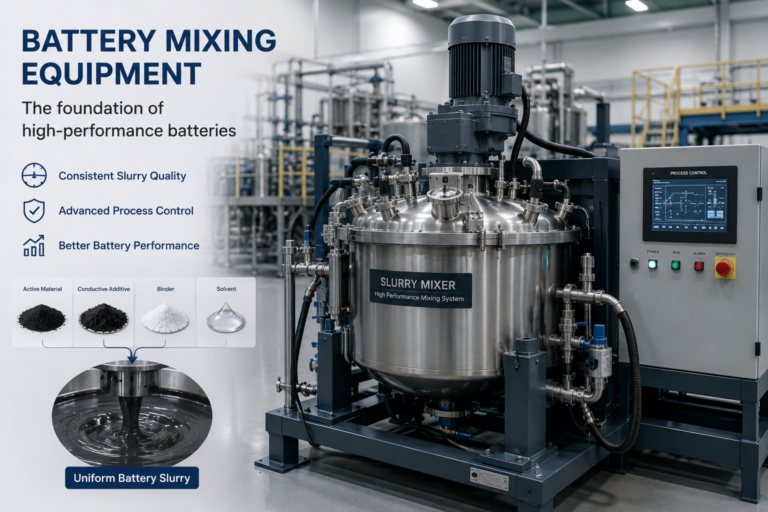
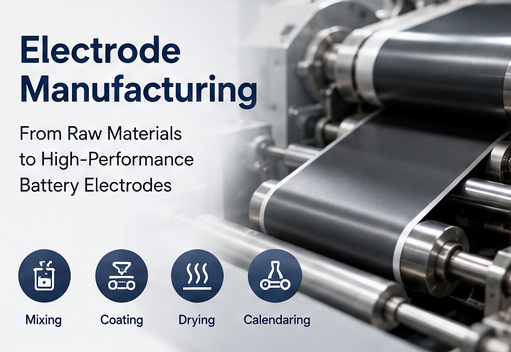
Their production lines involve coating, drying, electrode processing, assembly, electrolyte filling, formation and inspection.
Changing battery chemistry or cell format can require substantial equipment modifications and process qualification.
The Spring Hill investment therefore does not mean that a factory can switch between products effortlessly.
Instead, it demonstrates a willingness to invest in a manufacturing site capable of supporting a broader portfolio.
The strategic question is changing from:
How many gigawatt-hours can this factory produce?
to:
How many different battery requirements can this factory economically support?
That distinction matters when market demand changes faster than factories can be built.
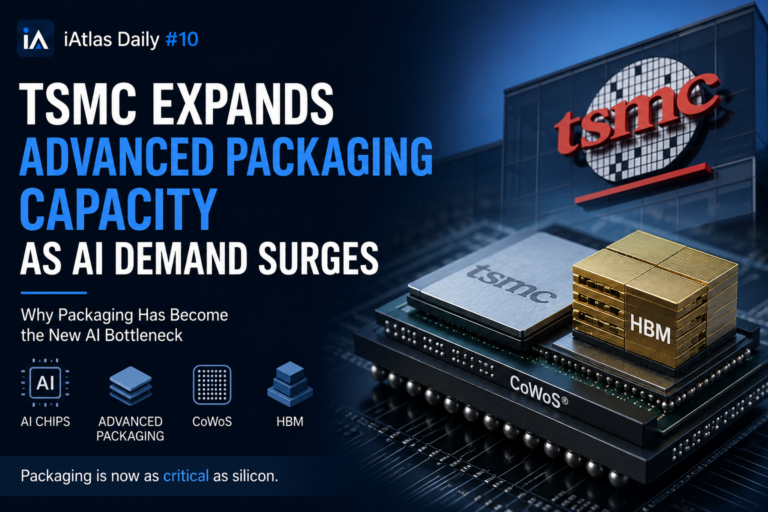
3. Semiconductor Packaging: Integration Becomes a Competitive Capability
Semiconductor manufacturing faces a different version of the same challenge.
Traditional chip scaling concentrated heavily on making transistors smaller.
But advanced computing systems increasingly depend on integrating multiple dies, memory components and specialized functions within sophisticated packages.
On October 1, Applied Materials and Besi announced an expansion of their strategic partnership in advanced packaging.
Their collaboration includes hybrid bonding, thermo-compression bonding and new die-on-wafer, die-on-die and die-on-panel architectures.
Applied Materials
The development highlights how advanced packaging is becoming more tightly connected to semiconductor process engineering.
Hybrid bonding requires precise control over surface preparation, alignment, cleanliness, bonding interfaces and defects.
These requirements connect traditionally separate manufacturing disciplines.
Equipment suppliers can no longer focus only on individual process steps.
Increasingly, they must help customers optimize entire manufacturing flows.
The strategic advantage is therefore shifting toward process integration.
A supplier capable of connecting materials engineering, precision placement, bonding and inspection may provide more value than one offering an isolated manufacturing function.
In advanced packaging, flexibility means supporting different chip architectures while maintaining the precision required for high-volume production.
4. Micro OLED: Manufacturing Capacity Is Moving Ahead of Market Certainty
The display industry illustrates another dimension of industrial flexibility.
Micro OLED, also known as OLED-on-Silicon or OLEDoS, is being developed for near-eye display applications, including mixed-reality headsets and certain smart-glasses architectures.
Chinese manufacturers such as BOE, SeeYA and SIDTEK are expanding their capabilities in this area.
The industrial opportunity is substantial.
Near-eye displays require high pixel density, compact dimensions and advanced optical integration.
But the eventual size and composition of the consumer market remain uncertain.
Different products may adopt different display technologies.
Immersive headsets, augmented-reality glasses and AI-enabled glasses do not necessarily have identical display requirements.
That creates a manufacturing dilemma.
Building capacity early can provide advantages in process learning, yield improvement and customer qualification.
But if demand develops more slowly than expected, manufacturers risk low utilization and pricing pressure.
The lesson is that capacity expansion alone does not guarantee competitiveness.
Manufacturers also need the ability to improve yields, reduce costs and adapt to evolving product requirements.
In an emerging market, the ability to adjust production strategy may be as valuable as entering first.
5. Energy Storage: Flexibility Is Changing Electricity Markets
The concept of flexibility extends beyond factories.
Australia’s growing grid-scale battery fleet demonstrates how flexibility can change the economics of an entire market.
Traditional electricity systems had to match generation and consumption continuously.
Battery energy storage allows electricity generated during one period to be used during another.
When solar output is high and prices are low, batteries can charge.
When electricity becomes scarce and prices rise, batteries can discharge.
Australia’s energy-market operator, AEMO, reported that renewable generation supplied 46.5% of the National Electricity Market’s electricity during the first quarter of 2026, with growing battery participation contributing to changing market outcomes.

aemo.com.au
Battery storage provides several forms of flexibility.
It can shift energy across time, support grid frequency and help integrate variable renewable generation.
But as more batteries enter the market, their collective behavior can also reduce the price differences that make energy arbitrage profitable.
This creates an important distinction between the value of storage to an individual operator and its value to the electricity system.
A battery can become less profitable from price arbitrage while helping make the wider electricity market more stable.
The competitive advantage may increasingly depend on combining several services rather than relying on a single revenue opportunity.
In electricity markets, flexibility is becoming an infrastructure function.
6. The Common Pattern: Capacity Is No Longer Enough
The five developments reveal a common pattern, but flexibility takes different forms across industries.
| Industry | Traditional advantage | Emerging advantage |
|---|---|---|
| Battery materials | Specialized high-volume production | Multi-chemistry portfolio |
| Battery manufacturing | Dedicated gigafactory capacity | Adaptable production assets |
| Semiconductors | Individual process performance | Integrated manufacturing processes |
| Micro OLED | Early capacity expansion | Yield improvement and market responsiveness |
| Energy storage | Installed MW and MWh | Dispatch flexibility and multi-service operation |
The common principle is not that every factory must manufacture every product.
That would often be inefficient.
Instead, industrial companies increasingly need to manage uncertainty without sacrificing their core manufacturing strengths.
This requires a balance between three capabilities.
Scale
The ability to produce economically at commercial volumes.
Precision
The ability to maintain quality, yield and reliability as technology becomes more complex.
Flexibility
The ability to respond when products, processes or markets change.
The companies that combine these capabilities effectively may gain advantages that cannot be measured through production capacity alone.
7. Why Manufacturing Equipment Could Become More Strategic
One implication deserves particular attention.
As industries become more flexible, equipment suppliers may become increasingly important.
Battery factories require equipment capable of supporting new materials and production formats.
Advanced packaging requires tightly coordinated process and assembly technologies.
Micro OLED manufacturers need equipment that supports higher precision, improved yields and evolving substrate architectures.
Grid-scale storage depends on power-conversion systems, controls and software that can respond to changing electricity-market conditions.
Across these sectors, the value of equipment may increasingly depend on more than its standalone specifications.
Customers may place greater emphasis on adaptability, integration, process stability and upgradeability.
This could create opportunities for equipment companies that help manufacturers extend the useful life and capabilities of existing industrial assets.
However, flexibility is not free.
More adaptable systems can introduce additional engineering complexity, qualification requirements and upfront investment.
The economic question is whether the benefits of adaptability outweigh those costs.
8. The Hidden Cost of Industrial Rigidity
A factory designed around a single product can be extremely efficient when demand is predictable.
But rigidity becomes a liability when market conditions change.
Consider a battery factory optimized for one EV cell chemistry.
If demand shifts toward ESS, the factory may require substantial retooling.
Or consider a semiconductor packaging line designed around an architecture that becomes less competitive.
Its installed capacity may remain technically available but become economically less valuable.
This distinction is important:
Installed capacity is not the same as commercially useful capacity.
The same applies to emerging display technologies.
A manufacturer can possess substantial production capability while struggling to achieve competitive yields or sufficient customer demand.
Industrial competitiveness therefore depends increasingly on how effectively companies can convert technical capacity into market-relevant output.
9. Flexibility Will Not Replace Specialization
There is an important limitation to this argument.
Specialization remains essential in many manufacturing industries.
Highly optimized production lines can deliver better throughput, lower costs and more consistent quality than broadly configurable systems.
Not every battery factory should support every chemistry.
Not every semiconductor process needs to accommodate multiple architectures.
And not every display manufacturer should invest in every emerging technology.
The future is unlikely to belong to companies pursuing maximum flexibility everywhere.
Instead, the competitive advantage may come from knowing:
Where to specialize, where to diversify and where to preserve the option to change.
That is a more sophisticated industrial strategy than simply maximizing capacity.
What to Watch
Battery Factory Conversion
Watch whether additional EV battery plants are reconfigured for ESS production, new chemistries or different cell formats. The cost and time required for conversion will help determine whether flexible gigafactories become a broader industry model.
Multi-Chemistry Materials
Watch how Korean battery-material suppliers expand their LFP, LMR and other cathode portfolios while maintaining competitiveness in established high-nickel materials.
Advanced Packaging Integration
Applied Materials and Besi’s expanded collaboration will be worth following as hybrid bonding and other integration technologies move toward wider commercial deployment. Yield, throughput and defect control will remain critical.
Micro OLED Utilization
Watch whether expanding Micro OLED production capacity translates into sustained customer demand. The relationship between manufacturing yield, unit cost and actual device adoption will be particularly important.
Battery Storage Economics
Watch how growing BESS penetration changes electricity-price volatility and project revenue. Storage operators may need increasingly sophisticated revenue models as arbitrage opportunities evolve.
Industrial Equipment Investment
Watch whether capital expenditure shifts toward retooling, process upgrades, inspection, automation and software rather than relying exclusively on new factory construction.
iAtlas Insight
The industrial economy has spent decades optimizing one central objective:
Produce more at lower cost.
That objective will not disappear.
But the next phase of competition may require a broader question:
How much value can an industrial asset create as technology and markets change?
A battery factory that supports several chemistries may respond to different applications.
A semiconductor equipment platform that integrates multiple processes may enable new chip architectures.
A Micro OLED manufacturer that improves yields and adapts to customer requirements may outperform a competitor with greater nominal capacity.
A battery-storage system that participates in several electricity markets may create more value than one dependent on a single revenue source.
These examples point toward a new industrial equation:
Scale
Produce efficiently
Precision
Maintain performance
Flexibility
Adapt to change
Industrial Competitiveness
Greater value from manufacturing assets across changing markets
The next industrial winners may not simply be those with the largest factories or the most advanced individual technologies.
They may be the companies that combine efficient production, technical excellence and the ability to adapt when conditions change.
The next industrial advantage is not flexibility alone. It is flexibility without losing efficiency.
Related Articles
These five iAtlas Daily articles form the editorial foundation of this Weekly analysis:
- Daily #70: Korea Is Building an LFP Supply Chain of Its Own
- Daily #71: Hybrid Bonding Is Moving Toward High-Volume Manufacturing
- Daily #72: Micro OLED Capacity Is Growing Ahead of the Smart Glasses Market
- Daily #73: GM and LG Energy Solution Are Turning One Battery Factory into a Multi-Chemistry Hub
- Daily #74: Battery Storage Is Starting to Change the Economics of Electricity
References
– POSCO Future M — LFP Cathode Material Supply Contract with SK On
– Ultium Cells — Spring Hill LMR Prismatic Battery Production
– Applied Materials — Expanded Strategic Partnership with Besi
– TrendForce — OLEDoS Demand and SeeYA Capacity Expansion
– TrendForce — The Second Half of the AR Glasses Race Begins
– AEMO — Renewables Lift Supply Share as Batteries Re-Shape Energy Markets
ℹ️ About iAtlas
iAtlas is an independent publication covering batteries, semiconductors, OLED, advanced materials, AI, and global industrial trends.
We transform complex industrial developments into clear, reliable, and easy-to-understand insights.
Whether you’re following today’s industry news or building long-term expertise, iAtlas helps you understand not only what happened, but why it matters.
Technology creates change.
Insight creates opportunity.
— iAtlas