CATL Launches Second-Generation Sodium-Ion Batteries
Why It Matters for the Future of Energy Storage
📰 iAtlas Daily #9 | July 13, 2026
📰 What Happened: CATL’s Second-Generation Sodium-Ion Batteries
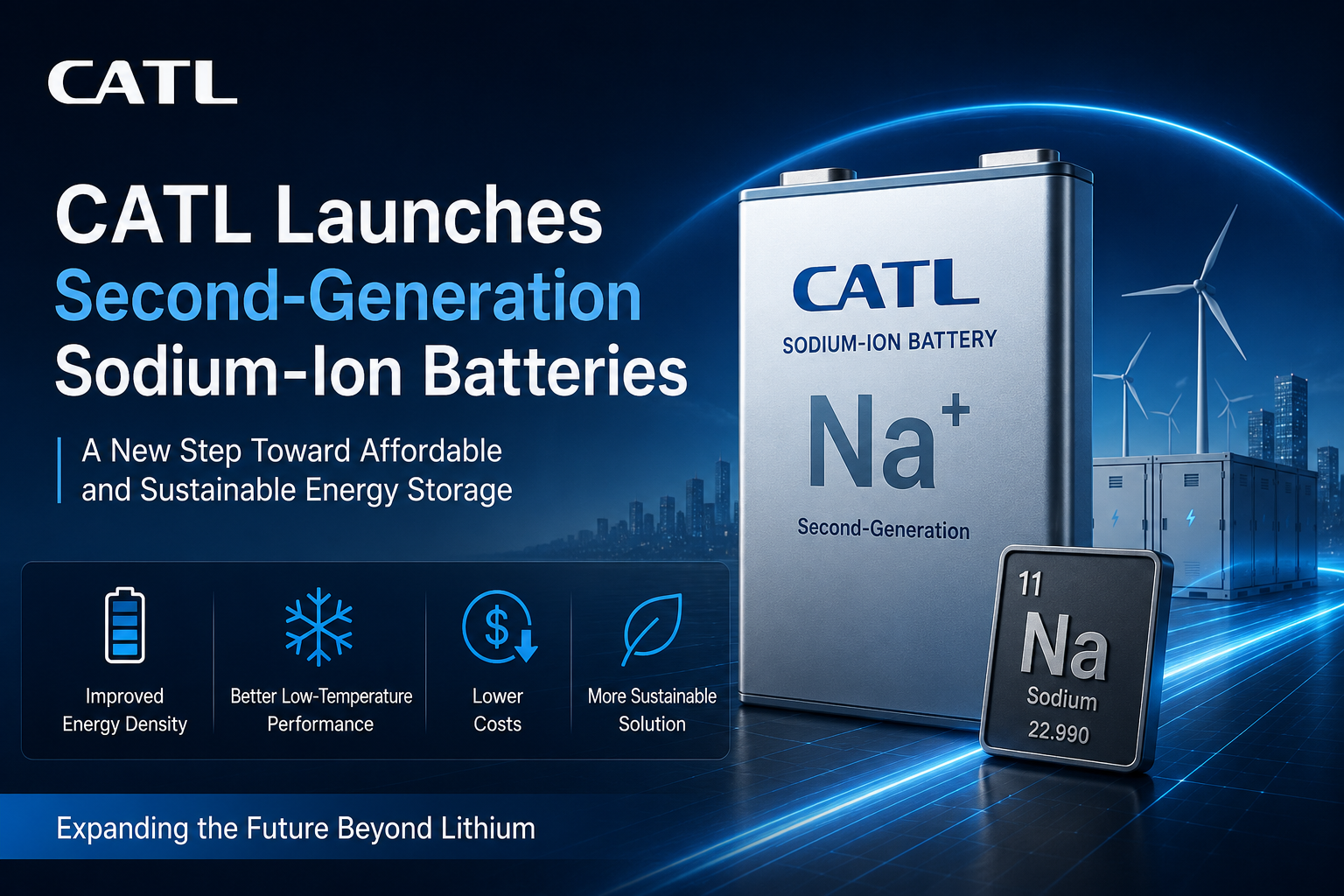
CATL has launched its second-generation sodium-ion batteries, marking a major milestone in next-generation battery technology.
According to CATL, the new generation delivers improvements in energy density, charging performance, and low-temperature operation while maintaining sodium-ion batteries’ key advantage—lower material costs.
Rather than positioning sodium-ion batteries as a replacement for lithium-ion batteries, CATL emphasized that both technologies are expected to serve different applications based on performance and cost requirements.
💡 Why It Matters
For more than a decade, lithium-ion batteries have dominated electric vehicles and energy storage systems.
However, growing concerns over lithium supply, raw material costs, and supply chain resilience have accelerated the search for alternative battery chemistries.
Sodium is one of the most abundant elements on Earth and is widely available across many regions. This makes sodium-ion batteries an attractive option for applications where affordability and stable supply are more important than achieving the highest possible energy density.
Industry analysts believe the CATL sodium-ion battery could accelerate the commercialization of sodium-ion technology, particularly for energy storage systems and affordable electric vehicles.
🌍 Industry Impact
Electric Vehicles
The CATL sodium-ion battery is expected to target entry-level electric vehicles and stationary energy storage systems, where lower cost and supply stability are often more important than maximum energy density.
Energy Storage Systems (ESS)
The technology is considered particularly promising for stationary energy storage, where lower cost, long cycle life, and supply stability are highly valued.
Global Battery Supply Chain
If sodium-ion batteries become widely adopted, they could reduce dependence on lithium and diversify the global battery supply chain.
🎯 Atlas Insight
CATL’s announcement does not signal the end of lithium-ion batteries.
Instead, it highlights a broader industry trend:
The future battery market is likely to rely on multiple battery chemistries, each designed for different applications.
Lithium-ion batteries will continue leading high-performance electric vehicles.
Sodium-ion batteries, meanwhile, may become an increasingly important solution for affordable mobility and large-scale energy storage.
The future of batteries is becoming more diverse—not less.
🔭 Atlas Outlook
Several battery manufacturers are now investing in technologies beyond traditional lithium-ion batteries.
As commercialization progresses, sodium-ion batteries could become an important complement to existing battery technologies, particularly in cost-sensitive markets and stationary energy storage.
The coming years will determine how quickly manufacturers can improve performance while maintaining the cost advantages that make sodium-ion batteries attractive.
📚 Continue Reading
Previous Daily
➡️ Why Silicon Anodes Are the Future of Lithium-Ion Batteries
Discover how silicon anodes could significantly improve battery energy density and extend EV driving range.
Also Recommended
➡️ Why Solid-State Batteries Could Transform Electric Vehicles
Explore why solid-state batteries are considered one of the most promising next-generation battery technologies.
About iAtlas
iAtlas is an independent publication covering batteries, semiconductors, OLED, advanced materials, AI, and global industrial trends.
We transform complex industrial developments into clear, reliable, and easy-to-understand insights.
Whether you’re following today’s industry news or building long-term expertise, iAtlas helps you understand not only what happened, but why it matters.
Technology creates change.
Insight creates opportunity.
— iAtlas