Nintendo Switch 2 OLED Could Boost Samsung Display
Why Gaming Could Become OLED’s Next Growth Engine
📰 iAtlas Daily #13 | July 17, 2026
📰 What Happened?
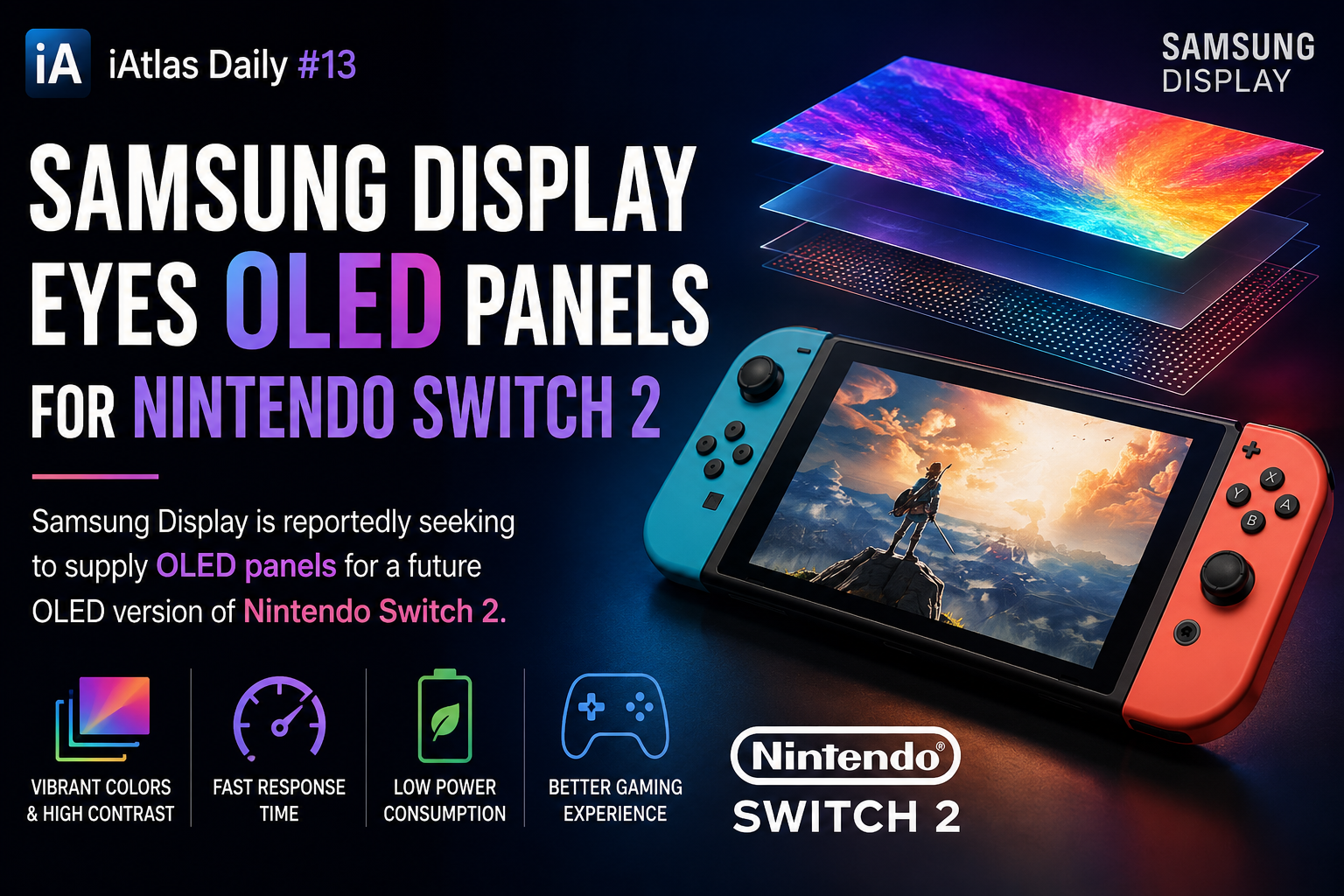
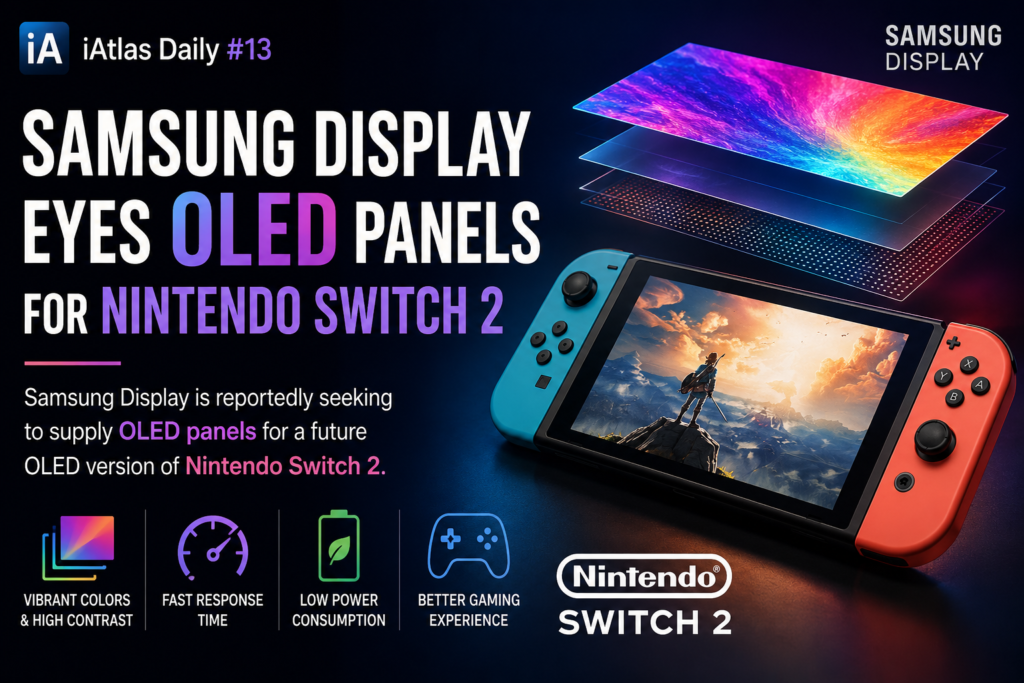
Nintendo Switch 2 OLED could become Samsung Display’s next major business opportunity as Nintendo reportedly evaluates OLED panels for future handheld devices.
According to industry reports, Nintendo is evaluating OLED display options while also balancing manufacturing costs as component prices continue to rise. Although no final decision has been announced, Samsung Display is considered one of the leading candidates to supply the panels if the OLED model moves forward.
💡 Why It Matters
OLED technology has become the premium display choice for smartphones, televisions, and high-end laptops.
Gaming devices may become the next major growth opportunity.
Compared with LCD panels, OLED displays offer:
- Higher contrast
- Faster response times
- Lower power consumption for dark scenes
- More vibrant colors
If Nintendo adopts OLED for the Switch 2, it could further expand OLED adoption beyond smartphones and TVs.
🌍 Industry Impact
Samsung Display
Winning the Nintendo supply contract would strengthen Samsung Display’s position in the small and medium-sized OLED market.
OLED Supply Chain
Higher gaming demand could benefit material suppliers, OLED equipment manufacturers, and display component companies throughout the ecosystem.
Consumer Electronics
OLED adoption is gradually expanding into more product categories, including gaming handhelds, automotive displays, AR/VR devices, and premium monitors.
🎯 Atlas Insight
For years, OLED growth has been driven primarily by smartphones.
Today, the market is becoming much broader.
Gaming, automotive displays, mixed reality devices, and AI-powered consumer electronics are creating new opportunities for OLED manufacturers.
Even if Nintendo has not yet finalized its decision, the discussion itself highlights an important trend:
OLED is no longer limited to flagship smartphones—it is becoming a mainstream premium display technology.
📚 Related Articles
➡️ Why High-Purity Materials Matter for Next-Generation OLED Displays
Discover how ultra-high-purity materials improve OLED efficiency, yield, and lifetime.
➡️ Why 300mm Wafers Matter for AR/VR
Learn how advanced semiconductor manufacturing supports the next generation of immersive displays.
About iAtlas
iAtlas is an independent publication covering batteries, semiconductors, OLED, advanced materials, AI, and global industrial trends.
We transform complex industrial developments into clear, reliable, and easy-to-understand insights.
Whether you’re following today’s industry news or building long-term expertise, iAtlas helps you understand not only what happened, but why it matters.
Technology creates change.
Insight creates opportunity.
— iAtlas