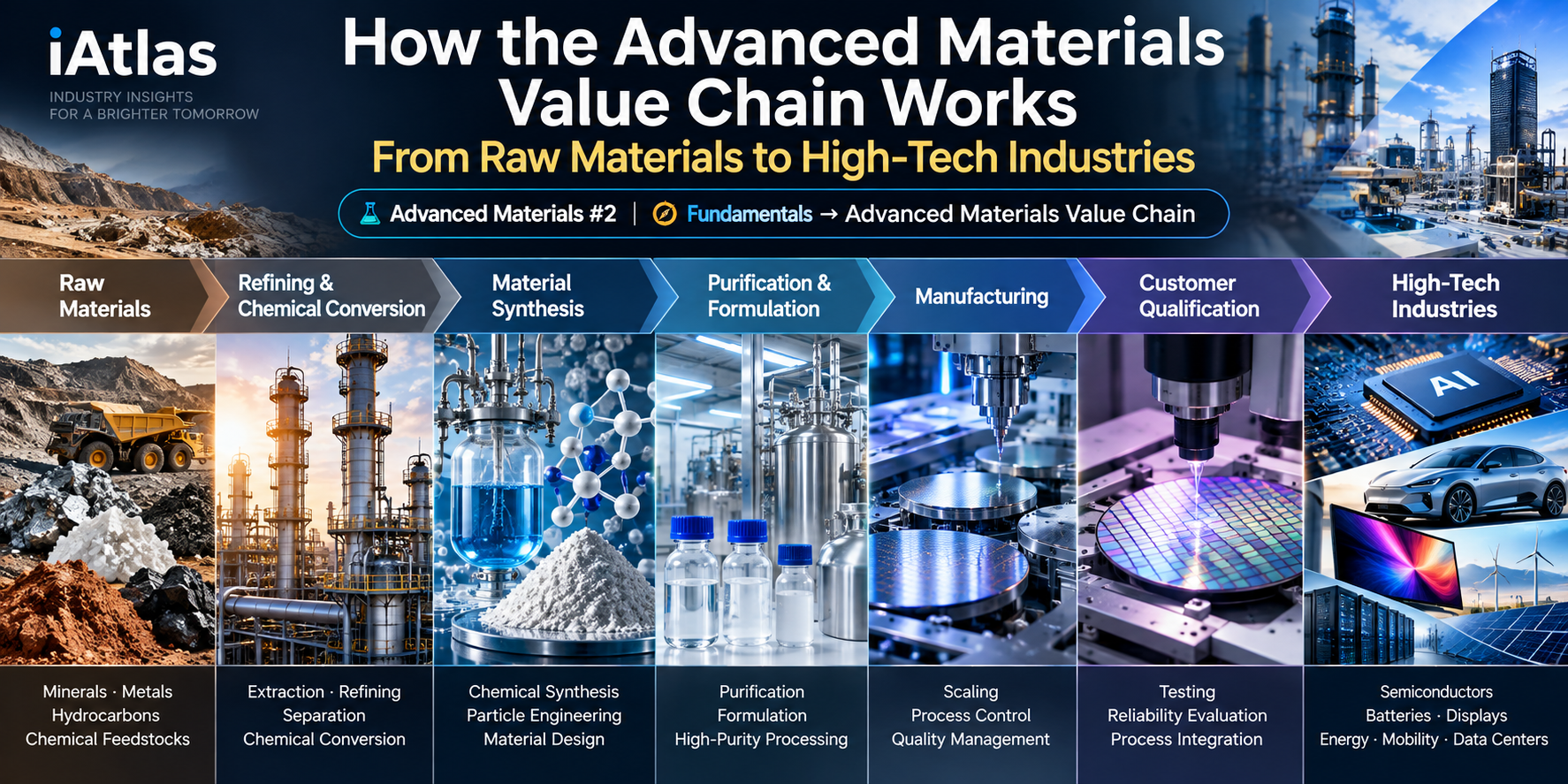
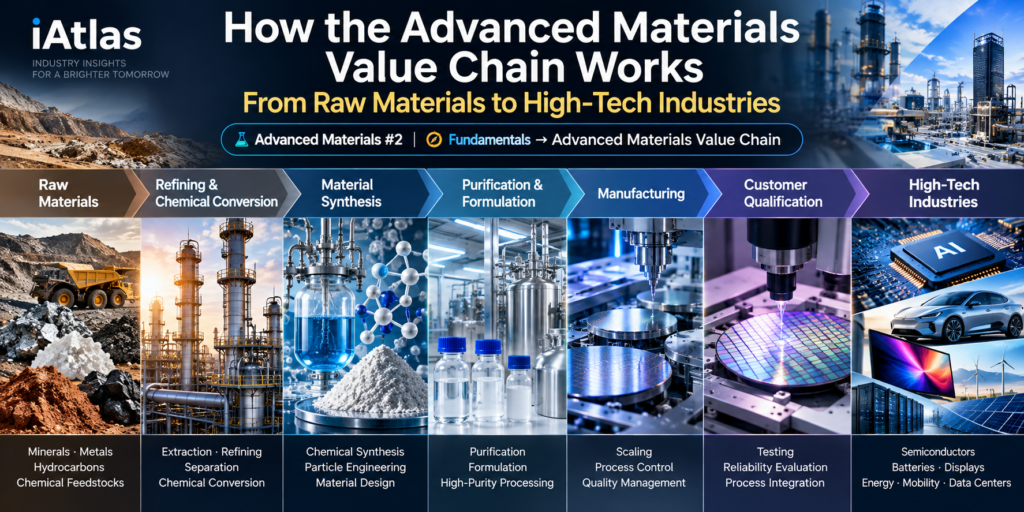
How the Advanced Materials Value Chain Works: From Raw Materials to High-Tech Industries
🧪 Advanced Materials #2 | 🧭 Fundamentals → Advanced Materials Value Chain
Advanced materials rarely begin as advanced materials.
Before they become semiconductor precursors, battery cathode materials, OLED compounds, high-performance polymers, or specialty alloys, they usually pass through a long industrial chain involving extraction, refining, chemical conversion, purification, formulation, manufacturing, qualification, and final integration.
This is what makes the advanced materials industry difficult to understand.
The material itself may look like the product.
But in reality, the value is created across an entire chain.
Raw Materials
↓
Refining & Chemical Conversion
↓
Material Synthesis
↓
Purification & Formulation
↓
Industrial Manufacturing
↓
Customer Qualification
↓
Device & Component Manufacturing
↓
Final Applications
Understanding this chain is essential because the most important competitive advantage does not always sit at the same stage.
One company may control access to raw materials.
Another may dominate purification.
Another may own a difficult synthesis process.
And another may build its advantage through long-term customer qualification.
The advanced materials industry is therefore best understood not as a collection of individual substances, but as a value chain that transforms basic resources into highly engineered industrial capabilities.
1. Where the Advanced Materials Value Chain Begins
When we think about an advanced material, we often start with the material that enters a factory.
But the real supply chain begins much earlier.
A semiconductor chemical may depend on a metal or chemical feedstock produced somewhere else.
A battery material may begin with lithium, nickel, graphite, or phosphate resources.
A permanent magnet may depend on rare-earth elements.
A high-performance polymer may originate from petrochemical or specialty chemical intermediates.
The first stage is therefore:
Raw Materials & Feedstocks
These can include:
- minerals
- metals
- hydrocarbons
- industrial gases
- chemical intermediates
- specialty compounds
This stage often attracts attention because many advanced technologies depend on materials whose resources are geographically concentrated.
The U.S. Department of Energy identifies materials such as lithium, cobalt, high-purity nickel, rare earth elements, gallium, and germanium as important inputs for energy, electronics, and semiconductor technologies. The Department of Energy’s Energy.gov
But resource ownership alone does not determine who controls the advanced materials industry.
The next stages can be even more important.
2. Refining Converts Resources into Industrial Inputs
Extracted resources are rarely ready for advanced manufacturing.
They must first be refined, separated, purified, or chemically converted.
For example, a mineral resource may need to go through:
Extraction
↓
Concentration
↓
Separation
↓
Refining
↓
Chemical Conversion
before it becomes suitable for downstream material production.
This is an important distinction.
A country can possess large natural resources while still depending on another country for refining or chemical processing.
That is why modern supply-chain policy increasingly focuses not only on where resources are mined, but also on where they are processed.
The U.S. Department of Energy’s material-supply-chain strategy, for example, covers the full lifecycle from material resources to manufacturing, recovery, reuse, and recycling. The Department of Energy’s Energy.gov
In other words:
Mining capacity and advanced-material manufacturing capacity are not the same thing.
The industrial value added often increases significantly as a material moves further downstream.
3. Material Synthesis Is Where Engineering Begins
Once suitable feedstocks are available, they can be transformed into materials with specific functions.
This is the stage where advanced-material companies begin to engineer characteristics such as:
- composition
- crystal structure
- particle size
- morphology
- electrical properties
- optical properties
- chemical reactivity
- thermal stability
- mechanical performance
Depending on the application, the manufacturing route may involve:
- chemical synthesis
- precipitation
- vapor-phase processing
- alloying
- polymerization
- coating
- thermal treatment
- sintering
- crystallization
At this point, materials start to differentiate themselves from commodity inputs.
A kilogram of basic chemical feedstock and a kilogram of highly engineered electronic material may have completely different industrial values even if they share some of the same elemental building blocks.
The difference comes from processing, knowledge, control, and repeatability.
4. Purification Can Be as Important as Synthesis
Producing the right material is not always enough.
For many high-technology applications, the material must also meet extremely strict purity requirements.
This is especially important in sectors such as:
- semiconductors
- displays
- batteries
- optics
- aerospace
- high-performance electronics
Unwanted contaminants may include:
- metals
- moisture
- oxygen
- particles
- ionic impurities
- organic residues
- unwanted chemical species
At this stage, companies may use combinations of:
- chemical purification
- filtration
- distillation
- drying
- separation
- controlled-atmosphere processing
- high-purity packaging and handling
Purification therefore should not be treated as a simple finishing step.
In some advanced-material markets, the ability to control impurities is part of the core technology itself.
5. Formulation Turns a Material into a Usable Product
Many advanced materials are not sold as a single pure substance.
Instead, they must be formulated for specific manufacturing processes.
A material supplier may need to control:
- concentration
- solvent system
- viscosity
- particle distribution
- additives
- stability
- surface chemistry
- storage behavior
This is where the relationship between the material and the customer’s process becomes particularly important.
The question changes from:
“Is the material chemically correct?”
to:
“Does the material perform correctly inside the customer’s manufacturing process?”
That distinction is fundamental to the advanced materials industry.
Because in many applications, customers are not purchasing chemistry alone.
They are purchasing process performance.
6. Scaling from Laboratory to Factory Is a Major Barrier
A material can perform extremely well in a laboratory and still fail commercially.
Why?
Because laboratory success does not automatically guarantee industrial-scale manufacturing.
Scaling up may create new problems involving:
- heat transfer
- reaction uniformity
- contamination
- particle consistency
- equipment limitations
- raw-material variation
- batch-to-batch stability
- yield
- cost
- safety
This is one of the most important transitions in the value chain.
Laboratory Development
↓
Pilot Production
↓
Process Optimization
↓
Commercial Manufacturing
↓
High-Volume Production
The U.S. Department of Energy specifically emphasizes research, development, demonstration, and scale-up of materials and manufacturing technologies as part of strengthening industrial supply chains. The Department of Energy’s Energy.gov
This helps explain why a technically promising material can take years to become an industrial product.
7. Manufacturing Equipment Becomes Part of the Material Capability
Advanced materials cannot be separated entirely from the equipment used to make them.
Different materials may require:
- reactors
- vacuum systems
- furnaces
- coating systems
- mixers
- filtration units
- purification systems
- inert-atmosphere chambers
- gloveboxes
- dry rooms
- analytical instruments
The equipment influences:
- purity
- consistency
- productivity
- yield
- safety
- scalability
For this reason, advanced-material competitiveness often depends on the combination of:
Material Chemistry + Process Know-How + Manufacturing Equipment
A company with strong material IP but poor manufacturing control may struggle to scale.
A company with strong process engineering can sometimes build a defensible position even when the underlying chemistry is relatively well understood.
8. Quality Control Connects Manufacturing to Customer Requirements
Advanced-material manufacturing requires continuous verification.
The supplier must confirm that each production batch meets defined specifications.
Typical parameters may include:
- chemical purity
- trace-metal concentration
- moisture content
- particle size
- density
- viscosity
- morphology
- electrical properties
- optical properties
- mechanical properties
This makes analytical capability another important part of the value chain.
Testing is not only performed at the end.
In advanced manufacturing, quality control may occur throughout:
Incoming Raw Materials
↓
In-Process Monitoring
↓
Final Product Testing
↓
Customer Qualification
The tighter the customer’s process window becomes, the more important this control becomes.
9. Customer Qualification Is Where a Material Becomes Commercial
This is one of the most important—and often overlooked—steps.
A material is not truly an industrial product simply because it can be manufactured.
The customer must accept it.
In industries such as semiconductors, batteries, and displays, qualification may involve:
- laboratory evaluation
- pilot-line testing
- reliability testing
- process compatibility checks
- sample production
- long-term stability analysis
- supplier audits
- production approval
This process can take considerable time.
But once a material has been qualified, the supplier may gain a significant competitive advantage.
Switching to another material may require:
- re-testing
- process adjustments
- new reliability evaluations
- production risk
This can create long-lasting supplier relationships.
Therefore, customer qualification is not simply a sales step.
It can become an industrial barrier to entry.
10. Logistics and Packaging Are Also Part of the Value Chain
Advanced materials can be sensitive during transportation and storage.
Some materials may react with:
- moisture
- oxygen
- light
- temperature
- particles
- incompatible container materials
Others may be hazardous, volatile, corrosive, or highly reactive.
This means packaging and logistics can require specialized systems such as:
- high-purity containers
- inert-gas packaging
- temperature-controlled transport
- moisture-barrier packaging
- specialized chemical delivery systems
In advanced industries, a material can meet all manufacturing specifications and still fail if contamination occurs during storage or transport.
So the value chain extends beyond the factory gate.
11. Device Manufacturing Is Where Material Performance Is Proven
Ultimately, advanced materials must deliver value inside a real device or manufacturing process.
Different materials feed into different industrial ecosystems.
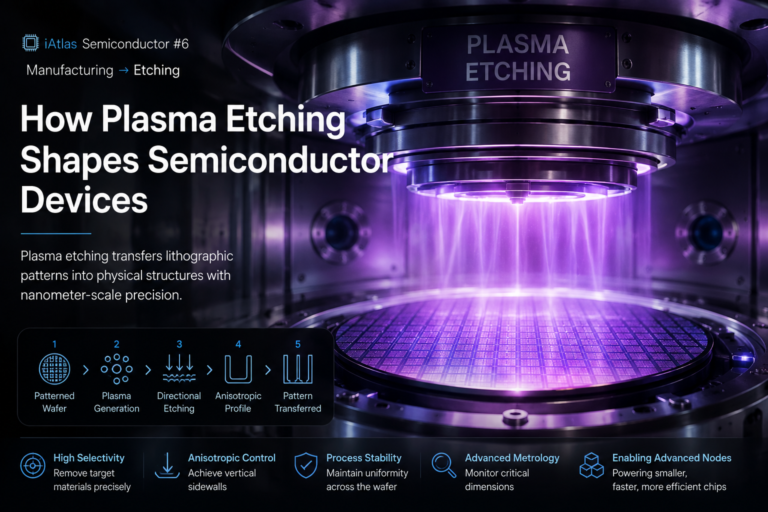
Semiconductors
Advanced materials enable:
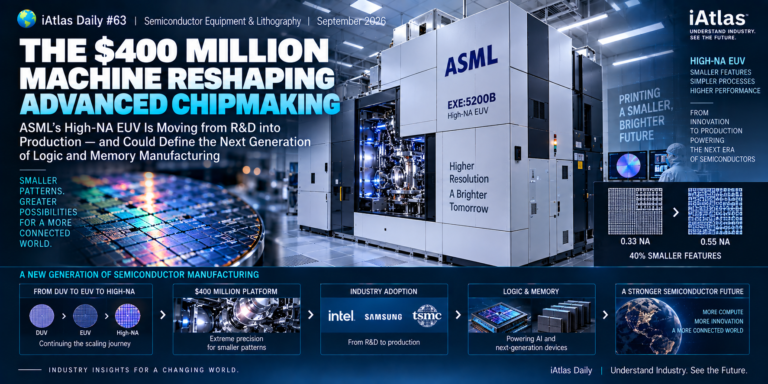
- lithography
- deposition
- etching
- planarization
- interconnects
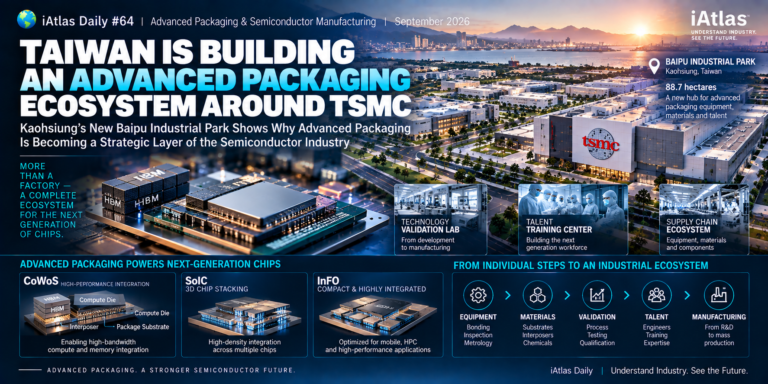
- advanced packaging
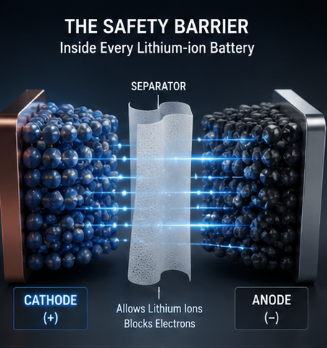
Batteries
Materials determine:
- energy density
- charging behavior
- cycle life
- safety
- cost
OLED & Displays
Materials influence:
- emission efficiency
- color
- lifetime
- moisture resistance
- optical performance
Energy Technologies
Materials affect:
- magnetic performance
- catalytic activity
- corrosion resistance
- conductivity
- thermal stability
The advanced-material value chain therefore ends not with the material itself, but with the performance it enables downstream.
12. Value Does Not Increase Evenly Across the Chain
A useful way to understand this industry is to distinguish between volume and value.
Upstream resources may be produced in large volumes.
But downstream advanced materials can have much higher value per unit because they incorporate:
- purification
- intellectual property
- process control
- formulation
- manufacturing know-how
- customer qualification
A simplified model looks like this:
Resource
Low processing
High volume
↓
Refined Material
Greater processing
↓
Advanced Material
Higher technical differentiation
↓
Qualified Material
Customer-specific performance
↓
Integrated Solution
Highest process integration
This is why some relatively small materials companies can occupy strategically important positions in large global industries.
They do not need to dominate by volume.
They may dominate a critical process step.
13. The Advanced Materials Value Chain Is Global—but Not Always Resilient
Advanced-material supply chains often cross multiple countries.
For example:
Raw Material — Country A
↓
Refining — Country B
↓
Chemical Conversion — Country C
↓
Advanced Material Production — Country D
↓
Device Manufacturing — Country E
This structure can improve efficiency.
But it can also create vulnerabilities.
Potential risks include:
- geographic concentration
- trade restrictions
- political conflict
- limited refining capacity
- single-source suppliers
- logistics disruptions
- environmental regulation
- long qualification cycles
Governments are increasingly examining advanced-material value chains for exactly this reason.
The European Commission has been analyzing advanced-material production capacity, industrial uptake, value chains, and trade balances as part of its Advanced Materials for Industrial Leadership initiative. Research and innovation
The issue is no longer only technological.
It is also strategic.
14. Recycling Is Becoming Part of the Value Chain
Traditionally, industrial value chains were often understood as linear:
Extract → Produce → Use → Dispose
But advanced-material strategies increasingly include:
Recovery → Reuse → Recycling
This is particularly important for:
- battery materials
- rare earths
- critical metals
- electronic materials
Recycling can help:
- diversify supply
- reduce dependence on primary resources
- recover valuable materials
- reduce waste
- improve supply-chain resilience
The U.S. Department of Energy explicitly includes recovery, reuse, and recycling within its secure-material-supply-chain strategy. The Department of Energy’s Energy.gov
This means future advanced-material value chains may become increasingly circular rather than purely linear.
15. Where Competitive Advantage Can Exist
The most interesting part of the advanced-material value chain is that leadership can emerge at almost any stage.
A company can build an advantage through:
Resource Access
Control of scarce or high-quality feedstocks.
Refining
Superior separation or purification capability.
Material Technology
Unique chemistry or material structure.
Manufacturing
Better scale, yield, or process consistency.
Purity Control
Ability to meet extremely tight specifications.
Customer Qualification
Deep integration into customer processes.
Logistics
Reliable handling and delivery of sensitive materials.
Recycling
Efficient recovery of critical materials.
This is why advanced-material companies cannot be compared only by production volume.
The more important question is:
Which stage of the value chain does the company control—and how difficult is that capability to replace?
16. The iAtlas View
The advanced materials industry is often described as if it were simply a list of interesting substances.
Lithium.
Silicon.
Graphene.
Rare earths.
Specialty chemicals.
But the real industrial story lies in the connections between them.
A material becomes strategically valuable only when a chain of capabilities allows it to move from resource to application.
That chain includes:
Raw Materials
↓
Refining
↓
Synthesis
↓
Purification
↓
Manufacturing
↓
Qualification
↓
Integration
↓
Final Technology
And every stage can become a source of:
competitive advantage, supply-chain risk, investment opportunity, or technological bottleneck.
That is why understanding the advanced materials industry begins not with a single material—
but with the value chain behind it.
Advanced Materials Learning Path
Previous Article
🧪 Advanced Materials #1 | 🧭 Fundamentals → Advanced Materials Industry Overview
Advanced Materials Industry Explained: The Strategic Layer Behind Next-Generation Technology
Next Article
🧪 Advanced Materials #3 | 🧭 Fundamentals → Strategic Importance
Why Advanced Materials Are Becoming Strategic Assets
Continue the Learning Path
- Why Advanced Materials Are Becoming Strategic Assets
- From Laboratory to Mass Production
- Purity, Consistency & Qualification
- Where Advanced Materials Demand Comes From
- Major Families of Advanced Materials
- Semiconductor Materials
- Battery Materials
- OLED & Display Materials
References
- U.S. Department of Energy — Advanced Materials and Manufacturing Technologies Office
DOE’s overview of next-generation materials, manufacturing processes, scale-up, and secure supply chains. - U.S. Department of Energy — Secure Material Supply Chains
Covers materials across resource development, manufacturing, recovery, reuse, and recycling. - U.S. Department of Energy — Critical Minerals and Materials
Overview of strategically important inputs including lithium, nickel, rare earths, gallium, and germanium. - European Commission — Advanced Materials for Industrial Leadership
European initiatives examining advanced-material production, industrial uptake, value chains, and competitiveness.
ℹ️ About iAtlas
iAtlas is an independent publication covering batteries, semiconductors, OLED, advanced materials, AI, and global industrial trends.
We transform complex industrial developments into clear, reliable, and easy-to-understand insights.
Whether you’re following today’s industry news or building long-term expertise, iAtlas helps you understand not only what happened, but why it matters.
Technology creates change.
Insight creates opportunity.
— iAtlas