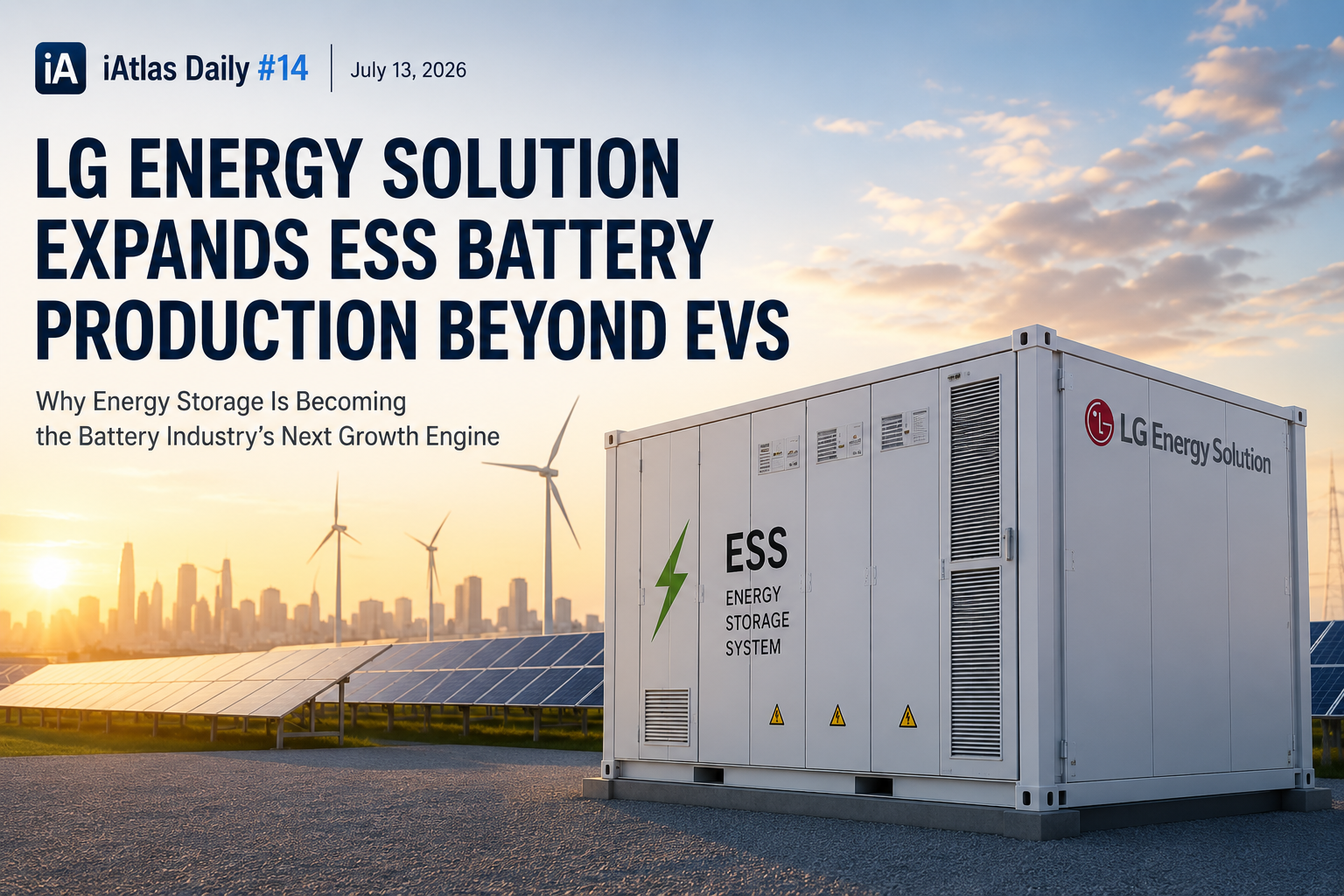
LG Energy Solution Expands ESS Battery Production Beyond EVs
Why Energy Storage Is Becoming the Battery Industry’s Next Growth Engine
📰 iAtlas Daily #14 | July 20, 2026
🔋 What Happened?
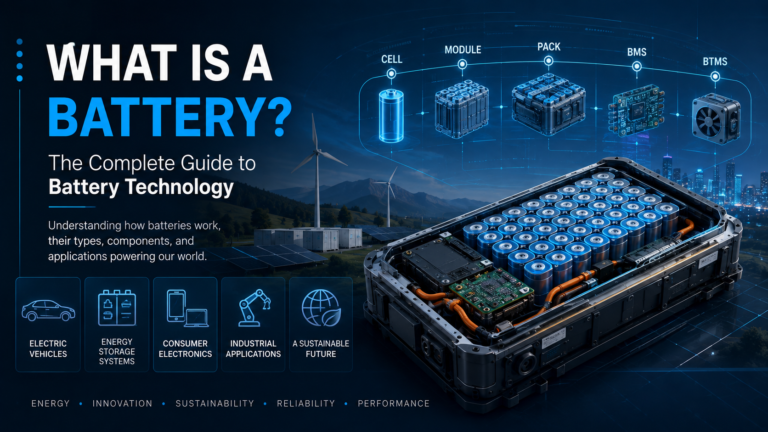
LG Energy Solution ESS production is entering a new phase as the company begins manufacturing LFP battery cells for Energy Storage Systems (ESS) at its joint venture plant with General Motors.
Originally built for electric vehicle battery production, part of the facility has been converted to manufacture batteries for stationary energy storage. The move reflects a strategic response to slowing EV demand and rapidly increasing investment in grid-scale ESS projects.
As utilities, renewable energy developers, and AI data center operators expand their infrastructure, battery manufacturers are adapting production capacity to serve a broader range of applications.
💡 Why It Matters
For much of the past decade, battery manufacturers focused primarily on supplying electric vehicles.
That is beginning to change.
Artificial intelligence, renewable energy, and large-scale electricity demand are accelerating investment in Energy Storage Systems (ESS), creating a second major growth market for battery manufacturers.
Unlike EV batteries, ESS prioritizes long cycle life, safety, and cost efficiency over maximum energy density. As a result, LFP batteries are becoming the preferred chemistry for many stationary storage projects.
This shift allows manufacturers to diversify revenue while making better use of existing production capacity.
🌍 Industry Impact
Battery Manufacturers
Flexible production lines capable of supplying both EV batteries and ESS batteries are becoming a competitive advantage.
Manufacturers that can quickly respond to changing market demand may gain greater resilience against fluctuations in the automotive sector.
Energy Storage Market
Global investment in renewable energy and AI infrastructure continues to drive demand for stationary battery storage.
Industry analysts expect ESS to become one of the fastest-growing battery applications throughout the coming decade.
Battery Materials
The expansion of ESS is also expected to increase demand for LFP batteries due to their lower cost, excellent thermal stability, and long service life.
Material suppliers throughout the battery value chain are likely to benefit as ESS installations continue to grow.
🎯 Atlas Insight
The battery industry is entering its second growth phase.
The first phase was driven by electric vehicles.
The next phase is likely to be powered by energy storage infrastructure.
As AI data centers consume more electricity and renewable energy continues to expand, batteries are evolving from automotive components into critical infrastructure for the modern power grid.
Companies that successfully balance both EV and ESS markets may become the long-term leaders of the global battery industry.
📚 Related Articles
🔋 Battery #5 | What Is an LFP Battery?
Understand why LFP batteries are becoming the preferred chemistry for Energy Storage Systems thanks to their safety, long cycle life, and lower cost.
🔋 Battery #8 | Why Silicon Anodes Are the Future of Lithium-Ion Batteries
Discover how silicon anodes improve energy density and why they remain one of the industry’s most promising next-generation battery technologies.
📰 iAtlas Daily #9 | CATL Launches Second-Generation Sodium-Ion Batteries
Learn how sodium-ion technology is expanding the battery market beyond traditional lithium-ion cells and creating new opportunities for stationary energy storage.
📊 iAtlas Weekly #2 | AI, Battery & Semiconductor Weekly News
Catch up on this week’s biggest developments across batteries, semiconductors, AI, OLED, and advanced manufacturing.
About iAtlas
iAtlas is an independent publication covering batteries, semiconductors, OLED, advanced materials, AI, and global industrial trends.
We transform complex industrial developments into clear, reliable, and easy-to-understand insights.
Whether you’re following today’s industry news or building long-term expertise, iAtlas helps you understand not only what happened, but why it matters.
Technology creates change.
Insight creates opportunity.
— iAtlas