Why Samsung’s New Gwangju Investment Matters | iAtlas Daily
AI Is Reshaping Industry
📰 iAtlas Daily #1 | July 1, 2026
Welcome to iAtlas
Every day brings new headlines.
But understanding why they matter is far more valuable than simply knowing what happened.
iAtlas is an independent industry publication focused on batteries, semiconductors, OLED, and advanced materials.
Our goal is simple:
To connect today’s news with tomorrow’s opportunities.
Welcome to the very first edition of iAtlas Daily.
Today’s Highlights
- Samsung’s reported investment in Gwangju represents more than a new manufacturing site.
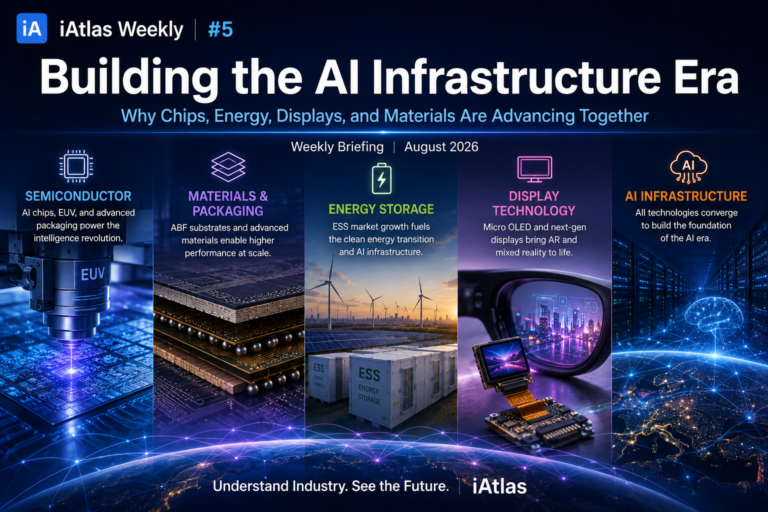
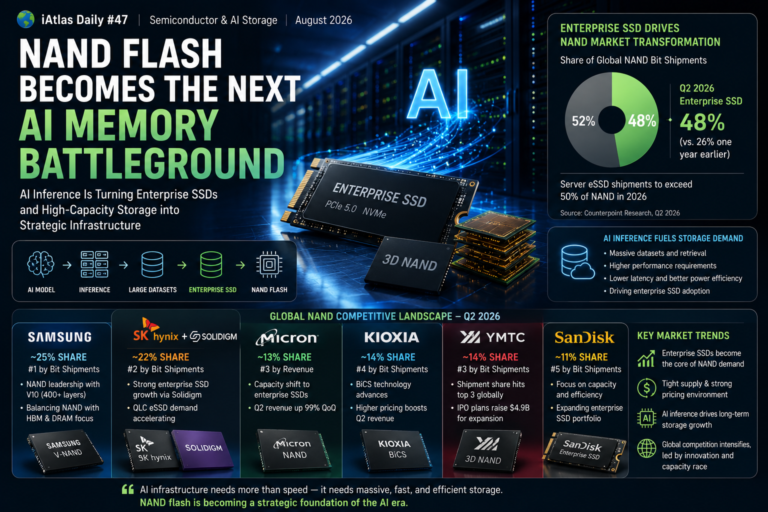
- AI is accelerating demand across semiconductors, energy storage, and advanced materials.
- Competitive advantage is shifting from manufacturing capacity to technology, materials, and ecosystem integration.
Cover Story
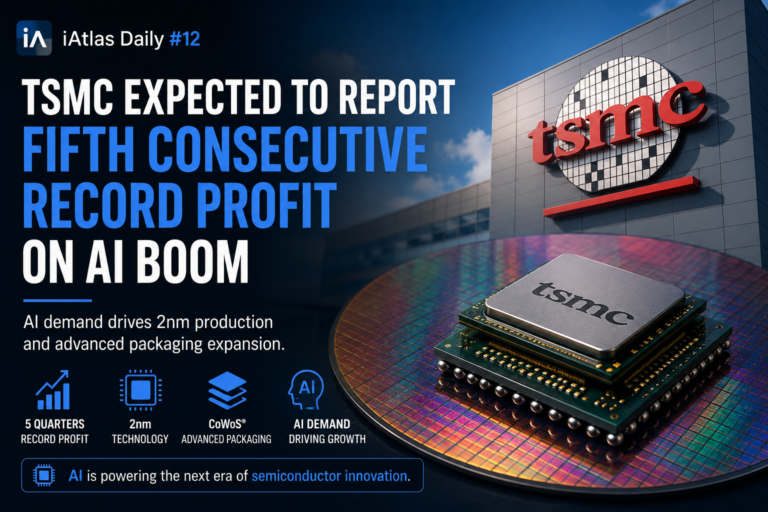
Why Samsung’s New Gwangju Investment Matters
Samsung Electronics is reportedly considering a new manufacturing investment in Gwangju.
At first glance, the story appears to be about another production facility.
In reality, it reflects something much bigger.
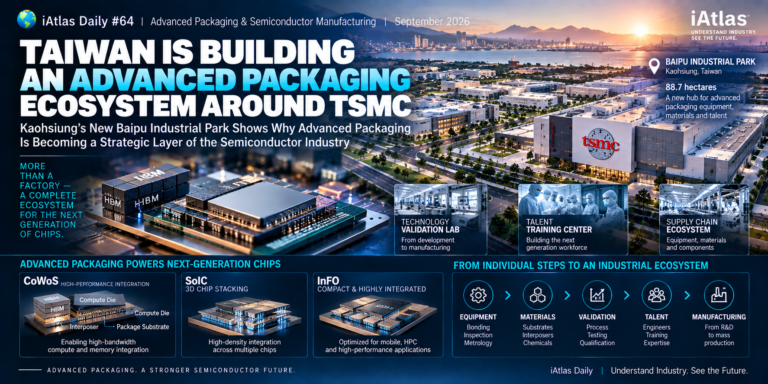
The semiconductor industry is entering a new phase where competitiveness depends not only on manufacturing capacity, but also on advanced packaging, resilient supply chains, and regional industrial ecosystems.
As AI adoption accelerates worldwide, manufacturers are expanding beyond traditional production hubs to build more flexible and diversified operations.
The significance of Gwangju is not simply its location.
It represents another step toward building the next-generation AI manufacturing ecosystem.
Battery
AI Is Powering the ESS Boom
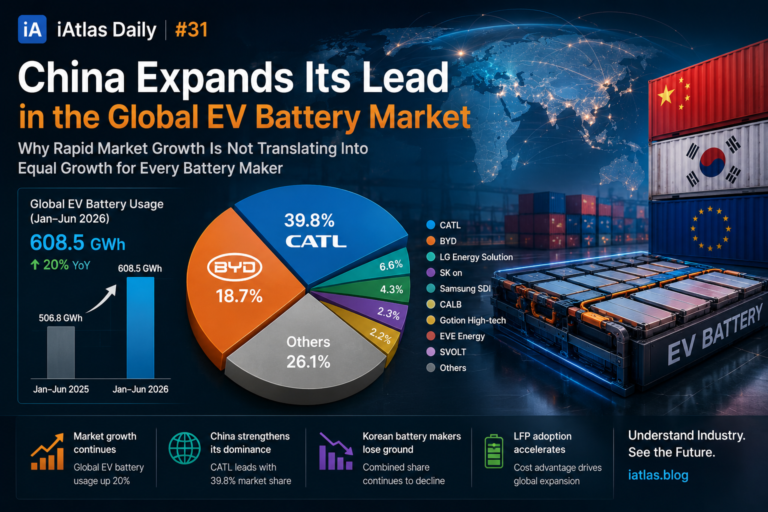
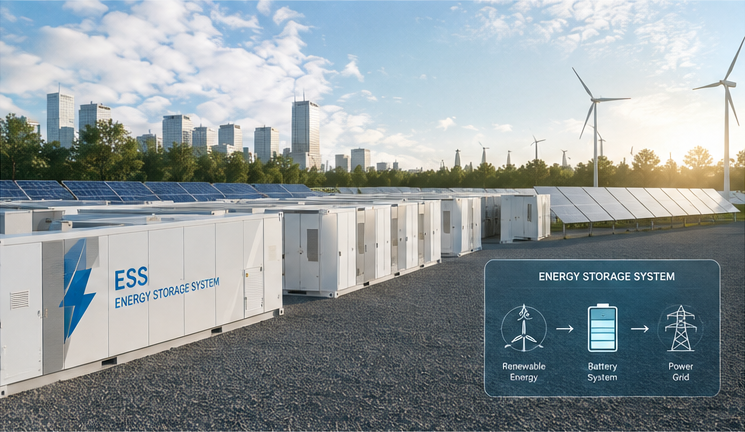
Artificial intelligence is dramatically increasing global electricity demand.
Large AI data centers consume significantly more power than conventional facilities, making Energy Storage Systems (ESS) an essential part of future infrastructure.
At the same time, battery research continues to focus on next-generation technologies, including:
- Solid-State Batteries
- Sodium-ion Batteries
- Lithium Metal Batteries
- Silicon Anodes
- Next-generation Electrolytes
Many of these technologies rely on highly controlled research environments due to the air-sensitive nature of advanced materials.
Semiconductor
The Era of Advanced Packaging
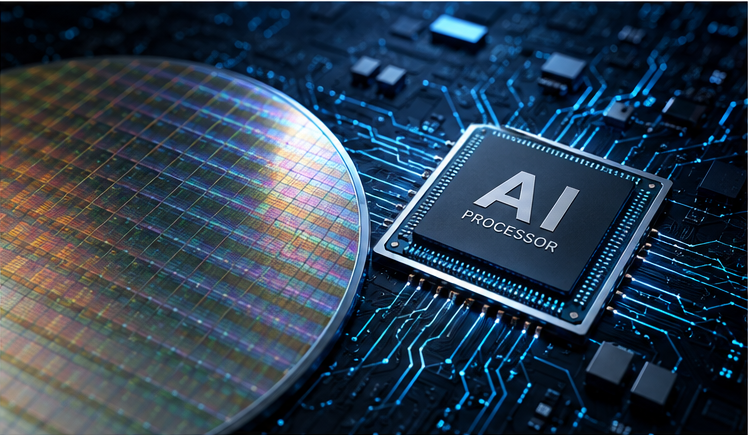
The AI race is no longer defined solely by smaller process nodes.
Instead, advanced packaging technologies are becoming one of the industry’s most important competitive advantages.
Key technologies include:
- HBM
- Advanced Packaging
- Chiplet Architecture
- CoWoS
- Glass Substrate
Future AI performance will depend not only on computing power, but also on how efficiently chips are integrated into complete systems.
OLED
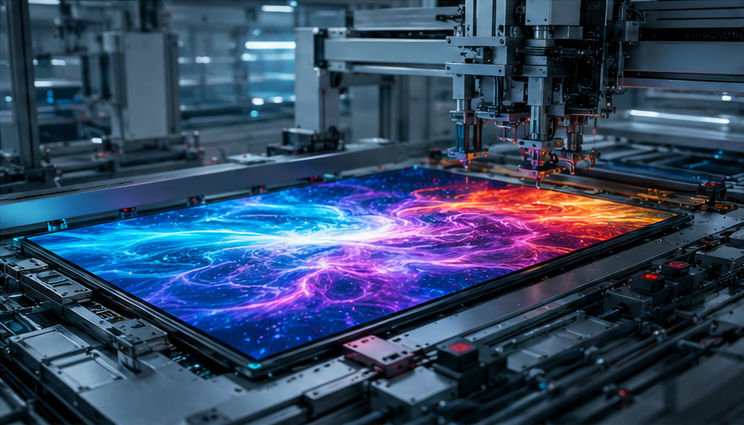
Quality Over Quantity
Competition within the OLED industry is shifting.
Instead of focusing purely on production capacity, companies are investing in:
- High-Purity Materials
- Material Purification
- Process Innovation
The expansion of IT OLED, automotive displays, and XR devices will continue driving demand for premium materials and manufacturing technologies.
🎯 Atlas Radar

Glass Substrate
One technology currently attracting significant industry attention is Glass Substrate.
Originally considered a long-term research topic, it is rapidly becoming a strategic platform for next-generation semiconductor packaging.
Why It Matters
Glass substrates offer superior flatness, thermal stability, and signal performance compared to conventional organic substrates.
As AI chips require greater bandwidth and higher integration density, this technology could become a critical building block of future semiconductor manufacturing.
🔭 Atlas Outlook
Looking Ahead
AI Will Continue Connecting Industries
Artificial intelligence is no longer transforming only the semiconductor industry.
Its impact is spreading across:
- Power Infrastructure
- Energy Storage
- Batteries
- Advanced Materials
- Manufacturing Automation
Future industrial competitiveness will increasingly depend on how effectively companies connect these technologies into integrated ecosystems.
💡 Atlas Insight
Today’s headline is not simply about Samsung or Gwangju.
It reflects a broader industrial transformation.
AI is reshaping supply chains, manufacturing strategies, and investment priorities across multiple industries.
Understanding individual technologies is no longer enough.
The real opportunity lies in understanding how industries connect.
Today’s Keywords
HBM (High Bandwidth Memory)
High-performance memory technology designed for AI computing and data-intensive workloads.
Advanced Packaging
Technologies that integrate multiple semiconductor chips into highly efficient systems.
ESS (Energy Storage System)
Infrastructure that stores electricity for later use, playing a critical role in AI data centers and renewable energy integration.
About iAtlas
iAtlas is an independent publication covering batteries, semiconductors, OLED, advanced materials, AI, and global industrial trends.
We transform complex industrial developments into clear, reliable, and easy-to-understand insights.
Whether you’re following today’s industry news or building long-term expertise, iAtlas helps you understand not only what happened, but why it matters.
Technology creates change.
Insight creates opportunity.
— iAtlas