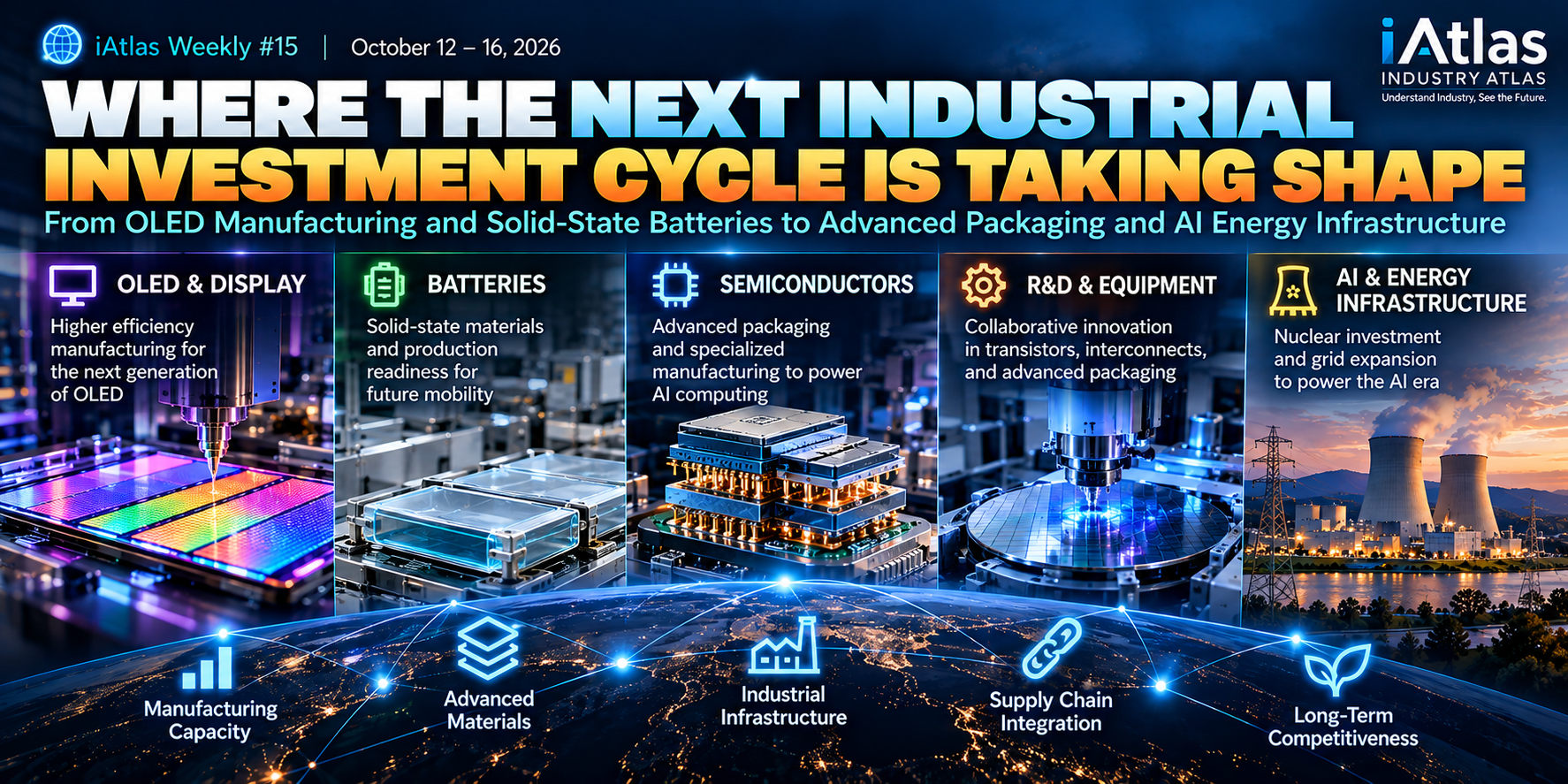
Where the Next Industrial Investment Cycle Is Taking Shape
From OLED Manufacturing and Solid-State Batteries to Advanced Packaging and AI Energy Infrastructure
iAtlas Weekly #15 | October 12–16, 2026

The Big Picture
The next industrial investment cycle is taking shape across a much broader range of technologies than finished products alone.
This week, developments involving LG Display, TSMC, GlobalFoundries, Samsung SDI, EcoPro BM, Applied Materials, Intel, Google, and Constellation Energy revealed a common trend.
Companies are increasingly investing in the technologies and infrastructure required to manufacture, integrate, and operate next-generation products.
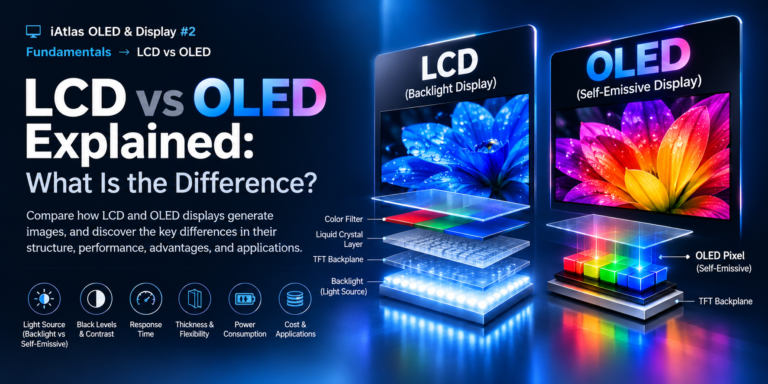
In OLED displays, attention is shifting toward more efficient manufacturing processes.
In batteries, companies are building the materials and production capabilities required for solid-state technologies.
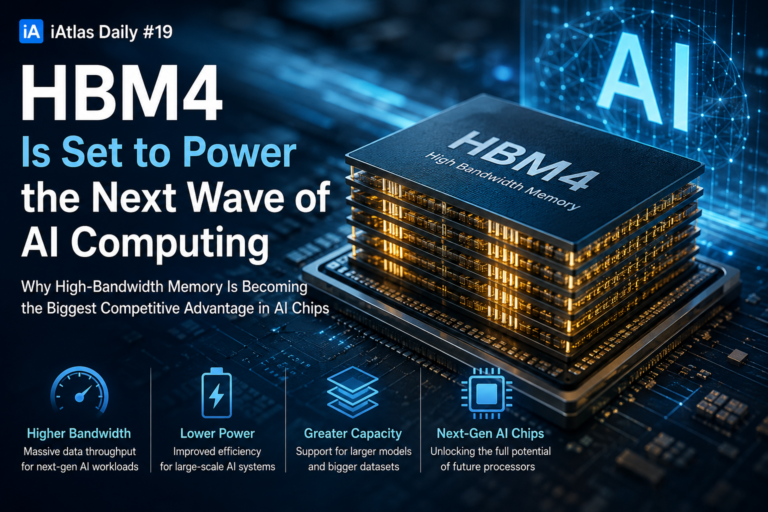
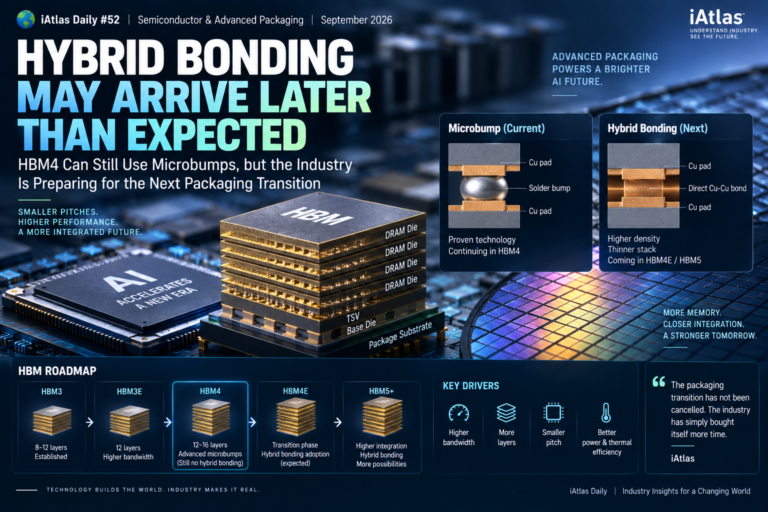
In semiconductors, advanced packaging and collaborative research are becoming increasingly important.
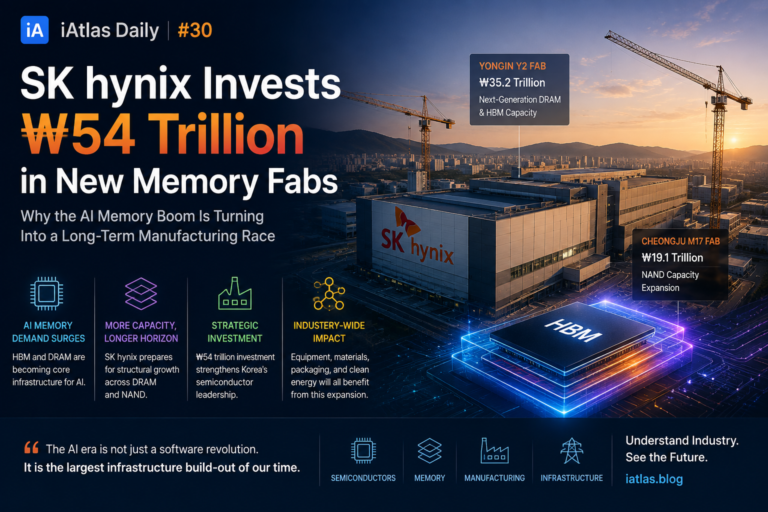
And in AI infrastructure, electricity supply is emerging as a strategic factor in long-term competitiveness.
These developments involve different industries, but they share a fundamental principle.
The next industrial advantage may depend less on who introduces a new product first and more on who builds the manufacturing and infrastructure capabilities required to produce it at scale.
This week’s developments offer five examples of that transformation.
1. OLED: Manufacturing Efficiency Is Becoming a Competitive Advantage
LG Display’s FLiPP technology illustrates how process innovation could reshape OLED manufacturing economics.
FLiPP, short for FMM-Less innovative Pixel Patterning, uses an alternative pixel-patterning approach designed to reduce dependence on conventional fine metal masks.
LG Display has reported potential improvements including approximately 24% higher panel productivity and a 40% reduction in deposition process time under its comparison conditions.
These figures represent company-reported technology comparisons rather than independently verified results from widespread commercial production.
Nevertheless, the implications are significant.
OLED manufacturers face pressure to improve production yields, reduce material waste, and lower manufacturing costs.
This is particularly important for IT OLED applications, including laptops, monitors, and tablets, where display area and cost requirements differ from those of smartphones.
The strategic opportunity is not limited to manufacturing more OLED panels.
It involves producing them more efficiently.
If alternative patterning technologies can deliver competitive yields and reliability at scale, they could influence equipment demand, factory design, and the economics of future OLED investments.
Investment signal: Process efficiency, materials utilization, and manufacturing yield may become increasingly important differentiators in the display industry.
2. Batteries: The Next Investment Challenge Is Manufacturing Readiness
Samsung SDI and EcoPro BM announced a partnership to develop materials for sulfide-based all-solid-state batteries.
The companies are targeting commercialization in 2027, with cooperation covering cathode materials, solid electrolytes, quality evaluation, and manufacturing preparation.
EcoPro BM has also disclosed a solid-electrolyte pilot facility with approximately 40 metric tons of annual capacity.
The partnership reflects a challenge facing next-generation battery technologies.
Laboratory performance alone is insufficient for commercial success.
Materials must be manufactured consistently, integrated into battery cells, and qualified for long-term performance.
For sulfide-based solid-state batteries, important challenges include moisture sensitivity, electrode–electrolyte interfaces, mechanical stability, and process repeatability.
These requirements create opportunities across the manufacturing supply chain.
Materials companies must develop reliable production processes.
Equipment suppliers may need to support new powder-processing, densification, and environmental-control requirements.
Battery manufacturers must integrate those technologies into commercially viable cell architectures.
However, a memorandum of understanding and pilot production capability should not be confused with confirmed high-volume manufacturing.
Investment signal: The commercial value of solid-state batteries will increasingly depend on manufacturing capability, quality control, and supply-chain integration—not only battery chemistry.
3. Semiconductors: Advanced Packaging Is Becoming Strategic Infrastructure
TSMC and GlobalFoundries announced a $2 billion manufacturing agreement to establish U.S.-based silicon interposer production for TSMC’s CoWoS advanced packaging ecosystem.
GlobalFoundries plans to expand manufacturing capacity at its Malta, New York facility, with production ramp-up expected in the first half of 2028.
Silicon interposers provide high-density electrical connections between semiconductor components, including advanced processors and high-bandwidth memory.
These structures are essential to many high-performance AI chip packages.
The agreement demonstrates an important change in semiconductor manufacturing.
Producing advanced logic chips is only one part of delivering complete AI computing systems.
Manufacturers must also secure memory, interposers, package substrates, assembly capacity, and testing capabilities.
A shortage in any critical component can constrain the availability of finished semiconductor packages.
The GlobalFoundries agreement therefore represents more than an additional component supplier.
It is an investment in a specialized manufacturing capability that supports the broader AI semiconductor ecosystem.
It also highlights opportunities for companies that do not manufacture leading-edge logic chips themselves.
Specialized process technologies can become strategically important when they address bottlenecks elsewhere in the supply chain.
Investment signal: Advanced packaging capacity, interposer manufacturing, and high-density integration technologies are becoming important areas of semiconductor investment.
4. Semiconductor R&D: The Innovation Process Is Becoming an Investment Target
Applied Materials and Intel announced a collaboration covering next-generation transistors, interconnects, and advanced packaging technologies.
The companies plan to conduct research through Applied Materials’ EPIC Center in Silicon Valley and Intel’s research facilities in Oregon.
On October 12, Applied Materials unveiled its $5 billion EPIC Center, a facility designed to accelerate collaborative semiconductor equipment and process technology development.
The significance extends beyond the size of the investment.
Semiconductor innovation increasingly requires coordination among equipment suppliers, materials companies, chipmakers, and research institutions.
Advanced transistors require new materials and manufacturing processes.
Interconnect scaling introduces electrical and physical constraints.
Three-dimensional packaging creates additional challenges involving bonding, power delivery, and thermal management.
These technologies cannot always be optimized independently.
Changes in one part of the manufacturing process can affect performance and reliability elsewhere.
The EPIC Center model seeks to address this complexity by bringing participants into a shared development environment.
Its success will depend on whether collaborative research leads to faster qualification and commercially viable manufacturing technologies.
Investment signal: Research infrastructure, process integration, and equipment–manufacturer collaboration may become increasingly important sources of competitive advantage.
5. AI Infrastructure: Electricity Is Becoming a Strategic Asset
Google and Constellation Energy announced long-term electricity agreements covering approximately 3.59 GW of contracted power capacity.
The arrangements include support for 890 MW of additional nuclear generating capacity through upgrades to existing facilities, alongside a separate agreement involving 2.7 GW of existing generation.
Constellation plans to invest more than $4.3 billion in associated nuclear plant upgrades.
The distinction between new generating capacity and existing contracted supply is important.
The full 3.59 GW agreement does not represent entirely new electricity generation.
Nevertheless, the agreement illustrates how AI is changing the economics of power infrastructure.
Data centers require continuous access to substantial amounts of electricity.
As AI computing expands, power availability can influence project location, development schedules, and long-term operating costs.
Technology companies are therefore becoming more involved in electricity procurement and infrastructure investment.
This creates potential opportunities across nuclear generation, grid equipment, transmission, substations, energy storage, and industrial electrical systems.
However, those broader opportunities should not be interpreted as confirmed investments under Google’s specific agreement.
Investment signal: Electricity generation and grid infrastructure are becoming integral parts of the AI investment cycle.
6. Five Industries, One Investment Pattern
Although this week’s announcements involve different technologies, they reveal a similar investment logic.
| Industry | Emerging Investment Focus | Strategic Objective |
|---|---|---|
| OLED & Display | Pixel-patterning and process efficiency | Improve manufacturing economics |
| Batteries | Solid electrolytes and production readiness | Enable next-generation commercialization |
| Semiconductors | Interposers and advanced packaging | Expand AI chip integration capacity |
| Semiconductor Equipment | Collaborative R&D and process development | Accelerate manufacturing innovation |
| AI & Energy | Nuclear generation and electricity infrastructure | Secure long-term computing power |
The common theme is the increasing importance of the systems behind industrial products.
For investors and industrial companies, this creates a broader set of questions.
Which manufacturing processes are becoming more valuable?
Where are capacity constraints emerging?
Which suppliers control specialized technologies?
What infrastructure must be built before end-market demand can be fully served?
And which announced investments are likely to translate into actual commercial production?
These questions are becoming essential to understanding industrial competitiveness.
7. Where the Next Industrial Investment Opportunities May Emerge
The week’s developments suggest several areas worth monitoring.
Manufacturing Process Innovation
Technologies that improve yield, productivity, and materials efficiency could create significant economic value.
In capital-intensive industries, even incremental improvements can influence long-term competitiveness.
However, company-reported performance improvements must be evaluated against commercial production results.
Advanced Materials
New battery chemistries, semiconductor structures, and display processes require specialized materials.
The ability to manufacture those materials consistently may become a competitive advantage.
Qualification requirements and production economics will determine which technologies achieve commercial adoption.
Specialized Semiconductor Manufacturing
Advanced packaging creates opportunities beyond leading-edge transistor fabrication.
Interposers, bonding technologies, substrates, and inspection equipment are increasingly important to complete AI systems.
Industrial R&D Infrastructure
Collaborative development environments may help reduce the time required to commercialize complex technologies.
Their value will depend on measurable improvements in development efficiency and manufacturing readiness.
Energy and Grid Infrastructure
AI-related electricity demand may support investment in generation, transmission, electrical equipment, and grid flexibility.
But project economics will depend on regulation, electricity markets, capital costs, and the timing of demand.
8. The Difference Between Announcements and Industrial Execution
One of the most important lessons from this week is the need to distinguish investment announcements from manufacturing outcomes.
A technology demonstration does not establish commercial yield.
A memorandum of understanding does not guarantee a supply contract.
A manufacturing agreement does not mean production capacity is already available.
A research facility does not automatically produce qualified technologies.
And a power purchase agreement does not necessarily represent entirely new generating capacity.
These distinctions matter when evaluating industrial investment opportunities.
The transition from announcement to commercial value generally requires several stages.
Technology Development → Pilot Validation → Customer Qualification → Capacity Investment → Production Ramp → Commercial Returns
Not every project will complete this progression on schedule.
For that reason, industrial investment analysis should examine not only the size of announced commitments, but also the technical and operational milestones required to realize them.
This is especially important in emerging technologies where manufacturing processes are still evolving.
What to Watch Next
OLED commercialization
Will alternative pixel-patterning technologies achieve competitive yields and production costs in commercial manufacturing?
Solid-state battery qualification
Can manufacturers translate pilot-scale material production into reliable battery-cell manufacturing?
Advanced packaging capacity
Will additional interposer manufacturing reduce supply constraints for AI semiconductor packages?
Semiconductor R&D outcomes
Can collaborative development programs shorten the transition from research to qualified manufacturing technologies?
AI electricity infrastructure
Will power generation and grid expansion keep pace with planned data center capacity?
Capital allocation
Will future investment increasingly favor specialized manufacturing capabilities and supporting infrastructure rather than final-product capacity alone?
iAtlas Insight
This week’s industrial developments point toward a broader transformation in capital allocation.
For much of the technology industry’s history, attention has focused on finished products.
Better smartphones, faster computers, longer-range electric vehicles, and more powerful AI systems have been the most visible measures of progress.
But the technologies behind those products are becoming increasingly complex.
An advanced semiconductor requires more than leading-edge transistor fabrication.
A solid-state battery requires more than a promising electrolyte.
An OLED display requires more than improved image quality.
And an AI data center requires more than powerful processors.
Each depends on manufacturing processes, specialized materials, equipment, and infrastructure.
That changes where competitive advantages can emerge.
Companies that control critical production technologies may become strategically important even when they do not manufacture the final product.
Equipment suppliers, materials developers, packaging specialists, and energy infrastructure providers can all play essential roles.
The next industrial investment cycle may therefore be distributed across a wider ecosystem of companies and technologies.
The most important investment opportunities may not always be found in the products attracting the most attention.
They may be found in the manufacturing capabilities and infrastructure that make those products possible.
For industrial companies, the challenge is to identify which capabilities will become essential.
For investors, the challenge is to distinguish promising announcements from technologies and infrastructure that can generate durable commercial value.
The next industrial advantage will belong not only to those who innovate, but to those who can turn innovation into scalable industrial capability.
Related Articles
TSMC Expands Advanced Packaging Capacity as AI Demand Grows
Why AI semiconductor demand is creating new investment requirements across advanced packaging technologies.
AI Data Center Infrastructure: The Next Industrial Investment Cycle
How AI computing demand is driving investment across semiconductors, data centers, electricity, and industrial equipment.
Battery Manufacturing Process Explained
An introduction to the manufacturing stages and process requirements behind commercial battery production.
References
1. LG Corporation — Official Newsroom
LG Display’s FLiPP OLED manufacturing technology and pixel-patterning development.
2. EcoPro BM — October 7, 2026
EcoPro BM and Samsung SDI Announce Solid-State Battery Materials Cooperation.
3. Applied Materials — October 6, 2026
Applied Materials and Intel Collaborate to Accelerate Chipmaking Innovations for AI-Driven Computing.
4. Applied Materials — October 12, 2026
Applied Materials Unveils $5 Billion EPIC Center in Silicon Valley.
5. Google and Constellation Energy — October 6, 2026
Google and Constellation Announce Landmark Agreement to Bring 890 MW of New Nuclear Capacity to PJM Grid.
ℹ️ About iAtlas
iAtlas is an independent publication covering batteries, semiconductors, OLED, advanced materials, AI, and global industrial trends.
We transform complex industrial developments into clear, reliable, and easy-to-understand insights.
Whether you’re following today’s industry news or building long-term expertise, iAtlas helps you understand not only what happened, but why it matters.
Technology creates change.
Insight creates opportunity.
— iAtlas