
Cell Assembly Explained: 7 Essential Steps in Lithium-Ion Battery Manufacturing
🔋 iAtlas Battery #14 | 🏭 Manufacturing → 🏗️ Cell Assembly
Introduction

Cell assembly is one of the most critical stages in lithium-ion battery manufacturing.
After electrodes have been produced, they must be precisely assembled into battery cells that can safely store and deliver electrical energy. Even small assembly defects may reduce battery performance, shorten cycle life, or increase safety risks.
Modern battery cell assembly combines high-speed automation with micron-level precision, making it one of the most advanced manufacturing processes in the battery industry.
In this article, you’ll learn how electrodes become complete battery cells through stacking, winding, separator insertion, welding, and sealing.
Table of Contents
- What Is Cell Assembly?
- Preparing the Electrodes
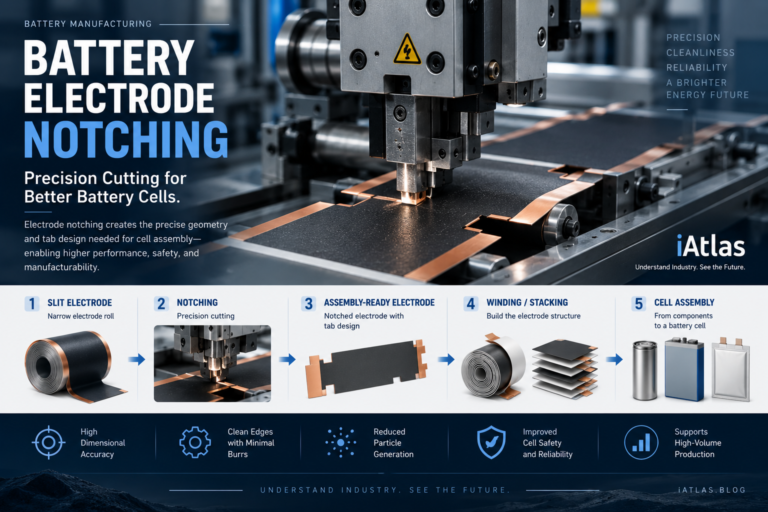
- Stacking vs. Winding
- Separator Integration
- Tab Welding
- Cell Sealing
- Why Cell Assembly Quality Matters
- Frequently Asked Questions
What Is Cell Assembly?
Cell assembly is the manufacturing process that combines electrodes, separators, and current collectors into a complete lithium-ion battery cell.
Unlike electrode manufacturing, which prepares the cathode and anode materials, cell assembly creates the battery’s internal structure before electrolyte filling and formation.
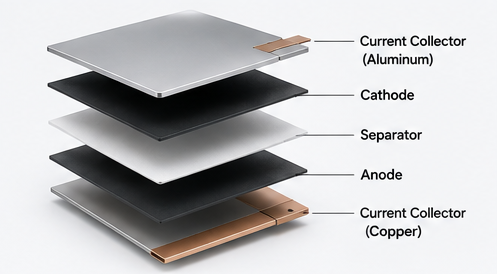
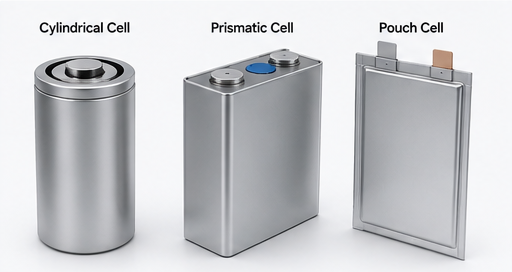
The exact assembly process depends on the battery format:
- Cylindrical cells
- Prismatic cells
- Pouch cells
Although the designs differ, every battery cell must maintain precise alignment, insulation, and electrical connections.
Step 1. Preparing the Electrodes
Before assembly begins, manufactured cathodes and anodes are inspected for:
- Thickness
- Surface defects
- Moisture
- Burrs
- Dimensional accuracy
Only electrodes that meet strict quality standards proceed to the assembly line.
Step 2. Stacking vs. Winding
The electrode structure depends on the battery design.
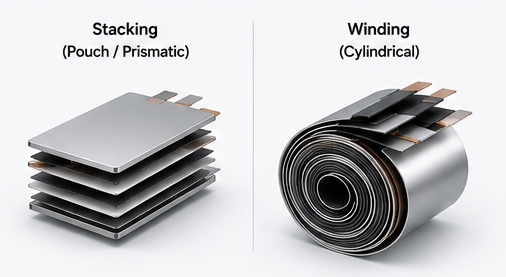
Stacking
Used mainly for:
- Pouch cells
- Prismatic cells
Advantages include:
- High energy density
- Excellent space utilization
Winding
Used mainly for:
- Cylindrical cells
Advantages include:
- High production speed
- Excellent mechanical stability
Step 3. Separator Integration
The separator is placed between the cathode and anode to prevent short circuits while allowing lithium ions to move freely.
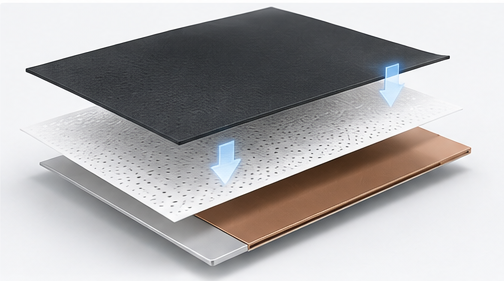
Proper separator alignment is essential for:
- Safety
- Uniform current distribution
- Long cycle life
This process directly connects with 🔋 iAtlas Battery #7 — Battery Separator Explained.
Step 4. Tab Welding
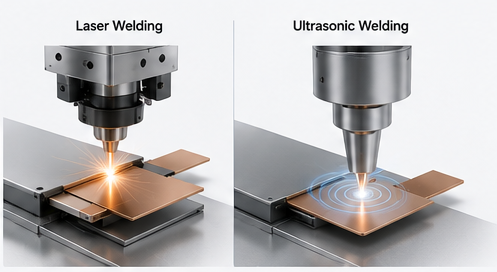
Current collector tabs are welded to connect the electrodes with the battery terminals.
Modern production lines commonly use:
- Laser welding
- Ultrasonic welding
High-quality welding minimizes electrical resistance and improves reliability.
Step 5. Cell Sealing
Once assembled, the battery cell is sealed to protect internal components from moisture and contamination.
Depending on the battery type, manufacturers use:
- Metal can sealing
- Aluminum pouch sealing
- Prismatic case sealing
Precise sealing is critical for long-term durability.
Why Cell Assembly Quality Matters
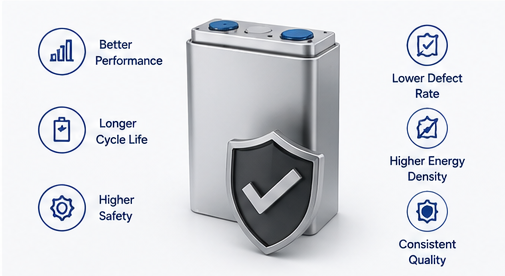
High-quality cell assembly provides:
- Better battery consistency
- Longer cycle life
- Improved safety
- Higher manufacturing yield
- Faster production
Poor assembly may lead to:
- Internal short circuits
- Capacity imbalance
- Premature degradation
- Lower production efficiency
Because of this, leading battery manufacturers invest heavily in automated inspection and AI-powered quality control systems.
Frequently Asked Questions
What is cell assembly?
Cell assembly is the manufacturing process that combines cathodes, anodes, separators, and electrical connections into a complete lithium-ion battery cell.
What is the difference between stacking and winding?
Stacking layers electrodes, while winding rolls them into a cylindrical “jelly-roll” structure.
Why is separator alignment important?
Accurate separator placement prevents short circuits and improves battery safety and lifespan.
What comes after cell assembly?
After cell assembly, batteries move to electrolyte filling, where electrolyte is injected before formation and aging.
Key Takeaways
- Cell assembly transforms electrodes into complete battery cells.
- Stacking and winding are the two primary assembly methods.
- Separator alignment is critical for battery safety.
- Laser welding improves electrical reliability.
- High-precision automation ensures consistent battery quality.
🎓 Battery Learning Path
🏭 Manufacturing
✅🔋 iAtlas Battery #13 — Electrode Manufacturing
📍 🔋 iAtlas Battery #14 — Cell Assembly (Current)
▶ 🔋 iAtlas Battery #15 — Electrolyte Filling
▶ 🔋 iAtlas Battery #16 — Formation & Aging
▶ 🔋 iAtlas Battery #17 — Battery Inspection & Quality Control
Continue building your understanding of how lithium-ion batteries are manufactured, from prepared electrodes to fully activated battery cells.
📖 Continue Reading
⬅ Previous Article
🔋 iAtlas Battery #13
Electrode Manufacturing Explained: 4 Essential Steps to High-Performance Lithium-Ion Batteries
Discover how mixing, coating, drying, and calendaring determine electrode quality and influence battery performance.
➡ Next Article
🔋 iAtlas Battery #15
Electrolyte Filling Explained: Why Moisture Control Is Critical for Lithium-Ion Batteries
Learn how electrolyte filling activates lithium-ion battery cells and why moisture control plays a decisive role in battery performance and safety.
References
- International Energy Agency (IEA)
- U.S. Department of Energy – Vehicle Technologies Office
- Battery University
- Nature Energy (Battery Manufacturing Research)
About iAtlas
iAtlas is an independent publication covering batteries, semiconductors, OLED, advanced materials, AI, and global industrial trends.
We transform complex industrial developments into clear, reliable, and easy-to-understand insights.
Whether you’re following today’s industry news or building long-term expertise, iAtlas helps you understand not only what happened, but why it matters.
Technology creates change.
Insight creates opportunity.
— iAtlas