Battery Mixing Equipment Explained: 6 Essential Features of Slurry Mixers
🔋 iAtlas Battery #18 | ⚙️ Equipment → 🌀 Mixing Equipment
Introduction
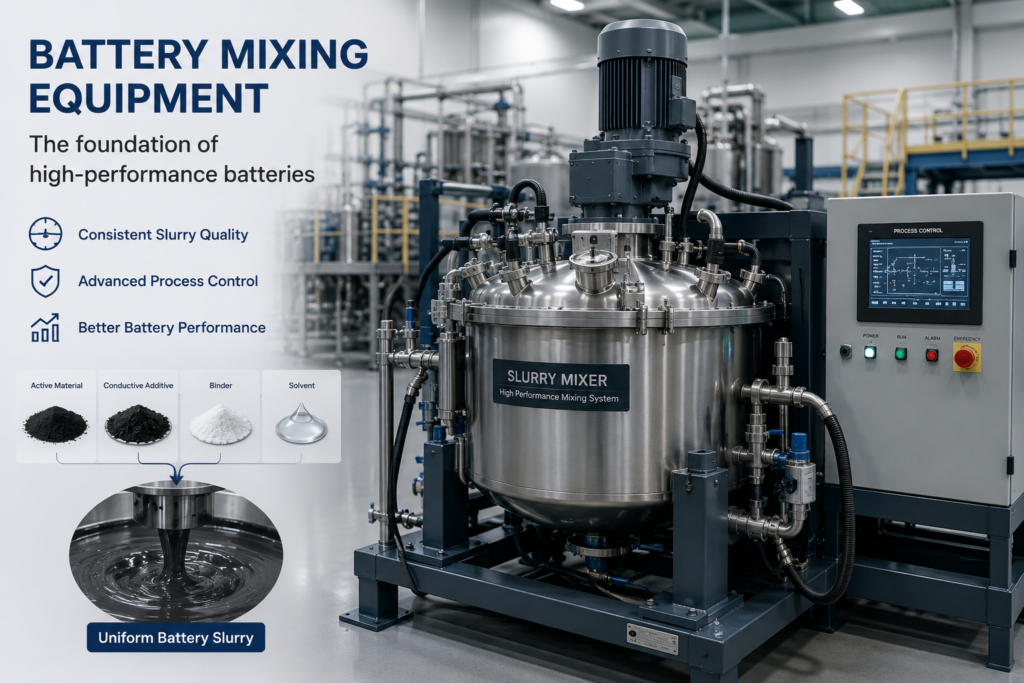
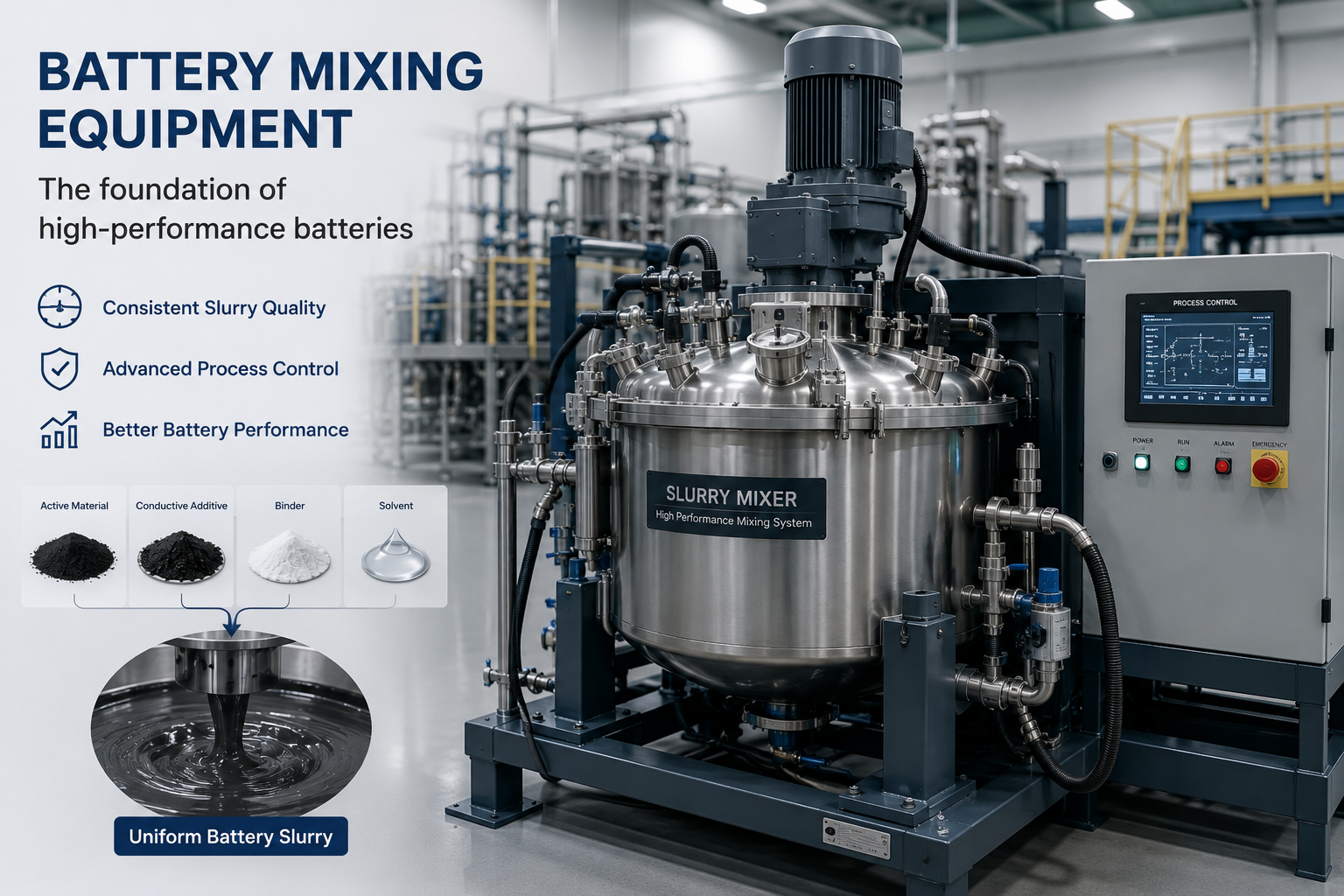
Battery mixing equipment is the first major machine used in lithium-ion battery manufacturing.
Before electrodes can be coated onto metal foil, active materials, conductive additives, binders, and solvents must be mixed into a highly uniform slurry.
Even tiny variations in slurry consistency can affect coating quality, electrode density, battery capacity, and long-term cycle life.
Modern battery mixing equipment combines precision mechanical design, vacuum technology, temperature control, and automated process monitoring to ensure every batch meets strict quality standards.
Table of Contents
- What Is Battery Mixing Equipment?
- Main Components of a Slurry Mixer
- Types of Mixing Equipment
- Why Vacuum Mixing Matters
- Key Performance Indicators
- Future Trends
- Frequently Asked Questions
What Is Battery Mixing Equipment?
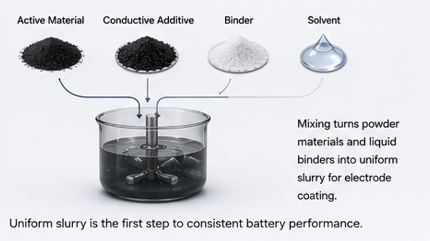
Battery mixing equipment prepares electrode slurry by blending solid powders with binders and solvents into a homogeneous mixture.
The slurry is later coated onto:
- Aluminum foil (cathode)
- Copper foil (anode)
Because slurry quality directly affects every downstream manufacturing process, mixing is often considered the foundation of battery production.
Main Components of a Slurry Mixer
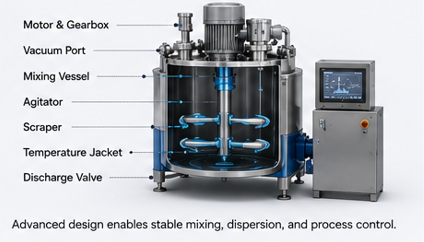
A typical battery slurry mixer includes:
- Mixing vessel
- Agitator
- Scraper system
- Vacuum chamber
- Temperature control jacket
- Process control sensors
Modern systems continuously monitor viscosity, temperature, and mixing speed to maintain stable slurry quality.
Types of Mixing Equipment
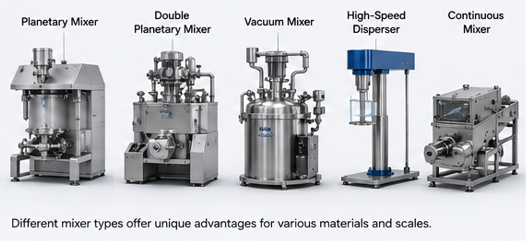
Different battery manufacturers use different mixer designs depending on production scale and slurry characteristics.
Common examples include:
- Planetary mixers
- Double planetary mixers
- Vacuum mixers
- High-speed dispersers
- Continuous mixers
Each design offers advantages in mixing efficiency, scalability, and process consistency.
Why Vacuum Mixing Matters
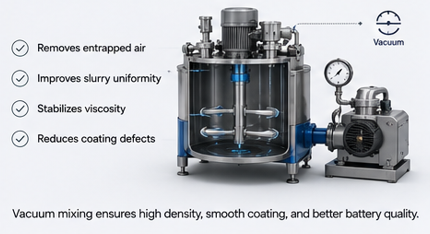
Air bubbles trapped inside slurry can create coating defects and reduce battery performance.
Vacuum mixing helps by:
- Removing entrapped air
- Improving slurry uniformity
- Stabilizing viscosity
- Enhancing coating quality
For high-energy-density batteries, vacuum mixing has become the industry standard.
Key Performance Indicators
Manufacturers evaluate battery mixing equipment using several KPIs.
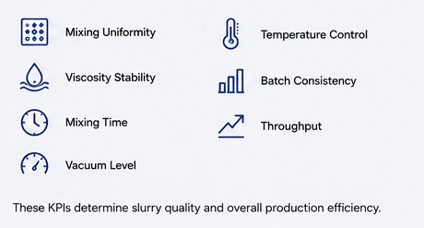
Important indicators include:
- Mixing uniformity
- Batch consistency
- Viscosity stability
- Mixing time
- Vacuum level
- Temperature control
- Production throughput
These parameters determine both product quality and manufacturing efficiency.
Future Trends
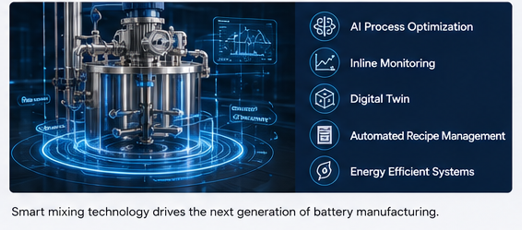
Battery mixing technology continues to evolve.
Recent developments include:
- AI-assisted process optimization
- Inline viscosity monitoring
- Fully automated recipe management
- Digital twin production systems
- Energy-efficient drive systems
As battery factories scale up, smart mixing equipment will play an increasingly important role in improving quality and reducing manufacturing costs.
Frequently Asked Questions
What is battery mixing equipment?
Battery mixing equipment produces homogeneous electrode slurry by blending active materials, binders, conductive additives, and solvents.
Why is vacuum mixing important?
Vacuum mixing removes trapped air, improves slurry consistency, and reduces coating defects.
What is a planetary mixer?
A planetary mixer rotates mixing blades around the vessel while the blades rotate on their own axes, producing highly uniform mixing.
Why does slurry quality matter?
Uniform slurry leads to consistent electrode coating, higher battery performance, and lower manufacturing defect rates.
Key Takeaways
- Battery mixing equipment is the first major machine in battery manufacturing.
- Uniform slurry is essential for high-quality electrodes.
- Vacuum mixing removes trapped air and improves consistency.
- Modern mixers use advanced automation and process monitoring.
- Mixing quality influences every downstream manufacturing process.
🎓 Battery Learning Path
⚙️ Equipment
📍 🔋 iAtlas Battery #18 — Mixing Equipment (Current)
▶ 🔋 iAtlas Battery #19 — Coating Equipment
▶ 🔋 iAtlas Battery #20 — Drying Equipment
▶ 🔋 iAtlas Battery #21 — Calendaring Equipment
▶ 🔋 iAtlas Battery #22 — Slitting Equipment
Welcome to the Equipment learning path, where you’ll explore the machines that power modern lithium-ion battery manufacturing.
📖 Continue Reading
⬅ Previous Learning Path
🔋 iAtlas Battery #17
Battery Inspection Explained: 7 Essential Quality Control Tests Every Battery Must Pass
Discover how manufacturers verify battery quality through electrical testing, visual inspection, and advanced non-destructive inspection technologies.
➡ Next Article
🔋 iAtlas Battery #19
Battery Coating Equipment Explained: How Precision Coaters Build High-Performance Electrodes
Learn how slot-die coating, comma coating, and precision thickness control determine electrode quality and battery performance.
References
- International Energy Agency (IEA)
- U.S. Department of Energy – Vehicle Technologies Office
- Battery University
- Nature Energy
About iAtlas
iAtlas is an independent publication covering batteries, semiconductors, OLED, advanced materials, AI, and global industrial trends.
We transform complex industrial developments into clear, reliable, and easy-to-understand insights.
Whether you’re following today’s industry news or building long-term expertise, iAtlas helps you understand not only what happened, but why it matters.
Technology creates change.
Insight creates opportunity.
— iAtlas