Electrode Manufacturing Explained: Mixing, Coating, Drying, and Calendaring
🔋 iAtlas Battery #13 | 🏭 Manufacturing → 🧪 Electrode Manufacturing
Introduction
Electrode manufacturing is one of the most important stages in lithium-ion battery production.
Every electric vehicle battery begins with a carefully controlled electrode manufacturing process, where active materials are transformed into high-performance battery electrodes.
The quality of electrode manufacturing directly influences battery capacity, cycle life, charging speed, internal resistance, and long-term safety. Even small variations during production can reduce battery performance or increase manufacturing defects.
Modern battery electrode manufacturing consists of four major steps:
- Mixing
- Coating
- Drying
- Calendaring
Together, these processes create high-quality electrodes that are ready for cell assembly.
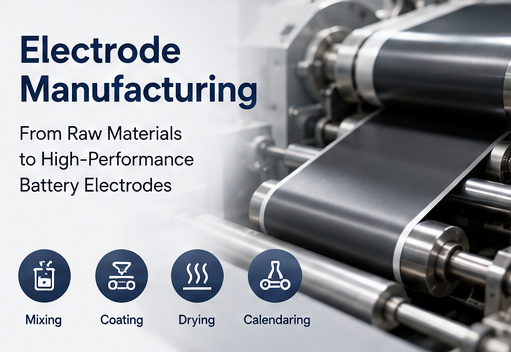
Table of Contents
- What Is Electrode Manufacturing?
- Mixing Process
- Electrode Coating
- Electrode Drying
- Calendaring Process
- Why Electrode Manufacturing Quality Matters
- Frequently Asked Questions
What Is Electrode Manufacturing?
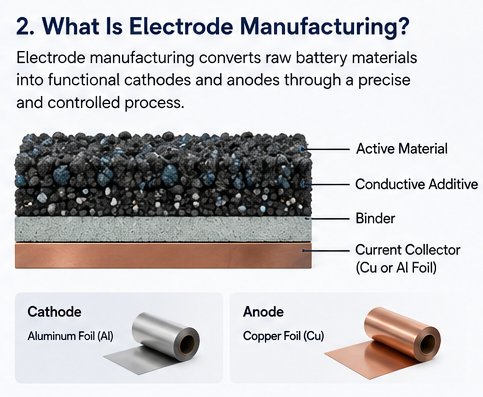
Electrode manufacturing converts raw battery materials into functional cathodes and anodes.
A typical battery electrode contains four key components:
- Active material
- Conductive additive
- Binder
- Current collector
The cathode and anode materials introduced in 🔋 iAtlas Battery #4 and 🔋 iAtlas Battery #5 are processed through electrode manufacturing before they become part of a lithium-ion battery.
Every stage of the manufacturing process must be tightly controlled to ensure consistent battery quality.
Step 1. Mixing
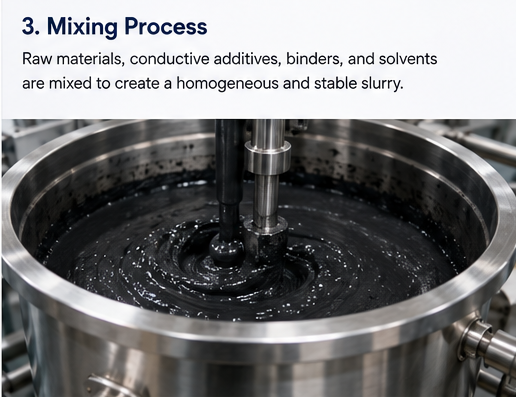
The first stage of electrode manufacturing is slurry preparation.
Cathode or anode powders are mixed with conductive additives, binders, and solvents to create a homogeneous slurry.
Proper mixing ensures:
- Uniform particle distribution
- Stable viscosity
- Consistent coating quality
- Reliable electrochemical performance
Poor mixing can lead to uneven electrode thickness, reduced capacity, and shorter battery life.
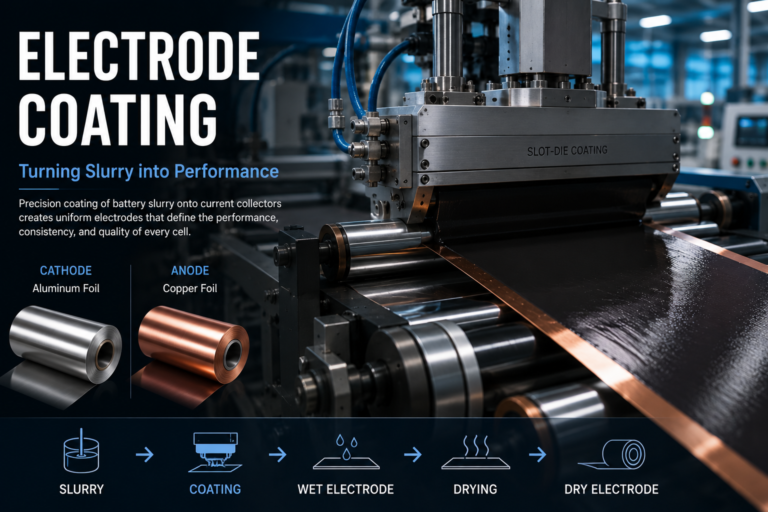
Step 2. Electrode Coating
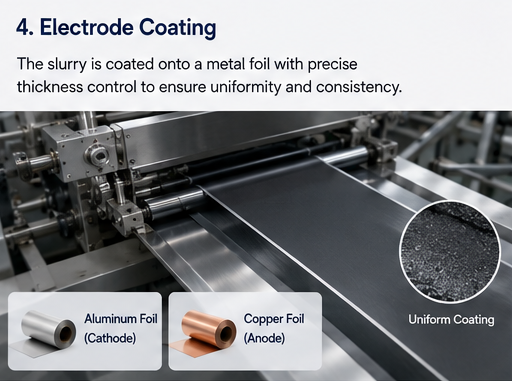
The slurry is coated onto a metal current collector.
Typically:
- Aluminum foil → Cathode
- Copper foil → Anode
The coating process requires extremely precise thickness control.
Uniform coating improves:
- Energy density
- Cell consistency
- Production yield
Uneven coating can create localized defects that reduce battery performance.
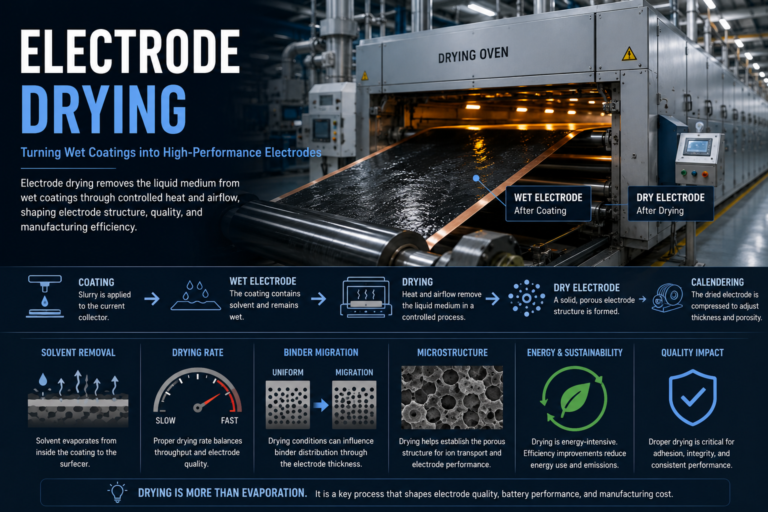
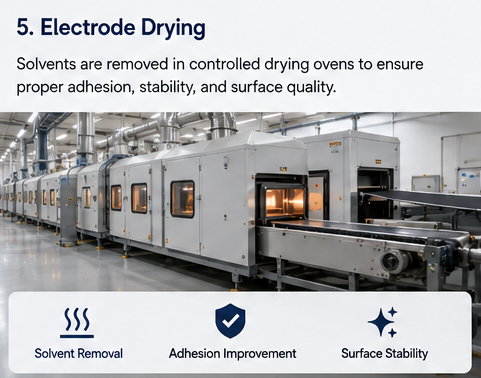
Step 3. Electrode Drying
After coating, solvents must be removed through carefully controlled drying.
The drying process determines:
- Residual solvent content
- Adhesion strength
- Surface quality
- Electrode stability
Improper drying may cause cracking, delamination, or poor electrochemical performance.
Many manufacturers use advanced drying systems to optimize both quality and production speed.
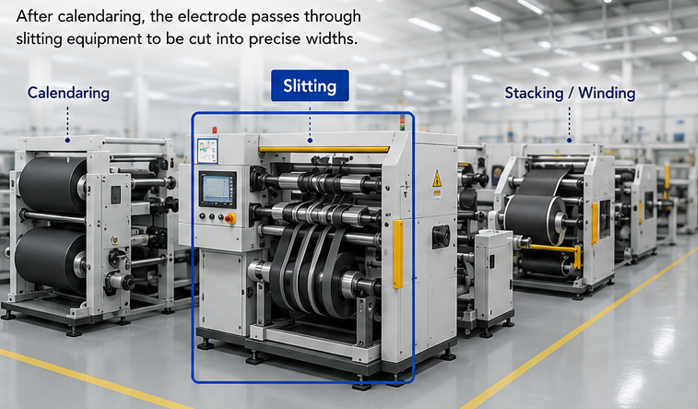
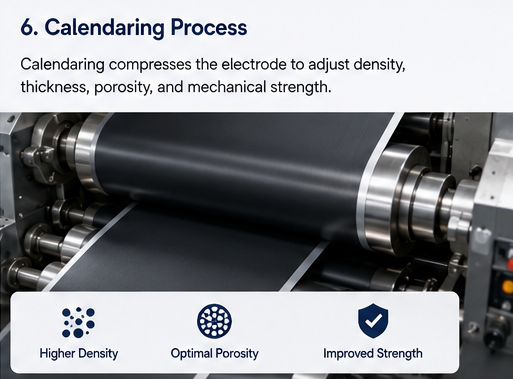
Step 4. Calendaring
Calendaring compresses the coated electrode using precision rollers.
This process adjusts:
- Electrode density
- Thickness
- Porosity
- Mechanical strength
Proper calendaring increases volumetric energy density while maintaining sufficient porosity for lithium-ion transport.
Because of this balance, calendaring is considered one of the most critical stages in electrode manufacturing.
Why Electrode Manufacturing Quality Matters

The quality of electrode manufacturing directly affects almost every aspect of battery performance.
High-quality manufacturing provides:
- Higher energy density
- Longer cycle life
- Faster charging capability
- Lower defect rates
- Better production consistency
Poor manufacturing control, on the other hand, increases scrap rates and reduces battery reliability.
For this reason, battery manufacturers invest heavily in precision coating systems, inspection equipment, and process automation.
Frequently Asked Questions
What is electrode manufacturing?
Electrode manufacturing is the process of converting battery materials into cathodes and anodes through mixing, coating, drying, and calendaring.
Why is electrode manufacturing important?
Because it determines battery performance, consistency, lifespan, and manufacturing quality.
What is the most critical process?
All four processes are interconnected, but coating and calendaring typically have the greatest influence on electrode quality.
What comes after electrode manufacturing?
After electrodes are completed, they move to cell assembly, where electrodes and separators are assembled into lithium-ion battery cells.
Key Takeaways
- Electrode manufacturing is the foundation of lithium-ion battery production.
- The four major processes are mixing, coating, drying, and calendaring.
- Manufacturing precision directly affects battery quality and lifespan.
- High-quality electrodes improve energy density, charging performance, and production yield.
- Modern battery factories continue investing in automation to improve electrode manufacturing.
🎓 Battery Learning Path
🏭 Manufacturing
📍 🔋 iAtlas Battery #13 — Electrode Manufacturing (Current)
▶ 🔋 iAtlas Battery #14 — Cell Assembly
▶ 🔋 iAtlas Battery #15 — Electrolyte Filling
▶ 🔋 iAtlas Battery #16 — Formation & Aging
▶ 🔋 iAtlas Battery #17 — Battery Inspection & Quality Control
🚀 Welcome to the Manufacturing learning path.
📖 Continue Reading
⬅ Previous Learning Path
🔋 iAtlas Battery #12
Cell-to-Pack vs. Cell-to-Chassis: 5 Essential Differences Explained
Discover how next-generation battery architectures improve energy density, reduce weight, and reshape EV battery design.
➡ Next Article
🔋 iAtlas Battery #14
Cell Assembly Explained: Building Lithium-ion Battery Cells Step by Step
Learn how electrodes, separators, and electrolytes are assembled into cylindrical, prismatic, and pouch cells before battery activation.
References
- International Energy Agency (IEA)
- U.S. Department of Energy – Vehicle Technologies Office
- Battery University
- Nature Energy (Battery Manufacturing Research)
About iAtlas
iAtlas is an independent publication covering batteries, semiconductors, OLED, advanced materials, AI, and global industrial trends.
We transform complex industrial developments into clear, reliable, and easy-to-understand insights.
Whether you’re following today’s industry news or building long-term expertise, iAtlas helps you understand not only what happened, but why it matters.
Technology creates change.
Insight creates opportunity.
— iAtlas