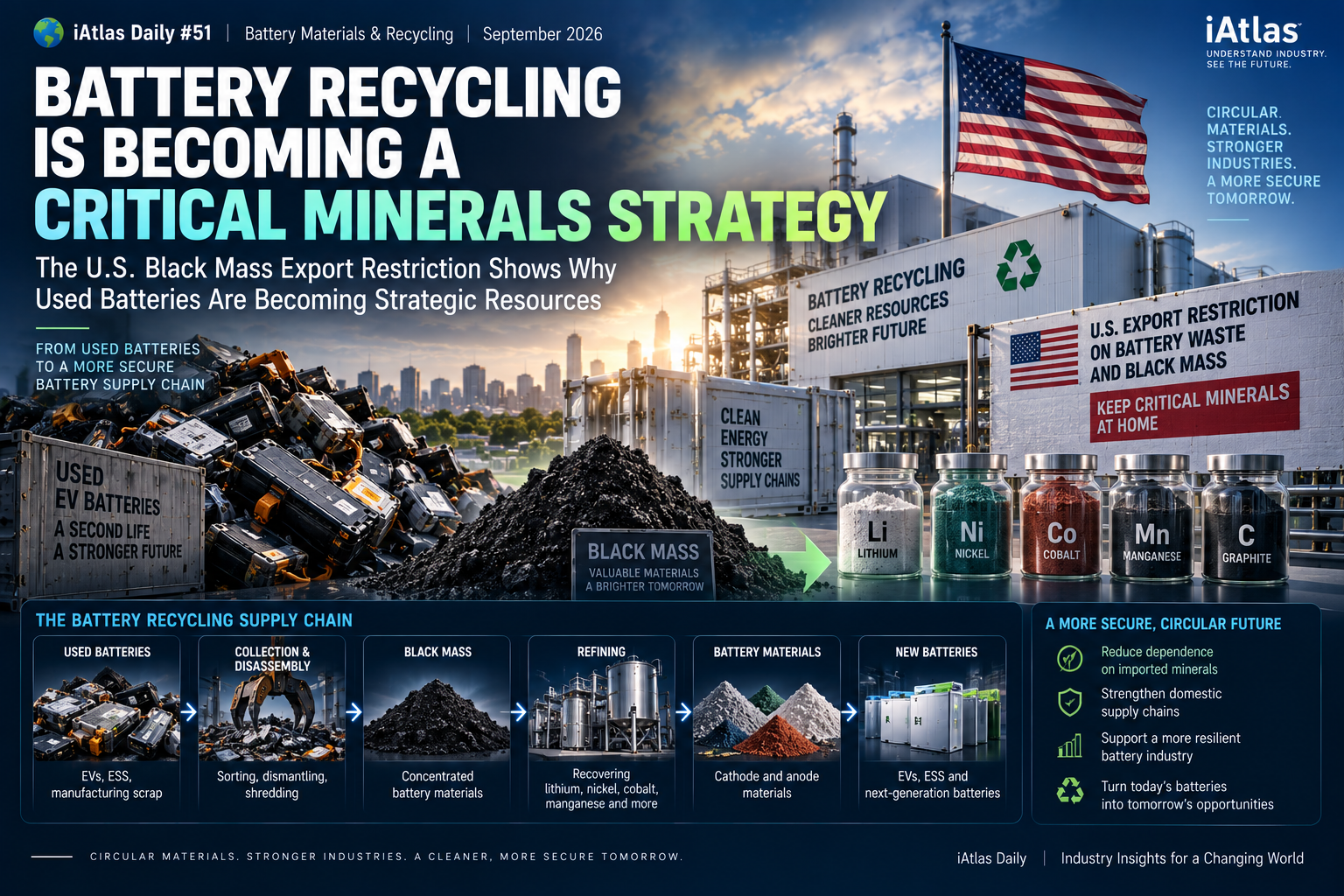
Battery Recycling Is Becoming a Critical Minerals Strategy
The U.S. Black Mass Export Restriction Shows Why Used Batteries Are Becoming Strategic Resources
♻️ iAtlas Daily #51 | Battery Materials & Recycling | September 2026
Battery recycling is entering a new phase.
For years, the Battery Recycling Supply Chain was discussed primarily as an environmental solution — a way to reduce waste, recover valuable materials and manage millions of lithium-ion batteries reaching the end of their useful lives.
That definition is becoming too narrow.
Governments increasingly see used batteries and manufacturing scrap as potential domestic sources of lithium, nickel, cobalt, manganese and graphite.
The United States has now taken another step in that direction.
Beginning August 27, the U.S. restricted exports of certain battery waste, including black mass, for one year as part of an effort to retain more critical-mineral resources inside the country.
The policy highlights an important transformation:
Used Battery
↓
Battery Waste
↓
Black Mass
↓
Critical Minerals
↓
New Battery Materials
↓
New Batteries
What was once considered waste is increasingly being treated as a strategic industrial resource.
The battery supply chain is beginning to close the loop.
♻️ The Big Story
A lithium-ion battery contains materials that remain valuable even after the battery can no longer serve its original application.
Depending on chemistry, these can include:
- lithium
- nickel
- cobalt
- manganese
- graphite
- copper
- aluminum
Recovering those materials can reduce dependence on newly mined resources.
But the strategic value goes further.
Many countries remain dependent on globally concentrated mineral-processing supply chains.
That means recycling can provide something mining alone cannot:
A domestic source of battery materials already located inside the market.
This is why battery recycling is increasingly becoming part of national industrial policy.
⚫ 1. What Is Black Mass?
Black mass is one of the most important intermediate products in lithium-ion battery recycling.
The recycling process generally begins with batteries or manufacturing scrap.
They are discharged, dismantled and processed before valuable electrode materials are separated.
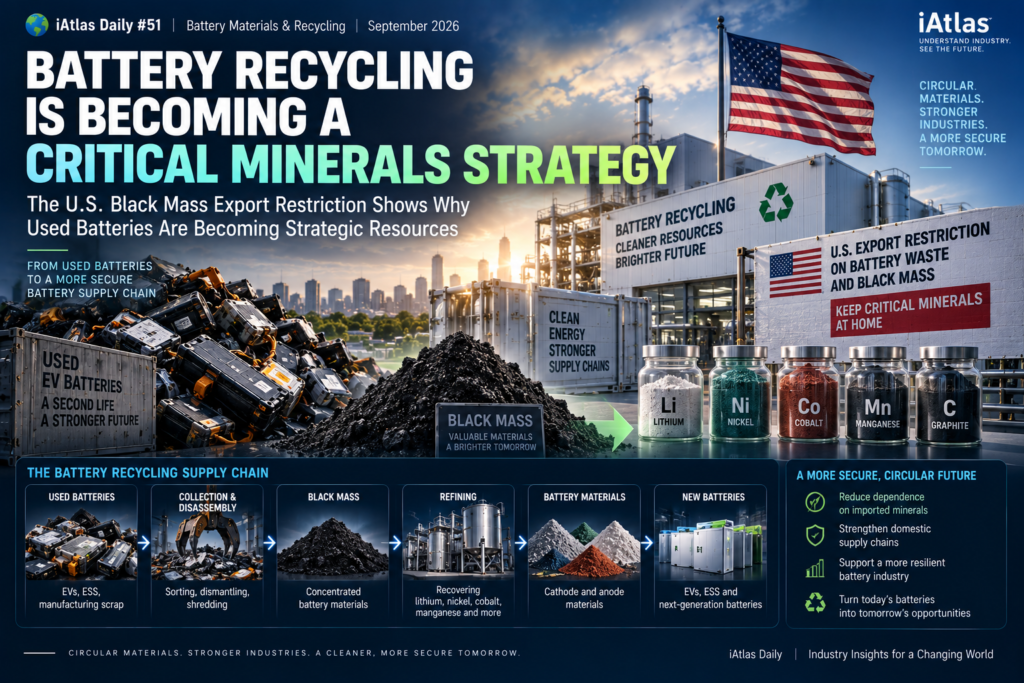
A simplified chain looks like this:
Used Battery / Manufacturing Scrap
↓
Collection
↓
Disassembly & Shredding
↓
Black Mass
↓
Refining
↓
Lithium / Nickel / Cobalt / Manganese
↓
Battery Materials
Black mass is typically a dark powder containing valuable active materials from the battery electrodes.
It is not yet a finished battery material.
That distinction is important.
Creating black mass is only one part of the recycling process.
The critical next step is refining it into usable materials.
🏭 2. Recycling Actually Contains Two Different Industries
Battery recycling is often described as though it were one process.
In reality, there are two major industrial stages.
Stage 1 — Pre-processing
Battery packs and cells are:
Collected → Discharged → Dismantled → Shredded → Separated
The result can include:
- black mass
- copper
- aluminum
- steel
- plastics
Stage 2 — Black Mass Refining
The black mass then undergoes chemical processing to recover materials such as:
Lithium
Nickel
Cobalt
Manganese
Research highlighted this week by the Union of Concerned Scientists estimates that North America currently has considerably more pre-processing capacity than actual black-mass refining capacity.
That creates an important bottleneck.
Being able to shred batteries does not necessarily mean a country can recover the critical minerals inside them.
🇺🇸 3. The U.S. Wants Black Mass to Stay at Home
The U.S. export restriction makes that distinction particularly important.
As of August 27, exports of black mass and certain other critical-mineral waste streams have been restricted for one year in an effort to increase domestic recovery.
The strategic logic is straightforward.
Without restrictions:
U.S. Battery Waste
↓
Black Mass
↓
🌏 Overseas Processing
↓
Recovered Minerals
With a domestic recycling strategy:
U.S. Battery Waste
↓
U.S. Black Mass
↓
🇺🇸 Domestic Refining
↓
Domestic Critical Minerals
↓
U.S. Battery Manufacturing
The second model creates a more circular domestic battery supply chain.
But there is a problem.
⚠️ 4. America Does Not Yet Have Enough Refining Capacity
Keeping black mass inside the country only works if sufficient facilities exist to process it.
Current research suggests that this is not yet the case.
The analysis cited by UCS estimates approximately:
65,000 metric tons
of black-mass feedstock requiring processing in North America in 2026, compared with only around:
7,000 metric tons
of black-mass refining capacity.
Those estimates illustrate a major mismatch.
Battery Collection
✅
↓
Shredding / Pre-processing
✅ Growing
↓
Black Mass
⬇
Refining Bottleneck
↓
Recovered Battery Minerals
This could create unusual market conditions.
If black mass cannot be exported but domestic refining capacity is insufficient, recyclers may need to store material, seek exceptions or find other disposal pathways.
So the policy creates both an opportunity and a challenge.
💰 5. Recycling Is Becoming Part of U.S. Battery Industrial Policy
The export restriction does not exist in isolation.
In August, the U.S. Department of Energy announced approximately $500 million in grants for seven projects spanning battery materials, critical minerals and recycling.
The projects include areas such as:
- lithium extraction
- cobalt refining
- battery recycling
- electrolyte chemicals
- silicon-based anodes
Benchmark Mineral Intelligence notes that these grants form part of larger U.S. Battery Manufacturing and Recycling and Battery Materials Processing programs, each with billions of dollars available.
The policy direction is therefore becoming clear.
Mining
Material Processing
Battery Manufacturing
Recycling
=
Domestic Battery Ecosystem
Recycling is no longer at the end of that equation.
It is becoming part of the beginning.
🔄 6. Manufacturing Scrap May Matter Before Used EV Batteries
When people think about battery recycling, they often imagine millions of old EV batteries.
Eventually, that will become a major feedstock source.
But many EV batteries sold today will remain in service for years.
In the meantime, another source is already available:
Battery Manufacturing Scrap
Gigafactories generate scrap during:
- electrode production
- cutting
- cell assembly
- formation
- quality inspection
- production ramp-up
That material can contain valuable battery materials without having spent years inside a vehicle.
This creates a shorter recycling loop:
Battery Factory
↓
Manufacturing Scrap
↓
Recycler
↓
Recovered Materials
↓
Cathode / Anode Materials
↓
Battery Factory
As battery manufacturing expands, recycling capacity can therefore grow alongside it — even before large volumes of EV batteries reach end-of-life.
⛏️ 7. Recycling Creates a New Source of Critical Minerals
Traditional battery supply chains begin underground.
Mine
↓
Ore Processing
↓
Refining
↓
Battery Materials
↓
Cell
Recycling introduces another source.
Used Battery
↓
Recycling
↓
Recovered Minerals
↓
Battery Materials
↓
Cell
The two systems can eventually operate together:
Primary Supply
Mining → Refining
Secondary Supply
Recycling → Recovery
↓
Battery Materials
↓
Cell Manufacturing
This does not eliminate the need for mining.
Battery demand can continue growing faster than recycled material becomes available.
But recycling can reduce the amount of new material required at the margin while providing additional domestic supply.
🌎 8. Critical Minerals Are Becoming Geopolitical Assets
This matters because critical-mineral supply chains are increasingly geopolitical.
China maintains strong positions across the processing of numerous strategic minerals and battery materials.
And supply-chain tensions remain visible beyond batteries.
Just this week, several Chinese rare-earth suppliers reportedly paused some shipments to U.S. customers amid concerns over geopolitical restrictions.
Rare earths and lithium-ion battery materials are different markets.
But the strategic lesson is similar:
Countries increasingly want greater control over the materials required for advanced industries.
Battery recycling fits directly into that strategy.
A used battery located in the United States, Europe or Korea represents material that does not need to be newly imported from a mine thousands of kilometers away.
🇪🇺 9. Europe Is Taking a Different Approach
The United States is not alone in trying to build circular battery supply chains.
Europe has introduced increasingly detailed requirements through the EU Batteries Regulation, including recycling, material recovery and future recycled-content requirements.
However, the European recycling industry faces its own economic challenges.
Recent industry reporting notes that recyclers still face difficulties establishing consistently profitable business models as feedstock availability, mineral prices and processing economics fluctuate.
This reveals an important distinction.
Recycling can be strategically important without always being economically easy.
The economics depend on:
Feedstock Volume
Battery Chemistry
Metal Prices
Recovery Efficiency
Processing Cost
Regulation
Logistics
That means governments may continue playing a major role in shaping the industry.
🧪 10. LFP Creates a New Recycling Challenge
Battery chemistry also matters.
Traditional NCM batteries contain relatively valuable nickel and cobalt.
That can make recycling economics more attractive.
LFP batteries are different.
Their cathodes contain:
Lithium
Iron
Phosphate
but no nickel or cobalt.
That provides advantages in cost, safety and material availability.
But it also changes recycling economics.
As LFP expands across:
- EVs
- ESS
- commercial vehicles
recyclers will need processes capable of recovering value from batteries containing lower-value cathode materials.
This becomes particularly important because the global battery industry is rapidly increasing LFP production.
🔋 11. The ESS Boom Will Eventually Create Another Recycling Stream
Recent iAtlas Daily articles have examined the rapid expansion of energy-storage batteries.
That creates another future recycling market.
The chain will eventually look like:
Renewable Energy
↓
ESS Deployment
↓
10+ Years of Operation
↓
Battery Retirement
↓
Recycling
↓
Recovered Materials
↓
New Batteries
The ESS expansion therefore has a long-term consequence that is easy to overlook today.
More batteries installed now means more recyclable material later.
This turns recycling into infrastructure that must grow before the largest waste volumes arrive.
🏗️ 12. The Next Bottleneck May Be Refining, Not Collection
The emerging North American situation provides a useful lesson.
The battery recycling industry cannot be measured simply by asking:
How many tons of batteries can be recycled?
A better question is:
What happens to the materials after the battery is shredded?
Consider the full chain:
Collection
↓
Disassembly
↓
Shredding
↓
Black Mass
↓
Chemical Refining
↓
Battery-Grade Materials
↓
Cathode / Anode
↓
New Cell
Every stage must exist.
Otherwise, the circular supply chain remains incomplete.
🧩 Why This Matters
The Battery Recycling Supply Chain is changing in four important ways.
Recycling is becoming industrial policy.
Governments increasingly view used batteries as domestic critical-mineral resources.
Black mass is becoming strategic.
It contains materials that countries increasingly want processed domestically.
Refining capacity matters more than headline recycling capacity.
Shredding a battery is only the beginning.
Recycling is becoming part of battery manufacturing.
Recovered materials can eventually flow directly back into new battery production.
The industry is moving from:
Take → Make → Use → Dispose
toward:
Materials → Battery → Use → Recycling → Materials
🔭 What to Watch
U.S. Black Mass Policy
Will the one-year export restriction be extended or replaced with a longer-term policy?
Refining Investment
The largest opportunity may increasingly lie in converting black mass into battery-grade materials.
Manufacturing Scrap
Scrap from new gigafactories will remain an important near-term feedstock source.
LFP Recycling
As LFP expands, recyclers need economically viable processes for lower-value chemistries.
EU Regulation
Europe’s recycling and recycled-content rules could provide an early model for closed-loop battery supply chains.
Korean Battery Companies
LG Energy Solution, Samsung SDI and SK On have large manufacturing footprints in North America and Europe, making recycling and local material sourcing increasingly relevant to their overseas supply chains.
🧭 iAtlas Insight
Battery recycling is often described as the final stage of the battery lifecycle.
Strategically, that may be the wrong way to think about it.
The emerging system looks more like this:
Critical Minerals
↓
Battery Materials
↓
Cell Manufacturing
↓
EV / ESS
↓
Recycling
↓
Critical Minerals
♻️
The end of one battery becomes the beginning of another.
That changes the strategic value of waste.
In the next battery supply chain, used batteries will not simply be products waiting for disposal. They will be above-ground mines containing materials already inside the market.
The countries that build the infrastructure to recover those materials could gain a new source of lithium, nickel, cobalt and other strategic resources.
Battery recycling is becoming critical-mineral infrastructure.
📚 Related Articles
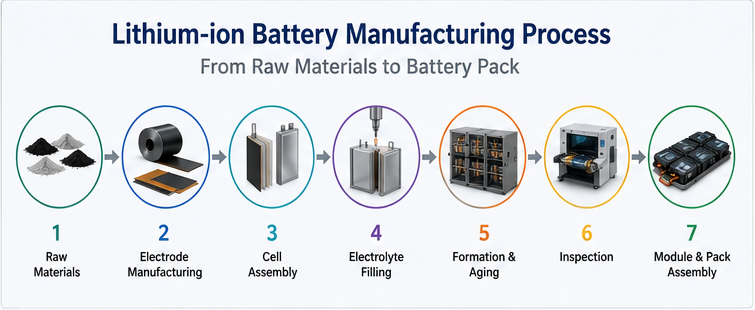
🔋 iAtlas Battery #1: Battery Manufacturing Process Explained: From Raw Materials to Battery Pack
Understand where raw materials enter battery manufacturing — and how recycled materials can eventually return to the production chain.
iAtlas Library: What is a Battery?
A fundamental introduction to battery structure, components and operation.
🔗 References
U.S. Department of Energy — Battery Materials, Manufacturing and Recycling Programs
Union of Concerned Scientists — U.S. Black Mass Export Restriction and Recycling Capacity
Benchmark Mineral Intelligence — Black Mass Recycling Regulation
Benchmark Mineral Intelligence — U.S. DOE Battery Materials and Recycling Grants
About iAtlas
iAtlas is an independent publication covering batteries, semiconductors, OLED, advanced materials, AI, and global industrial trends.
We transform complex industrial developments into clear, reliable, and easy-to-understand insights.
Whether you’re following today’s industry news or building long-term expertise, iAtlas helps you understand not only what happened, but why it matters.
Technology creates change.
Insight creates opportunity.
— iAtlas