China Expands Its Lead in the Global EV Battery Market
Why Rapid Market Growth Is Not Translating Into Equal Growth for Every Battery Maker
📰 iAtlas Daily #31 | August 2026
📰 What Happened?
The global electric vehicle battery market continued to expand rapidly during the first half of 2026.
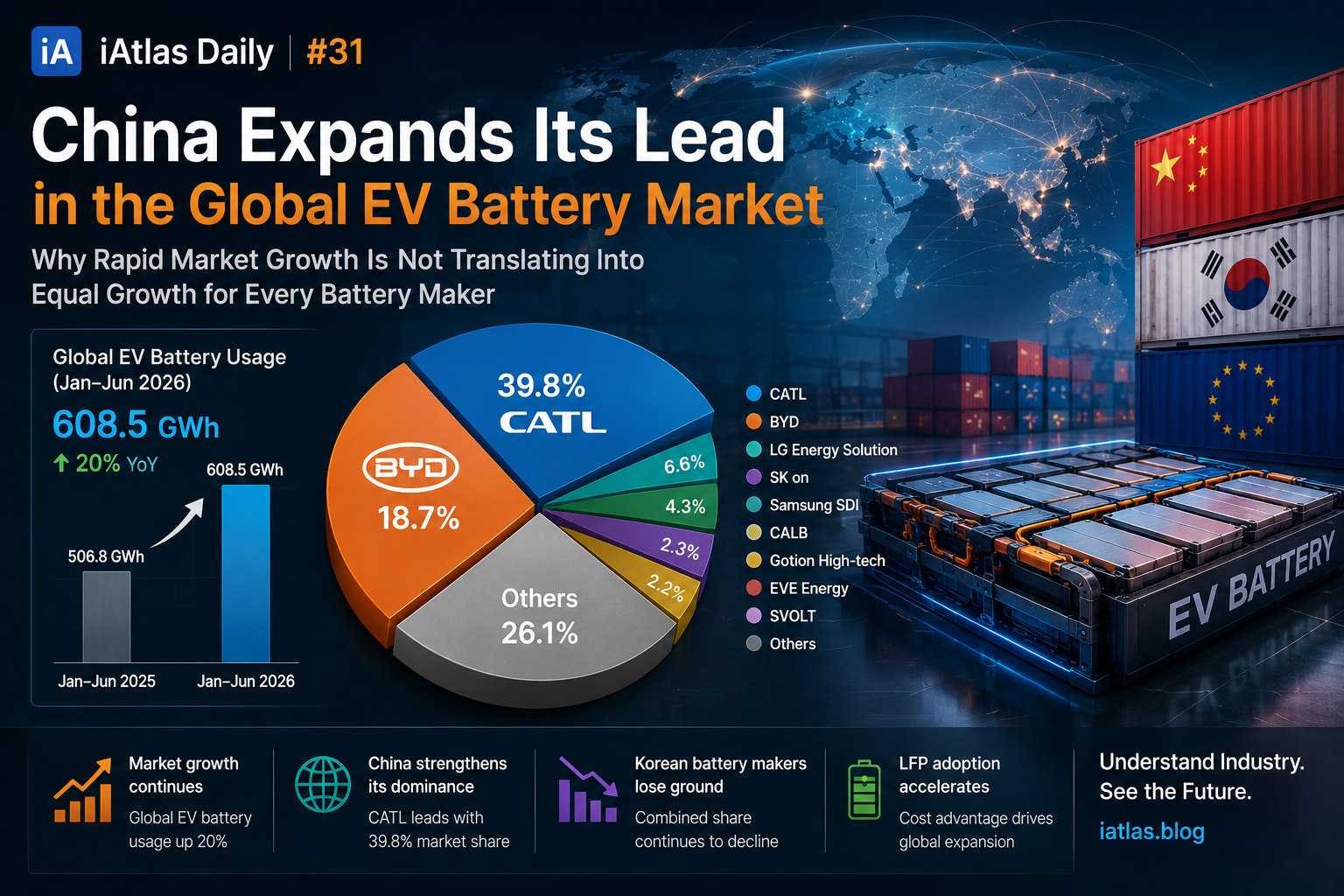
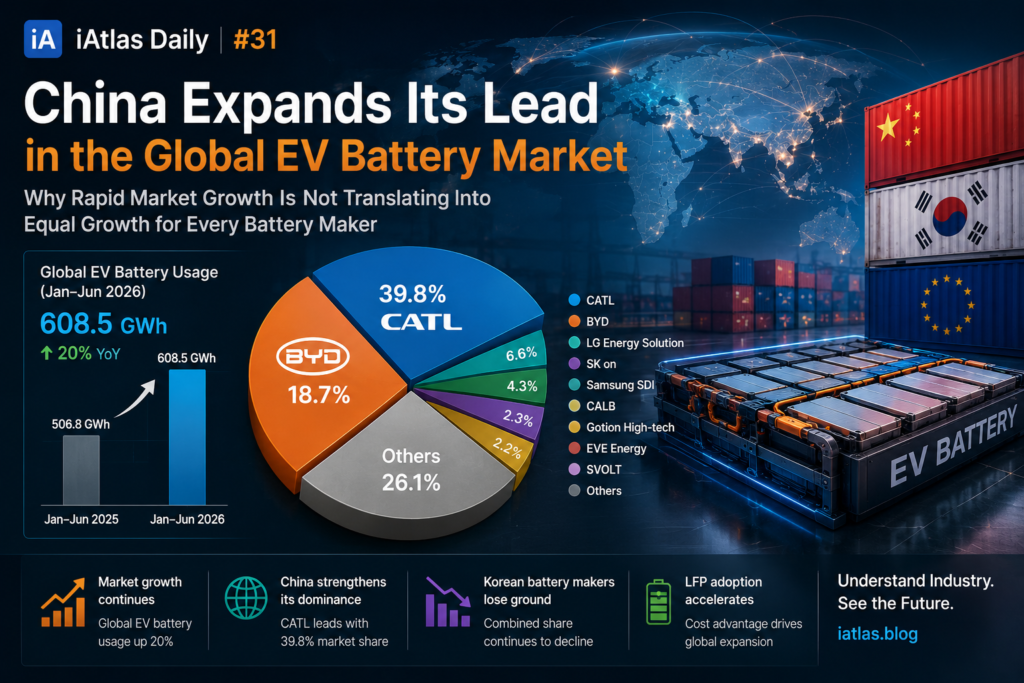
According to data from SNE Research, global battery usage in electric vehicles reached approximately 608.5 GWh between January and June, representing roughly 20% year-over-year growth.
But the more important story is where that growth is going.
Chinese battery manufacturers continued to expand their presence across the global market, while the combined market share of Korea’s three major battery companies declined.
This suggests that the next phase of battery competition may be defined less by overall EV market growth—and more by who captures that growth.
📊 CATL Remains the Clear Global Leader
CATL remains at the center of the global battery industry.
Its EV battery installations reached approximately 242.2 GWh in the first half of 2026, giving the company a market share of roughly 39.8%.
BYD remained another major force, while other Chinese manufacturers—including CALB, Gotion, EVE Energy and SVOLT—continued competing for global scale.
The result is increasingly clear:
China’s battery advantage is no longer based on one or two companies. It is becoming an ecosystem advantage.
🇰🇷 What About Korean Battery Makers?
The situation is more complicated for Korea’s major battery manufacturers.
LG Energy Solution, SK On, and Samsung SDI remain among the world’s important battery suppliers.
However, their combined global market share declined during the first half of 2026 even as overall battery demand continued growing.
That distinction matters.
A growing market does not automatically guarantee growing competitive position.
Battery companies must simultaneously compete on:
- Cost
- Manufacturing scale
- Chemistry
- Supply chains
- Customer relationships
- Regional production
- Energy density
- Safety
Chinese manufacturers have become particularly competitive in LFP batteries and large-scale manufacturing.
💡 Why This Matters
For several years, the global battery industry benefited from a relatively simple assumption:
More EVs = more opportunities for every battery manufacturer.
The market is now becoming more complicated.
EV demand is still growing, but competition between battery manufacturers is becoming significantly more intense.
Chinese manufacturers are expanding outside China while simultaneously benefiting from enormous domestic manufacturing scale.
That creates a difficult competitive environment for Korean, Japanese, European, and emerging battery manufacturers.
🔋 Battery Chemistry Is Part of the Story
One important factor behind China’s expansion is LFP battery technology.
LFP batteries generally offer:
- Lower material costs
- Strong thermal stability
- Long cycle life
- Reduced reliance on nickel and cobalt
Their lower energy density historically limited adoption in some long-range EV applications.
But improvements in battery pack design and cell technology have made LFP increasingly competitive across mainstream EV segments.
This has strengthened manufacturers with large LFP production capabilities.
🌍 The Competition Is Moving Overseas
Perhaps the bigger question is no longer what happens inside China.
It is:
How successfully can Chinese battery companies expand internationally?
Europe has become one of the most important battlegrounds.
CATL and other Chinese manufacturers are expanding manufacturing networks and customer relationships outside their domestic market.
At the same time, Korean manufacturers are trying to defend their positions through local manufacturing, new chemistries, cost reduction, and partnerships with global automakers.
The global battery competition is therefore moving from an export race toward a localized manufacturing race.
🏭 Industry Impact
Battery Manufacturers
Scale and manufacturing efficiency are becoming increasingly important competitive advantages.
Battery Materials
The expansion of LFP creates additional opportunities for lithium, phosphate, graphite, electrolyte, and separator suppliers.
Battery Equipment
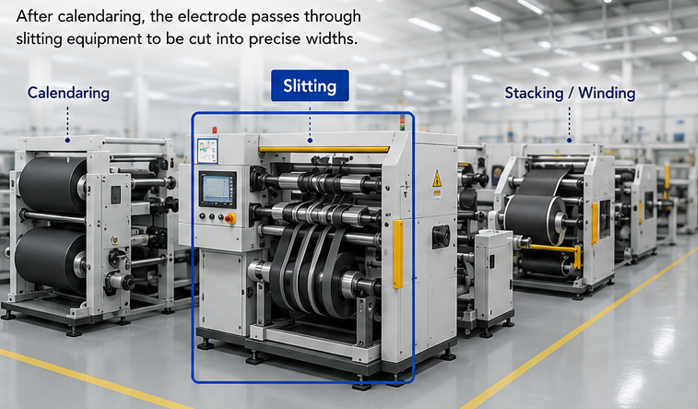
New global battery plants will continue generating demand for coating, calendaring, stacking, winding, formation, inspection, and automation equipment.
Automakers
Automakers may gain greater negotiating power as more battery suppliers compete for global contracts.
👀 What to Watch
Several indicators will be particularly important during the second half of 2026:
- CATL’s overseas expansion
- Korean battery makers’ global market share
- LFP adoption outside China
- European battery manufacturing
- Battery price competition
- ESS battery growth
- Next-generation battery technologies
The key question is no longer simply whether the battery market will grow.
It is which companies will capture that growth.
🎯 Atlas Insight
The first half of 2026 highlights an important transformation in the battery industry.
The market itself is still expanding.
But market growth and competitive success are becoming two different things.
China has built advantages across multiple layers of the battery ecosystem—from materials and cells to manufacturing scale and increasingly overseas production.
For Korean battery manufacturers, the next competitive phase may therefore require more than technological leadership.
Cost, scale, localization, chemistry strategy, and manufacturing efficiency will increasingly determine who leads the global battery industry.
The battery race is becoming a manufacturing race.
📚 Related Articles
📰 iAtlas Daily #24 | China’s Battery Recycling Industry Enters a New Growth Phase
📰 iAtlas Daily #28 | Global ESS Market Enters a New Growth Phase
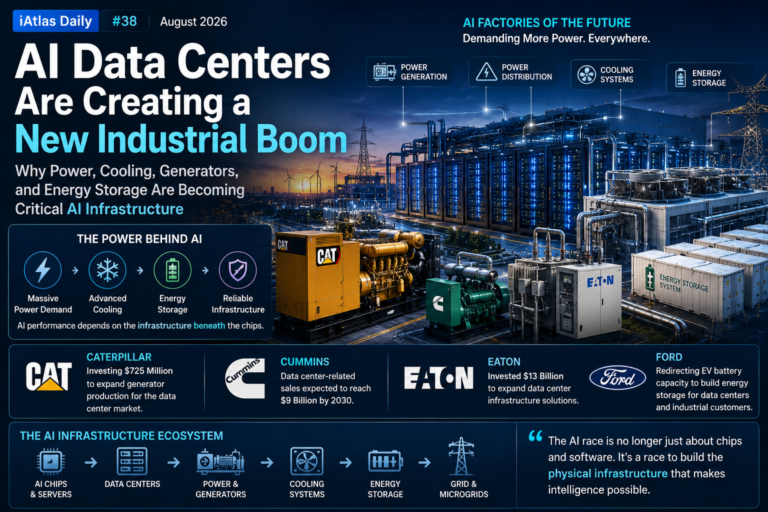
📊 iAtlas Weekly #5 | Building the AI Infrastructure Era
Sources
Yonhap — Global EV Battery Usage Rises 20% in H1 2026
ETNews — H1 EV Battery Usage Rises 20% as Chinese Suppliers Expand Share
CnEVPost — Global EV Battery Market Share in H1 2026
The reported figures originate from SNE Research’s latest battery market data.
About iAtlas
iAtlas is an independent publication covering batteries, semiconductors, OLED, advanced materials, AI, and global industrial trends.
We transform complex industrial developments into clear, reliable, and easy-to-understand insights.
Whether you’re following today’s industry news or building long-term expertise, iAtlas helps you understand not only what happened, but why it matters.
Technology creates change.
Insight creates opportunity.
— iAtlas