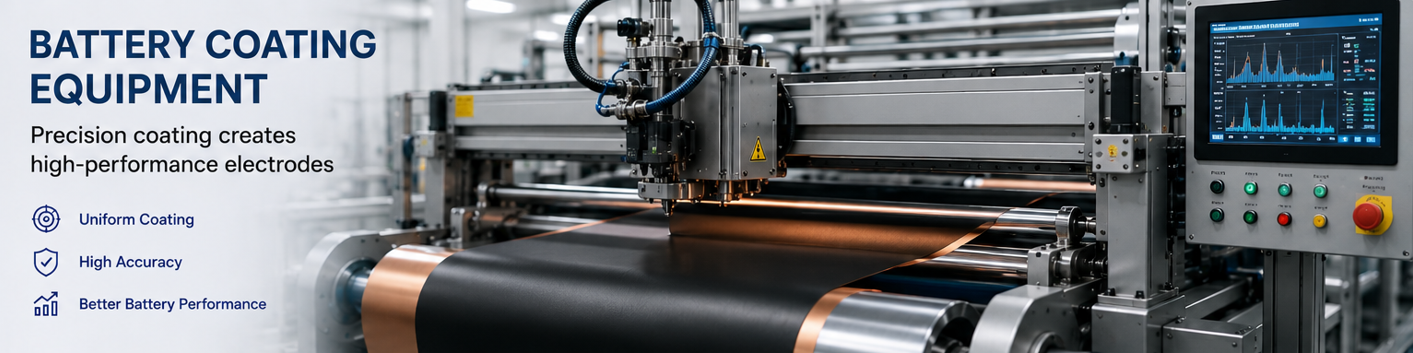
Battery Coating Equipment Explained: 7 Precision Technologies for High-Performance Electrodes
🔋 iAtlas Battery #19 | ⚙️ Equipment → 🎯 Coating Equipment
Introduction
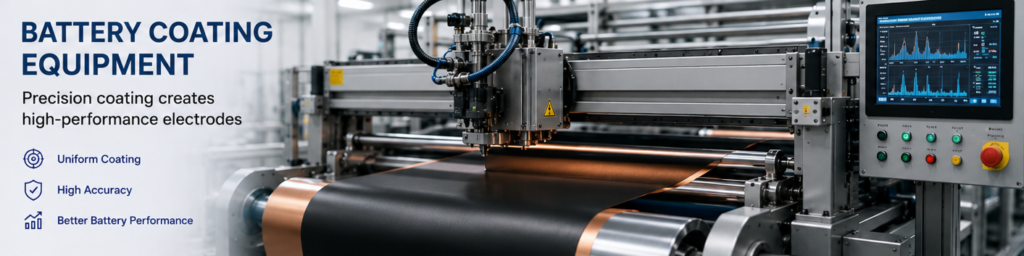
Battery coating equipment is one of the most critical machines in lithium-ion battery manufacturing.
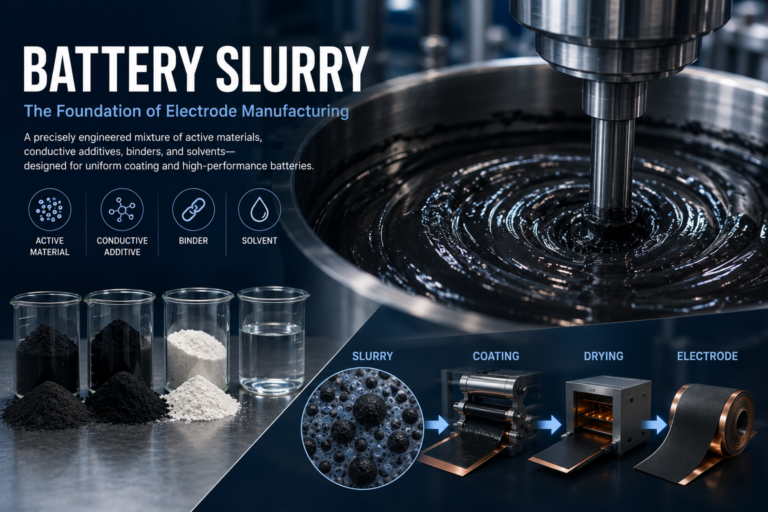
After slurry is prepared in the mixing process, it must be coated onto a metal current collector with exceptional precision. Even tiny variations in coating thickness can reduce battery capacity, shorten cycle life, and increase production defects.
Modern battery coating equipment combines precision fluid control, high-speed web handling, and real-time thickness monitoring to produce consistent, high-quality electrodes for electric vehicles and energy storage systems.
Table of Contents
- What Is Battery Coating Equipment?
- Main Components of a Coating Machine
- Slot-Die vs. Comma Coating
- Thickness Control
- Common Coating Defects
- Future Trends
- Frequently Asked Questions
What Is Battery Coating Equipment?
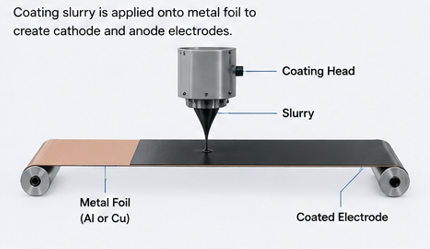
Battery coating equipment applies electrode slurry onto metal foil to create cathodes and anodes.
The coated foils later become the active layers inside lithium-ion batteries.
Typical current collectors include:
- Aluminum foil for cathodes
- Copper foil for anodes
Uniform coating is essential because it determines how evenly lithium ions move through the electrode.
Main Components of a Coating Machine
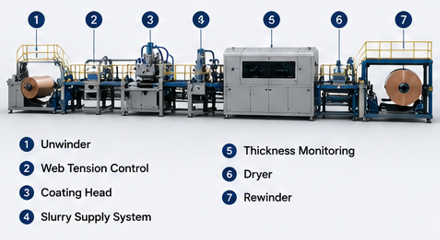
A modern coating line typically consists of:
- Unwinder
- Web tension control
- Coating head
- Slurry supply system
- Thickness monitoring system
- Dryer
- Rewinder
Each component contributes to stable coating quality and continuous production.
Slot-Die vs. Comma Coating
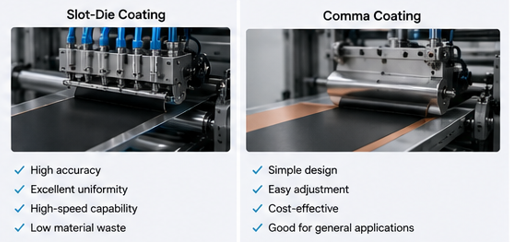
Two of the most common coating technologies are:
Slot-Die Coating
Advantages:
- High coating accuracy
- Excellent thickness uniformity
- Suitable for high-speed production
- Low material waste
Comma Coating
Advantages:
- Simple mechanical design
- Easy process adjustment
- Cost-effective for certain applications
Today, slot-die coating is the dominant technology in most large-scale EV battery production lines.
Thickness Control
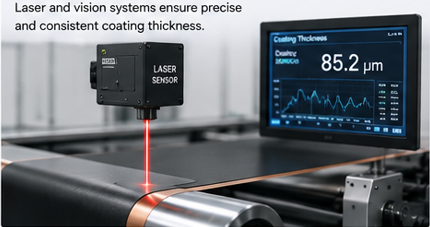
Coating thickness directly influences:
- Battery capacity
- Energy density
- Cell consistency
- Production yield
Manufacturers use laser sensors, machine vision systems, and inline measurement tools to continuously monitor coating thickness.
Even a variation of only a few micrometers can affect battery performance.
Common Coating Defects
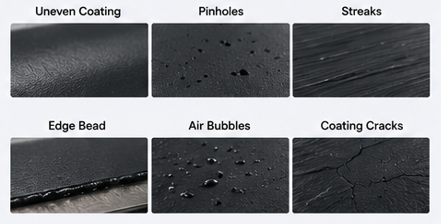
Common defects include:
- Uneven coating
- Pinholes
- Streaks
- Edge bead formation
- Air bubbles
- Coating cracks
To reduce defects, manufacturers optimize slurry viscosity, coating speed, and drying conditions while continuously monitoring the coating process.
Future Trends
Battery coating equipment continues to evolve with advances in automation and process control.
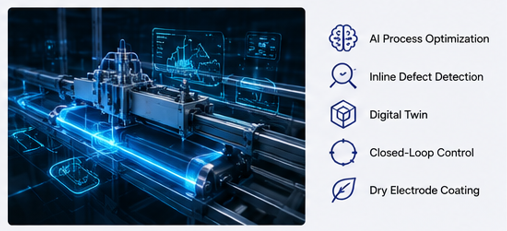
Current industry trends include:
- AI-assisted coating optimization
- Inline defect detection
- Digital twin manufacturing
- Closed-loop thickness control
- Dry electrode coating technology
These innovations improve manufacturing efficiency while reducing material waste.
Frequently Asked Questions
What is battery coating equipment?
Battery coating equipment applies electrode slurry onto aluminum or copper foil with precise thickness control during lithium-ion battery manufacturing.
Why is coating thickness important?
Uniform coating thickness improves battery capacity, consistency, and production yield while reducing manufacturing defects.
What is slot-die coating?
Slot-die coating is a precision coating method that delivers highly uniform slurry layers with minimal material waste.
Which coating technology is most widely used?
Slot-die coating is currently the preferred technology for most high-volume EV battery manufacturing lines because of its precision and scalability.
Key Takeaways
- Battery coating equipment creates uniform cathode and anode layers.
- Slot-die coating is the industry standard for precision and efficiency.
- Thickness control is critical for battery performance and consistency.
- Inline monitoring reduces defects and improves yield.
- AI and digital process control are shaping the next generation of coating equipment.
🎓 Battery Learning Path
⚙️ Equipment
✅ 🔋 iAtlas Battery #18 — Mixing Equipment
📍 🔋 iAtlas Battery #19 — Coating Equipment (Current)
▶ 🔋 iAtlas Battery #20 — Drying Equipment
▶ 🔋 iAtlas Battery #21 — Calendaring Equipment
▶ 🔋 iAtlas Battery #22 — Slitting Equipment
Continue exploring the machines that transform raw materials into high-performance lithium-ion batteries.
📖 Continue Reading
⬅ Previous Article
🔋 iAtlas Battery #18
Battery Mixing Equipment Explained: 6 Essential Features of Slurry Mixers
Learn how slurry mixers create uniform battery slurry and why mixing quality affects every downstream manufacturing process.
➡ Next Article
🔋 iAtlas Battery #20
Battery Drying Equipment Explained: Why Solvent Removal Is Critical for Electrode Quality
Discover how industrial drying systems remove solvents, improve electrode adhesion, and prepare coated electrodes for calendaring.
References
- International Energy Agency (IEA)
- U.S. Department of Energy – Vehicle Technologies Office
- Battery University
- Nature Energy
About iAtlas
iAtlas is an independent publication covering batteries, semiconductors, OLED, advanced materials, AI, and global industrial trends.
We transform complex industrial developments into clear, reliable, and easy-to-understand insights.
Whether you’re following today’s industry news or building long-term expertise, iAtlas helps you understand not only what happened, but why it matters.
Technology creates change.
Insight creates opportunity.
— iAtlas