Battery Materials Overview: The Essential Components of a Lithium-ion Battery
🔋 iAtlas Battery #3 | 📘 Fundamentals → 🧩 Core Components
Introduction
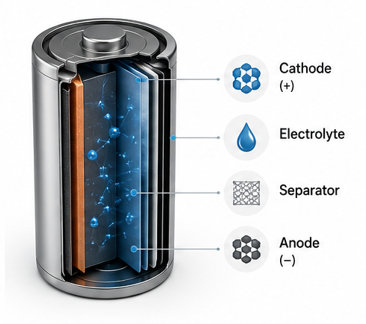
The performance of a lithium-ion battery is determined not only by its design but also by the materials used inside it. Each component plays a unique role in storing, transporting, and delivering energy.
From cathode materials that define energy density to separators that ensure safety, every material directly influences battery performance, lifespan, charging speed, and cost.
In this article, we’ll explore the essential materials used in lithium-ion batteries and explain why they matter.
The Four Core Materials
A lithium-ion battery consists of four primary functional materials:
- Cathode
- Anode
- Electrolyte
- Separator
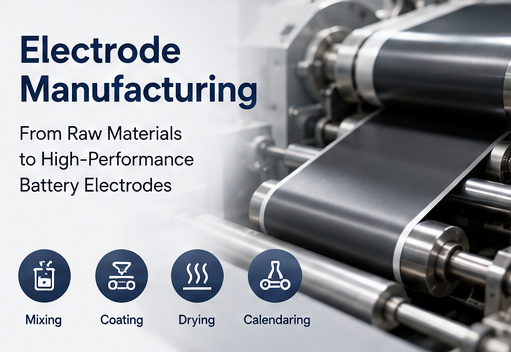
Supporting materials such as copper foil, aluminum foil, binders, and conductive additives are also essential for battery manufacturing.
1. Cathode Materials
The cathode is the most valuable component in a lithium-ion battery and largely determines its energy density, operating voltage, and cost.
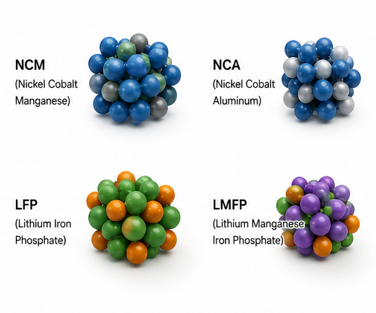
The most common cathode chemistries include:
- NCM (Nickel Cobalt Manganese)
- NCA (Nickel Cobalt Aluminum)
- LFP (Lithium Iron Phosphate)
- LMFP (Lithium Manganese Iron Phosphate)
Each chemistry offers different advantages in terms of safety, cycle life, and performance.
2. Anode Materials
The anode stores lithium ions during charging.
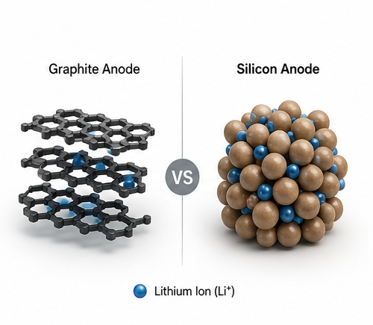
Graphite remains the industry standard because of its excellent stability and cost-effectiveness.
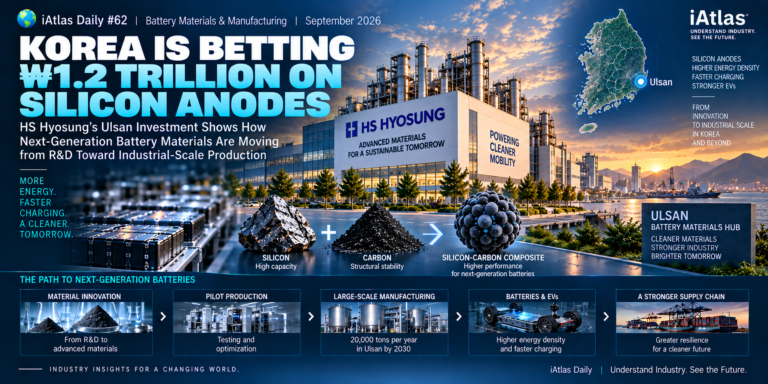
However, silicon-based anodes are attracting attention due to their significantly higher theoretical capacity.
3. Electrolyte
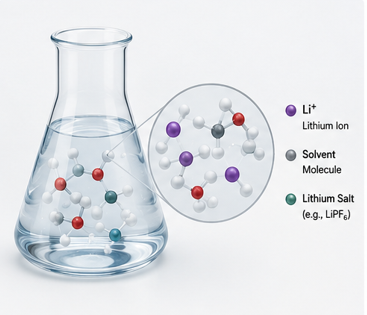
The electrolyte acts as the pathway through which lithium ions move between the cathode and anode.
Most commercial batteries use liquid electrolytes based on lithium salts dissolved in organic solvents.
Because electrolytes react with moisture, they must be handled under extremely dry conditions during manufacturing.
4. Separator
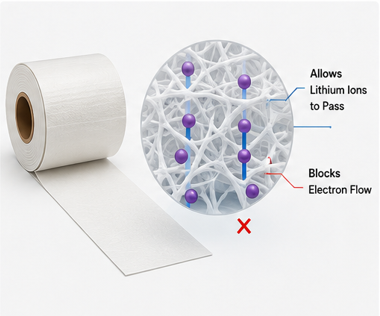
The separator is a thin porous membrane placed between the cathode and anode.
Although it blocks direct electrical contact, it allows lithium ions to pass freely.
A high-quality separator is essential for preventing internal short circuits and improving battery safety.
Supporting Materials
Several additional materials play important roles in battery manufacturing.
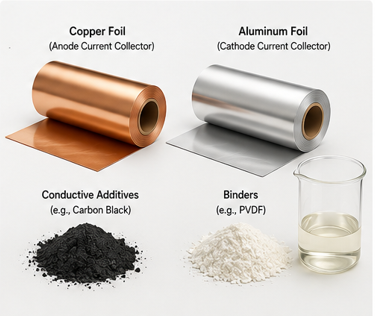
Copper Foil
Used as the current collector for the anode.
Aluminum Foil
Used as the current collector for the cathode.
Conductive Additives
Improve electrical conductivity within the electrodes.
Binders
Hold active materials together and improve adhesion to current collectors.
Why Material Selection Matters
Battery manufacturers choose materials based on the target application.
For example:
- Electric vehicles require high energy density and long driving range.
- Energy storage systems prioritize safety and long cycle life.
- Consumer electronics emphasize compact size and fast charging.
No single material is ideal for every application.
Key Takeaways
- The cathode, anode, electrolyte, and separator form the foundation of every lithium-ion battery.
- Supporting materials such as copper foil and binders are equally important for reliable manufacturing.
- Different material combinations create batteries optimized for different applications.
- Material innovation continues to drive improvements in battery performance, safety, and cost.
🎓 Battery Learning Path
📘 Fundamentals
✅🔋 iAtlas Battery #1 — Manufacturing Process
✅🔋 iAtlas Battery #2 — How Batteries Work
📍🔋 iAtlas Battery #3 — Materials Overview (Current)
Next Learning Path: 🧪 Materials
📖 Continue Reading
⬅ Previous Article
🔋 iAtlas Battery #2
How Lithium-ion Batteries Work: Charging, Discharging, and Energy Storage
Learn the core operating principles that power every lithium-ion battery.
➡ Next Article
🔋 iAtlas Battery #4
Cathode Materials Explained: Types, Chemistry, and Applications
Discover how cathode chemistry influences battery capacity, voltage, safety, and overall performance.
References
- International Energy Agency (IEA)
- U.S. Department of Energy – Vehicle Technologies Office
- Battery University
- Nature Energy (Battery Manufacturing Research)
About iAtlas
iAtlas is an independent publication covering batteries, semiconductors, OLED, advanced materials, AI, and global industrial trends.
We transform complex industrial developments into clear, reliable, and easy-to-understand insights.
Whether you’re following today’s industry news or building long-term expertise, iAtlas helps you understand not only what happened, but why it matters.
Technology creates change.
Insight creates opportunity.
— iAtlas