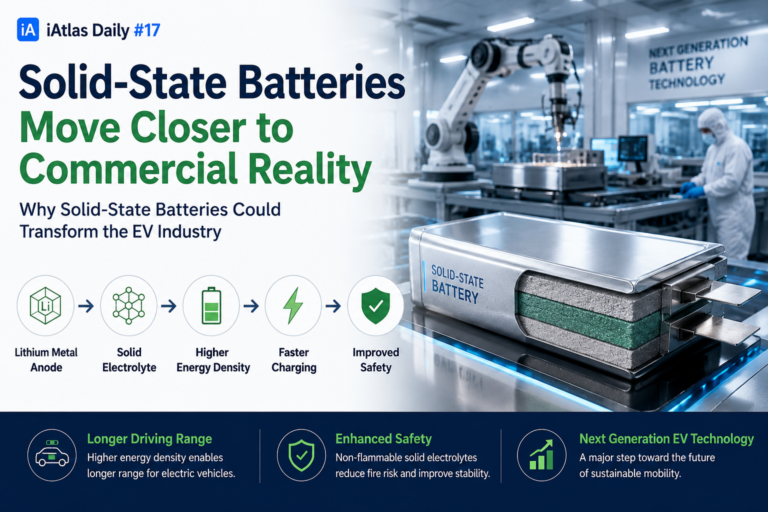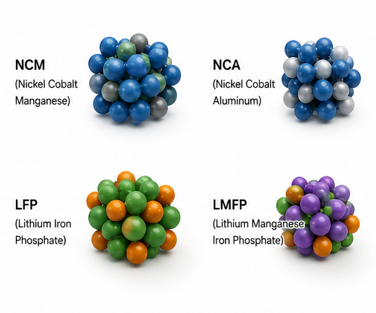
Why Solid-State Batteries Could Transform Electric Vehicles
The Next Breakthrough Beyond Lithium-Ion Batteries
📰 iAtlas Daily #7 | July 9, 2026
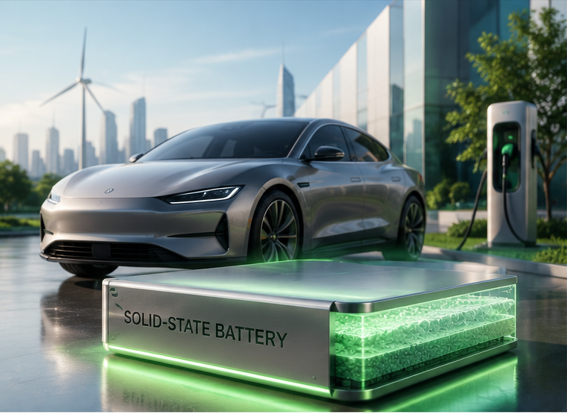
Today’s Highlights
- Solid-state batteries promise higher energy density and improved safety compared with conventional lithium-ion batteries.
- Major automakers and battery manufacturers are accelerating research and pilot production.
- Commercialization remains challenging, but the technology could redefine the future of electric vehicles.
Cover Story
Beyond Today’s Lithium-Ion Batteries
Lithium-ion batteries have powered the rapid growth of electric vehicles over the past decade.
However, as EV adoption continues to accelerate, manufacturers are searching for technologies that can deliver longer driving range, faster charging, and greater safety.
One of the most promising solutions is the solid-state battery.
Instead of using a liquid electrolyte, solid-state batteries replace it with a solid electrolyte, opening the door to significant improvements in battery performance.
Although commercialization is still underway, many experts believe this technology represents the next major evolution in energy storage.
Battery Technology
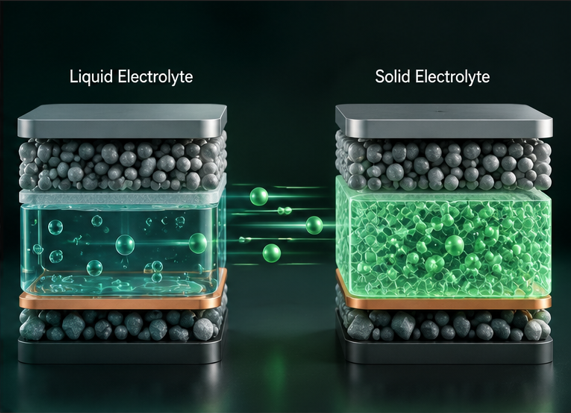
What Makes Solid-State Batteries Different?
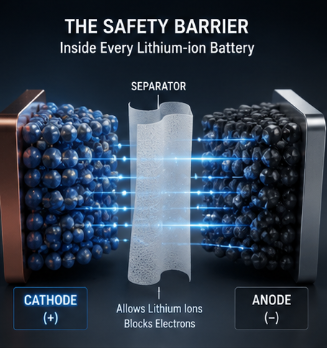
Traditional lithium-ion batteries rely on liquid electrolytes to transport lithium ions.
Solid-state batteries replace this liquid with a solid material.
This change offers several potential advantages:
- Higher energy density
- Improved thermal stability
- Reduced fire risk
- Faster charging capability
These benefits make solid-state batteries particularly attractive for future electric vehicles.
Automotive Industry
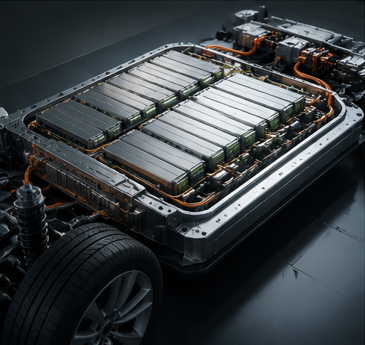
Why Automakers Are Investing
Global automakers are investing heavily in solid-state battery development.
The motivation is clear.
Consumers want:
- Longer driving range
- Shorter charging times
- Better battery durability
- Improved vehicle safety
Battery innovation is becoming one of the key competitive factors in the EV market.
Manufacturing
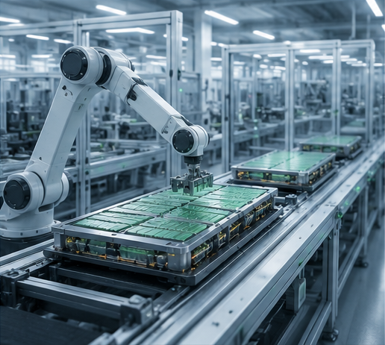
Challenges Before Mass Production
Despite the excitement, several technical challenges remain.
Manufacturers continue working to improve:
- Solid electrolyte stability
- Interface resistance
- Manufacturing scalability
- Production cost
Solving these issues will be essential before large-scale commercialization becomes possible.
🎯 Atlas Radar

What Is a Solid-State Battery?
A solid-state battery replaces the liquid electrolyte found in conventional lithium-ion batteries with a solid electrolyte.
Why It Matters
If successfully commercialized, solid-state batteries could enable safer, lighter, and more energy-dense electric vehicles.
🔭 Atlas Outlook
Looking Ahead
Commercialization Is Getting Closer
Pilot production is expanding across the battery industry.
Safety Will Become a Major Advantage
Solid electrolytes could significantly reduce thermal runaway risks.
The EV Market Will Continue Driving Innovation
As electric vehicles become mainstream, demand for next-generation batteries will continue to grow.
💡 Atlas Insight
Every generation of electric vehicles has been defined by better batteries.
Solid-state technology may become the foundation of the next generation.
The transition will not happen overnight.
But when it does, it could reshape the future of transportation.
Today’s Keywords
Solid-State Battery
A rechargeable battery that uses a solid electrolyte instead of a liquid electrolyte.
Solid Electrolyte
A solid material that transports lithium ions within a battery.
Energy Density
The amount of energy stored within a given battery size or weight.
📚 Continue Reading
Previous Daily
➡️ Why High-Purity Materials Matter for Next-Generation OLED Displays
Discover why material purity has become one of the most critical factors in advanced OLED manufacturing.
Also Recommended
➡️ Why HBM Is Redefining AI Computing
Explore how High Bandwidth Memory is transforming AI hardware through faster data transfer and advanced packaging.
About iAtlas
iAtlas is an independent publication covering batteries, semiconductors, OLED, advanced materials, AI, and global industrial trends.
We transform complex industrial developments into clear, reliable, and easy-to-understand insights.
Whether you’re following today’s industry news or building long-term expertise, iAtlas helps you understand not only what happened, but why it matters.
Technology creates change.
Insight creates opportunity.
— iAtlas